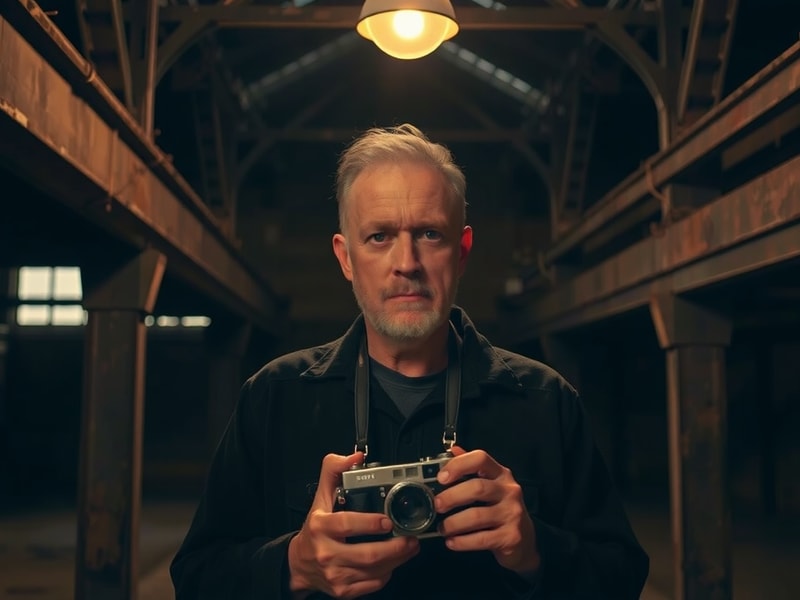
For over four decades, Keith Piper has stood at the intersection of art, activism, and technology, crafting works that challenge historical amnesia and social injustice. Born in Malta in 1960 and raised in the UK, Piper emerged from the vibrant Black British art scene of the 1980s, a period marked by political urgency and cultural reinvention. His practice spans painting, digital media, photography, and installation, each medium serving as a vehicle for dissecting colonial legacies, racial inequality, and the mechanics of power.
Piper’s early work was deeply rooted in the community. As a founding member of the influential BLK Art Group in 1982, he contributed to a movement that demanded visibility for Black artists in a predominantly white art world. The group’s exhibitions and manifestos called for systemic change, positioning art not as decoration but as a tool for social transformation. Piper’s role in this collective laid the foundation for his lifelong commitment to using art as a form of resistance.
The Evolution of a Visual Storyteller
In the 1990s, Piper shifted his focus toward digital technology, becoming one of the first artists to explore the internet as a space for artistic intervention. His 1997 project Relocating the Remains used CD-ROMs to recreate the Middle Passage, the harrowing transatlantic journey of enslaved Africans. The interactive piece forced viewers to confront the brutality of history through immersive, unsettling imagery and fragmented narratives. It wasn’t just art; it was an experience designed to evoke empathy and historical reckoning.
By the 2000s, Piper had expanded his practice into large-scale installations that blended archival materials with contemporary digital tools. His 2007 work Go West Young Man, exhibited at the Tate Britain, juxtaposed 19th-century colonial photographs with modern surveillance footage. The piece highlighted how racial surveillance and control have evolved, yet remained constant. Piper’s ability to weave past and present demonstrated his role as a historian of the invisible and the marginalized.
A Legacy of Interdisciplinary Innovation
Piper’s work is often categorized under the umbrella of cultural critique, but his approach defies easy classification. He has consistently pushed the boundaries of medium and message, collaborating with scientists, historians, and activists to create projects that are as intellectually rigorous as they are visually compelling. His 2015 piece The Empty Chair, part of the Transfigure exhibition, used AI-generated imagery to explore the erasure of Black bodies in classical art. The work questioned not only historical representation but also the role of emerging technologies in perpetuating or dismantling bias.
Piper’s contributions extend beyond his own studio. As an educator, he has mentored generations of artists, emphasizing the importance of critical thinking and social responsibility. He served as a professor at the University of East London and has been a visiting lecturer at institutions worldwide. His teaching philosophy mirrors his art: knowledge should be accessible, transformative, and rooted in lived experience.
Key Themes in Piper’s Work
Piper’s oeuvre is united by several recurring themes, each reflecting his commitment to exposing power structures and amplifying marginalized voices. Below are some of the central motifs that define his practice:
- Historical Reckoning: Piper frequently revisits colonial histories, using art to excavate silenced narratives. His work forces audiences to acknowledge the ongoing impact of slavery, empire, and racial capitalism.
- Technology and Control: From early digital projects to AI-driven installations, Piper examines how technology can both oppress and liberate. His work critiques surveillance, algorithmic bias, and the digital divide.
- Body and Identity: The Black body is a recurring subject in Piper’s work, often depicted as both a site of violence and resilience. He explores how identity is constructed, performed, and policed.
- Interdisciplinary Collaboration: Piper’s projects often involve partnerships with scholars, technologists, and communities. This collaborative approach ensures his work remains relevant and grounded in real-world issues.
Recognition and Influence
Piper’s impact is recognized globally. In 2016, he was awarded an MBE (Member of the Order of the British Empire) for his services to the arts. His work has been exhibited at the Venice Biennale, the Brooklyn Museum, and the Whitney Museum of American Art, among others. Despite this acclaim, Piper has remained critical of institutional complacency. In a 2020 interview, he remarked, “Art institutions have a habit of canonizing dissent after the fact. They love to celebrate the artists they once ignored.”
His influence extends beyond galleries. Piper’s work has inspired a generation of artists, activists, and scholars to interrogate the intersections of race, technology, and history. The rise of digital art collectives and socially engaged practices can trace some of its lineage back to Piper’s pioneering efforts. He has also contributed to news discourse, appearing in documentaries and panels that address the role of art in social justice movements.
The Future of Keith Piper’s Vision
Now in his sixth decade, Piper shows no signs of slowing down. His recent projects continue to grapple with urgent issues, from climate justice to the ethics of AI. In 2023, he unveiled Echo Chamber, an installation that used machine learning to generate dialogues between historical figures and contemporary activists. The piece underscored the cyclical nature of struggle while imagining new possibilities for solidarity.
Piper’s work remains vital because it refuses to offer easy answers. Instead, it presents questions: How do we remember what has been erased? How do we dismantle systems of oppression? And how can art be a catalyst for change? These questions are more pressing than ever in an era of resurgent nationalism, algorithmic governance, and global inequality.
As Piper once said, “Art doesn’t change the world, but it changes the way we see it. And seeing differently is the first step toward acting differently.” His contributions remind us that art is not merely a reflection of society but a force that can reshape it.
For those interested in exploring similar voices in contemporary art, Piper’s work offers a blueprint for how art can intersect with activism, technology, and education. His legacy is not just in the pieces he has created but in the conversations he has sparked—and the ones he has yet to ignite.