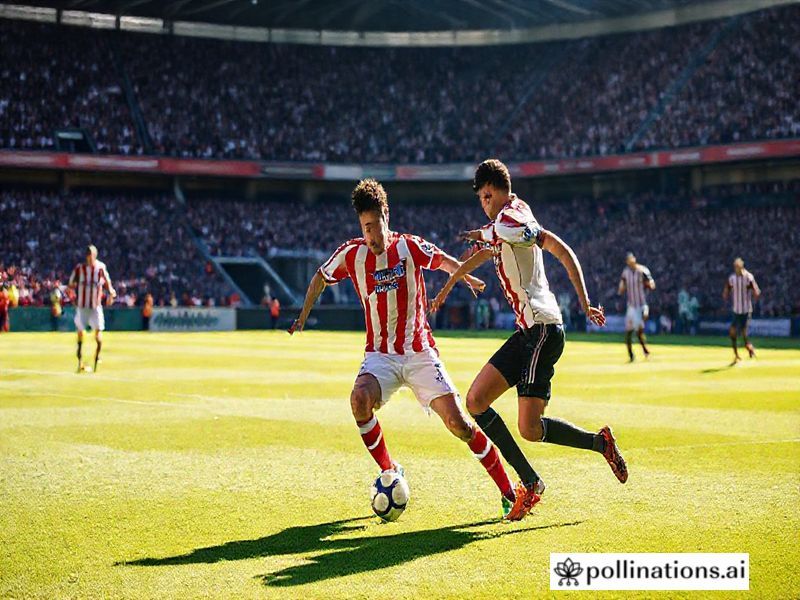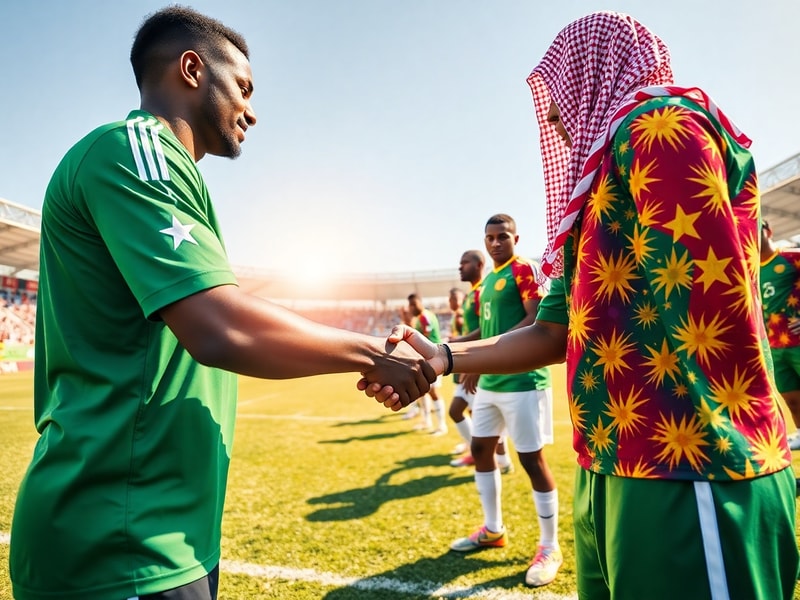
The meeting between Senegal and Saudi Arabia on the football pitch represents more than just a sporting contest. It’s a collision of football cultures, economic ambitions, and sporting philosophies that reflect broader global trends in the game. Senegal, with its rich footballing heritage built on technical skill and tactical discipline, faces Saudi Arabia, a nation investing heavily in football as part of a wider Vision 2030 strategy to diversify its economy and soft power.
The contrast between the two teams extends beyond the pitch. Senegal’s players often emerge from local academies and European leagues, carrying the hopes of a nation with deep footballing roots. Saudi Arabia, meanwhile, has rapidly assembled a squad through high-profile transfers, aiming to position itself as a new power in world football. This clash is not just about three points—it’s a narrative of ambition, identity, and the evolving face of African and Middle Eastern football.
The Footballing Backbone of Senegal
Senegal’s football identity is deeply rooted in its history and culture. The national team, affectionately known as the “Lions of Teranga,” reflects the nation’s spirit of hospitality and resilience. Senegal has produced world-class players like Sadio Mané, who became a global icon, and Kalidou Koulibaly, whose defensive mastery earned him a move to Europe’s elite clubs.
Senegal’s football development has been organic, shaped by local coaches and European mentors who emphasize technique, tactical awareness, and mental strength. The country’s recent success—including reaching the 2022 World Cup Round of 16 and winning the 2021 and 2022 Africa Cup of Nations—has been built on a foundation of local talent nurtured through systems like the Diambars Academy.
This approach stands in contrast to Saudi Arabia’s rapid rise, which has been fueled by financial investment rather than grassroots development. While Senegal’s football is a reflection of national pride and identity, Saudi Arabia’s project is part of a broader economic and geopolitical strategy.
Key Strengths of the Senegalese Side
- Technical Proficiency: Senegal’s players are known for their dribbling, passing, and spatial awareness. The team excels in possession-based football when allowed to play to its strengths.
- Defensive Solidity: With players like Koulibaly and now younger talents like Formose Mendy, Senegal boasts a solid defensive core capable of shutting down top-tier attacks.
- Mental Resilience: The team has shown composure under pressure in major tournaments, including penalty shootouts and late-game comebacks.
- Coaching Continuity: Under coach Aliou Cissé, Senegal has maintained tactical consistency, allowing players to express themselves within a clear system.
Saudi Arabia’s Football Revolution
Saudi Arabia’s football transformation is one of the most dramatic in modern sports history. Through the Public Investment Fund (PIF) and the Saudi Pro League’s strategic spending, the nation has attracted global superstars such as Cristiano Ronaldo, Karim Benzema, and N’Golo Kanté. The national team, managed by former European coaches like Hervé Renard and now Roberto Mancini, has also benefited from this influx of resources and expertise.
The goal is clear: to build a competitive national team capable of qualifying for the World Cup knockout stages and, eventually, winning major tournaments. This ambition is tied to Saudi Vision 2030, a plan to reduce the country’s dependence on oil by investing in entertainment, tourism, and sports. Football is a key pillar of this strategy, and the national team’s progress is being watched closely as a barometer of success.
While Saudi Arabia’s recent performances have shown improvement—including a shock win over Argentina in the 2022 World Cup—critics argue that the team’s progress is still uneven. The blend of experienced foreign recruits with homegrown talent remains a work in progress. Still, the trajectory is undeniable: Saudi football is rising, and fast.
Saudi Arabia’s Tactical Evolution
- High Pressing: Under Mancini, Saudi Arabia has adopted a more aggressive pressing style, looking to force turnovers in dangerous areas.
- Physical Dominance: The team relies on its athleticism, particularly in duels and aerial battles, to overpower opponents.
- Set-Piece Threat: With tall, strong players like Salem Al-Dawsari and Saleh Al-Shehri, Saudi Arabia is a constant danger from set pieces.
- Flexible Formations: The team can shift between a back three and four, depending on the opposition, showing tactical adaptability.
Cultural and Global Implications
The Senegal vs Saudi Arabia rivalry transcends sport. It reflects the broader shifts in global football, where traditional powerhouses are being challenged by ambitious nations leveraging financial power. Senegal, as a footballing nation with a proud history, represents continuity and authenticity. Saudi Arabia, meanwhile, embodies the new wave of football investment driven by economic diversification and soft power ambitions.
This clash also highlights the growing influence of African and Middle Eastern football on the global stage. Both regions are investing in infrastructure, youth academies, and broadcasting rights, aiming to challenge the dominance of Europe and South America. Senegal’s success in tournaments like the Africa Cup of Nations shows the potential of African football, while Saudi Arabia’s rise signals the Middle East’s intent to become a footballing hub.
For fans, this matchup offers a compelling narrative: a battle between tradition and transformation. It’s a reminder that football is no longer just a European or South American game. Africa and the Middle East are staking their claim, each with their own vision of what the sport should be.
What’s at Stake
For Senegal, a win against Saudi Arabia would reinforce its status as Africa’s leading footballing nation. It would also provide a morale boost ahead of future tournaments, particularly the 2026 World Cup, where the competition will be fiercer than ever.
For Saudi Arabia, a victory would be a statement. It would prove that the country’s football project is more than just financial muscle—that it can compete on the pitch with consistency. It would also be a psychological victory, further legitimizing its ambitions on the world stage.
Beyond the results, this matchup is a cultural exchange. Senegalese fans will bring the vibrancy and rhythm of West African football, while Saudi supporters will showcase the passion and discipline of Middle Eastern football. Together, they represent the future of the game—diverse, dynamic, and driven by ambition.
Key Factors for Victory
- Midfield Control: Whichever team dominates the middle of the park will likely control the game’s tempo and flow.
- Defensive Organization: Both teams are strong defensively, but lapses in concentration could prove costly.
- Set-Piece Efficiency: With both teams possessing aerial threats, set pieces could decide the outcome.
- Mental Fortitude: In high-pressure moments, the team with the steadier nerves will likely prevail.
As the global football landscape continues to evolve, matches like Senegal vs Saudi Arabia remind us that the beautiful game is as much about culture, identity, and ambition as it is about skill and tactics. This is more than a football match—it’s a glimpse into the future of the sport.
Whether you’re a fan of African football, Middle Eastern sports, or simply the drama of international competition, this fixture offers something for everyone. It’s a testament to football’s power to unite, inspire, and challenge the status quo.