extreme heat warning
“`html
How Extreme Heat Warnings Became a Year-Round Reality
The first time many cities issued extreme heat warnings outside of summer months, meteorologists hesitated to call it a trend. Now, those warnings arrive with unsettling regularity—sometimes in April, often in October, and occasionally during the dead of winter. What was once a seasonal alert has transformed into a year-round signal of planetary imbalance.
Climate scientists trace the shift to the 1990s, when global surface temperatures began accelerating beyond natural variability. By 2024, the World Meteorological Organization reported that the past decade had seen the highest average temperatures ever recorded. The result? A new normal where heat domes linger longer, humidity feels heavier, and overnight lows refuse to offer relief. Cities once known for mild climates now face conditions once confined to deserts and tropical zones.
The Human Cost Behind the Numbers
Extreme heat warnings are not merely technical alerts—they are life-saving directives. The Centers for Disease Control and Prevention estimates that heat-related illnesses claim over 1,500 lives annually in the United States alone. But the impact varies sharply across demographics and geographies. Elderly populations, outdoor workers, and low-income communities face disproportionate risks. In India, for example, heat waves have killed thousands in recent years, with temperatures exceeding 120°F (49°C) in some regions.
Cultural practices are adapting in response. In the Middle East, traditional siestas have expanded beyond midday to avoid peak temperatures. In Japan, companies now mandate shorter work hours during extreme heat warnings, a policy rooted in both worker safety and ancient seasonal rhythms. Meanwhile, in the American Southwest, indigenous communities are reviving ancestral knowledge about hydration and shade structures to protect elders and children.
Global Cities Respond with Innovation and Inequality
Urban centers are at the front lines of the extreme heat crisis. Cities like Phoenix, Athens, and Dubai have implemented heat mitigation strategies, but approaches differ sharply based on resources.
- Cooling Centers: Public libraries, malls, and transit stations in North America and Europe now serve as emergency refuges. Yet in many African and South Asian cities, such infrastructure remains scarce.
- Green Infrastructure: Singapore leads with “supertrees” and vertical gardens that cool ambient air by up to 7°F (4°C). Contrast this with Mumbai, where informal settlements lack trees entirely.
- Early Warning Systems: India’s heat action plans have reduced deaths by nearly 30% in some cities. Meanwhile, cities in sub-Saharan Africa often rely on radio broadcasts and SMS alerts due to limited internet access.
The divide is stark. Wealthy neighborhoods in Los Angeles and Barcelona install reflective roof coatings and misting stations, while nearby informal settlements bake under tarpaulin roofs. This inequality reveals a deeper truth: extreme heat warnings expose not just temperature thresholds, but systemic failures in urban planning and social equity.
Cultural Shifts: From Denial to Daily Preparation
Attitudes toward heat are changing globally. In the Mediterranean, communities that once dismissed heat waves as “just summer” now treat extreme heat warnings with the same gravity as hurricane alerts. In Australia, bushfire season now overlaps with peak summer heat, forcing families to rethink summer travel and outdoor traditions.
Pop culture reflects this shift. K-pop idol groups delay outdoor performances during extreme heat warnings. Football clubs in Europe reschedule matches to avoid midday sun. Even weddings, once planned for peak summer, are increasingly held in air-conditioned venues or at night. These choices reflect a society slowly accepting that comfort is no longer guaranteed—even for those who can afford it.
What Comes Next: Adaptation or Collapse?
Scientists warn that without rapid emissions reductions, extreme heat events could double in frequency by 2050. The Intergovernmental Panel on Climate Change (IPCC) emphasizes that adaptation alone cannot offset the damage. Yet cities are pushing forward with bold experiments.
In Milan, the “Forestami” project aims to plant three million trees by 2030 to cool the city. In Tokyo, subway stations now feature misting tunnels during heat warnings. These efforts offer hope, but they require sustained investment and political will—resources that remain unevenly distributed.
For now, extreme heat warnings serve as both a lifeline and a mirror. They warn us of danger while reflecting our collective readiness—or failure—to respond. The question is no longer whether we will adapt, but how quickly, and at what cost.
One thing is clear: the era of treating heat as a seasonal inconvenience has ended. What lies ahead is a world where preparation is not optional, but essential.
—
METADATA
{
“title”: “Extreme Heat Warnings: The New Year-Round Crisis Shaping the Planet”,
“metaDescription”: “From deadly heat domes to cultural shifts, extreme heat warnings are reshaping cities worldwide—revealing both innovation and deep inequality.”,
“categories”: [“News”, “Science”],
“tags”: [“climate change”, “heat wave safety”, “urban heat islands”, “global warming”, “extreme weather”],
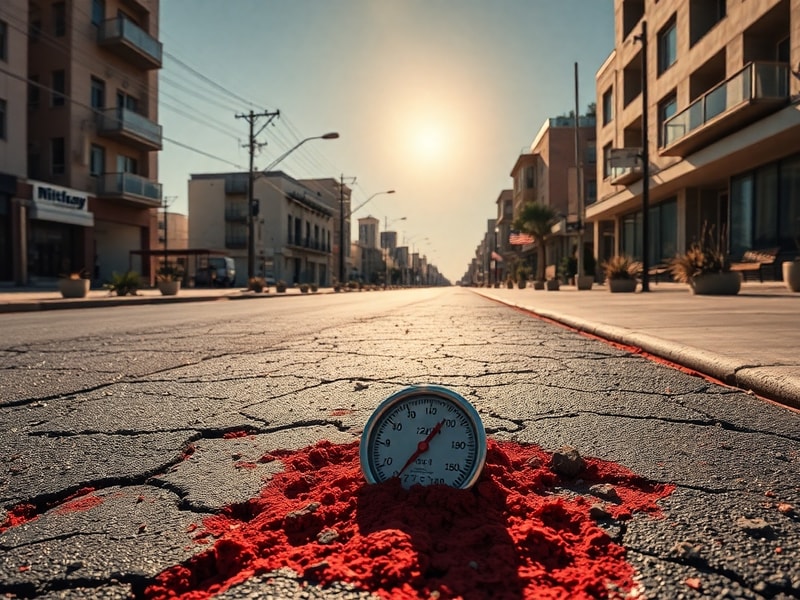
“imageDescription”: “A diverse urban scene at dusk showing people seeking shade under trees and misting stations, with temperature gauges displaying high readings and a background of modern buildings partially blurred by heat haze.”
}
—END METADATA—
“`