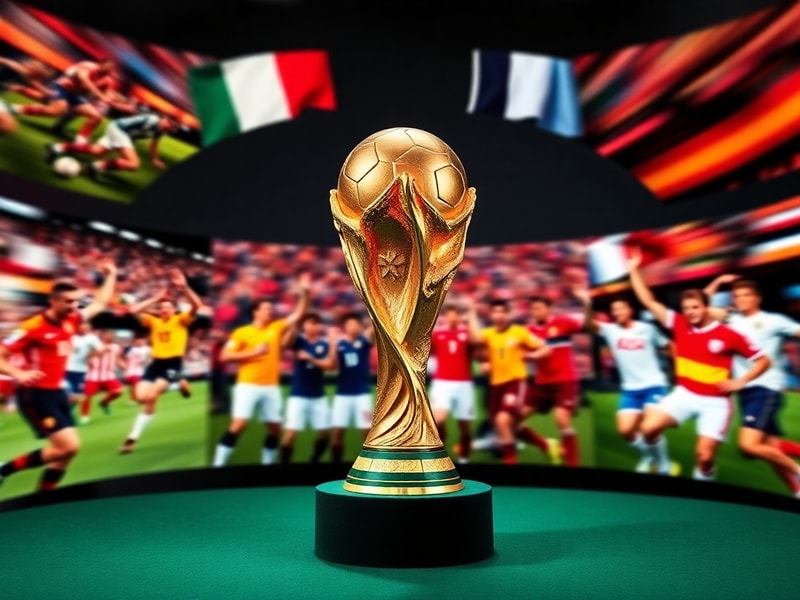
From the inaugural tournament in Uruguay to the modern era, the FIFA World Cup has crowned only eight nations as champions over its 90-year history. This exclusive list tracks every winner, runner-up, and host nation, while examining the broader implications of these victories.
The Complete List of World Cup Winners
Since the first World Cup in 1930, only eight countries have claimed the ultimate prize in men’s soccer. Below is the complete list of champions, including their final opponents and the score.
-
1930: Uruguay defeated Argentina (4-2)
Host: Uruguay -
1934: Italy defeated Czechoslovakia (2-1, a.e.t.)
Host: Italy -
1938: Italy defeated Hungary (4-2)
Host: France -
1950: Uruguay defeated Brazil (2-1)
Host: Brazil -
1954: West Germany defeated Hungary (3-2)
Host: Switzerland -
1958: Brazil defeated Sweden (5-2)
Host: Sweden -
1962: Brazil defeated Czechoslovakia (3-1)
Host: Chile -
1966: England defeated West Germany (4-2, a.e.t.)
Host: England -
1970: Brazil defeated Italy (4-1)
Host: Mexico -
1974: West Germany defeated Netherlands (2-1)
Host: West Germany -
1978: Argentina defeated Netherlands (3-1, a.e.t.)
Host: Argentina -
1982: Italy defeated West Germany (3-1)
Host: Spain -
1986: Argentina defeated West Germany (3-2)
Host: Mexico -
1990: West Germany defeated Argentina (1-0)
Host: Italy -
1994: Brazil defeated Italy (0-0, 3-2 pens)
Host: United States -
1998: France defeated Brazil (3-0)
Host: France -
2002: Brazil defeated Germany (2-0)
Host: South Korea & Japan -
2006: Italy defeated France (1-1, 5-3 pens)
Host: Germany -
2010: Spain defeated Netherlands (1-0, a.e.t.)
Host: South Africa -
2014: Germany defeated Argentina (1-0, a.e.t.)
Host: Brazil -
2018: France defeated Croatia (4-2)
Host: Russia -
2022: Argentina defeated France (3-3, 4-2 pens)
Host: Qatar
Dominant Nations: Who Has Won the Most World Cups?
Brazil stands alone as the most successful nation in World Cup history, with five titles to their name. Germany and Italy follow with four each, while Argentina has claimed three victories, including the most recent in 2022. These numbers reflect not just athletic prowess but also the evolution of soccer tactics and global influence.
- Brazil: 5 titles (1958, 1962, 1970, 1994, 2002)
- Germany: 4 titles (1954, 1974, 1990, 2014)
- Italy: 4 titles (1934, 1938, 1982, 2006)
- Argentina: 3 titles (1978, 1986, 2022)
- France: 2 titles (1998, 2018)
- Uruguay: 2 titles (1930, 1950)
- England: 1 title (1966)
- Spain: 1 title (2010)
Germany’s consistency over decades—despite reunification and tactical shifts—highlights the importance of infrastructure and development. Meanwhile, Argentina’s 2022 triumph under Lionel Messi underscored the enduring power of individual brilliance paired with cohesive team strategy.
Host Nations: Does Being the Host Help?
Host nations have historically enjoyed a significant advantage, with six of the 22 tournaments won by the home side. This phenomenon isn’t merely coincidental; it reflects the psychological boost of playing in front of a supportive crowd, familiarity with conditions, and often preferential scheduling.
The most recent host to win was France in 1998, while Brazil came agonizingly close in 2014 before falling to Germany in a historic 7-1 semifinal defeat. The pattern suggests that while hosting doesn’t guarantee victory, it significantly increases a nation’s chances of deep tournament runs.
“The World Cup is a unique event where the host nation benefits from more than just home-field advantage. The entire country becomes a fortress of support, and that energy can lift a team to unexpected heights.”
— Former FIFA Official
Broader Implications: What Winning the World Cup Means
A World Cup victory transcends sports. It serves as a unifying moment for nations, often boosting morale, tourism, and even economic indicators. For example, France’s 1998 win is credited with fostering national pride during a period of social tension.
Additionally, World Cup success often accelerates the development of soccer infrastructure in winning nations. Brazil’s 1958 triumph, for instance, cemented the country’s reputation as a soccer powerhouse and inspired generations of players. Similarly, Spain’s 2010 victory marked the beginning of a golden era for La Roja, influencing tactical trends worldwide.
Economically, hosting or winning the World Cup can lead to long-term benefits. South Africa’s 2010 tournament, though not won by the host, brought global attention to African soccer and left behind stadiums and facilities that continue to serve local communities.
For emerging soccer nations, the World Cup represents an opportunity to showcase talent on the global stage. While they may not lift the trophy, breakthrough performances—like Morocco’s 2022 quarterfinal run—can elevate the standard of soccer in their regions and attract investment.
Key Takeaways from World Cup History
- Consistency matters: Nations like Germany and Brazil have maintained elite status through decades of adaptation.
- Host advantage is real: Six of 22 tournaments have been won by the host nation.
- Individual brilliance can change history: Players like Pelé, Maradona, and Messi have defined eras through their performances.
- Winning creates legacies: A World Cup triumph often shapes a nation’s soccer identity for generations.
As we look ahead to the 2026 tournament—co-hosted by the United States, Canada, and Mexico—the World Cup continues to evolve. Expansion to 48 teams introduces new opportunities for underrepresented nations, while the growing commercialization of the sport ensures even greater stakes.
For fans, the World Cup remains the pinnacle of soccer drama, where nations rise and fall based on skill, strategy, and sheer will. The winners list is more than just a record; it’s a testament to the global appeal and enduring magic of the beautiful game.
Further Reading
To explore more about soccer history and analysis, visit our Sports and Analysis sections for in-depth coverage of the beautiful game.
© 2023 Dave’s Locker. All rights reserved.