How ‘Restore Britain’ Is Redefining National Identity Through Heritage
“`html
What Is ‘Restore Britain’ and Why It’s Gaining Global Attention
‘Restore Britain’ is more than a slogan. It is a cultural and political rallying cry that has moved from local grassroots initiatives to international headlines. The movement’s core mission is to revitalise British heritage, infrastructure, and national pride without rejecting global connections. What began as a response to post-industrial decline and Brexit-era uncertainty has evolved into a broad coalition of artists, engineers, historians, and activists.
At its heart, ‘Restore Britain’ is about reclaiming identity—not by closing borders, but by strengthening communities. The initiative spans physical restoration projects, such as the refurbishment of historic landmarks and railway lines, as well as digital and cultural revivals, including the preservation of regional dialects and folk traditions. It reflects a growing global trend where nations reassess their past to build a more resilient future.
The Roots of Restoration: From Post-Industrial Towns to National Narratives
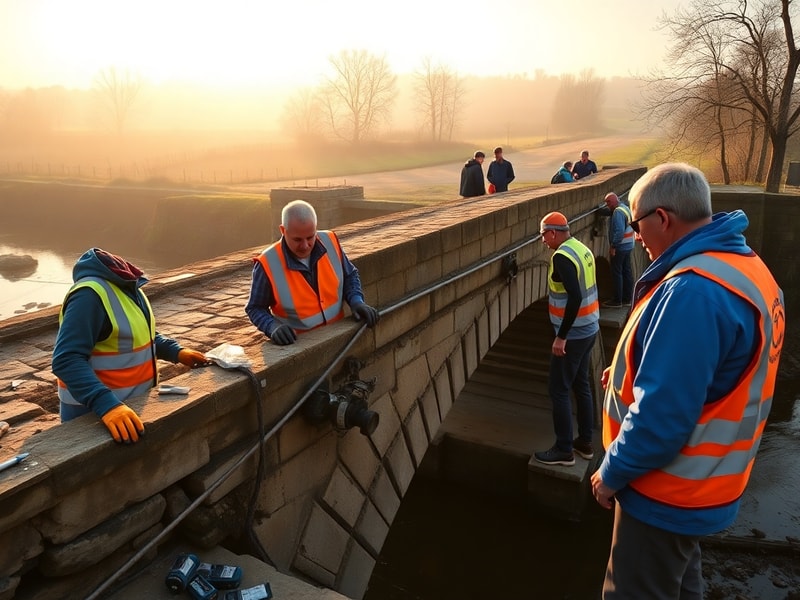
The movement’s origins trace back to the early 2010s, when former industrial towns in the Midlands and North of England faced chronic underinvestment. Local councils and volunteer groups began small-scale restorations of canals, libraries, and public squares. These efforts were not just about aesthetics—they were survival strategies. By 2018, the phrase ‘Restore Britain’ appeared in local media, often tied to regeneration grants and heritage lottery funding.
By 2022, the concept had expanded. A coalition of historians and urban planners launched the National Restoration Pledge, a five-year plan to restore 500 at-risk heritage sites across the UK. This included everything from medieval churches to Victorian-era schools. What makes this initiative notable is its inclusivity: it invites global expertise, especially from former British colonies, to share restoration techniques and funding models.
For example, the restoration of Manchester’s Smithfield Market Hall, a 19th-century iron-and-glass structure, involved collaboration with Australian conservationists who had restored similar market halls in Sydney. This cross-pollination of skills has given ‘Restore Britain’ a distinctly international dimension, turning preservation into a form of soft diplomacy.
Cultural Revival in a Globalised World: Language, Music, and Memory
‘Restore Britain’ is not limited to bricks and mortar. It extends into intangible heritage—language, music, and oral history. The movement has catalysed efforts to document and revive endangered regional languages such as Cornish, Manx Gaelic, and Scots. In 2023, the UK government launched the Voices of Britain archive, a digital repository of oral histories collected from communities across England, Wales, Scotland, and Northern Ireland.
Music has also become a vehicle for restoration. Traditional folk bands, once confined to local pubs, now perform at international festivals, blending old melodies with modern production. The success of artists like Karine Polwart and The Young’uns—who won the BBC Folk Award in 2024—has shown that cultural restoration can be commercially viable and artistically innovative.
The movement’s approach to memory is nuanced. It does not whitewash history. Instead, it acknowledges colonial legacies while focusing on shared futures. A landmark 2023 exhibition at the British Museum, titled Reckoning and Renewal, displayed restored artefacts alongside community-curated responses, inviting visitors to confront difficult histories while celebrating resilience.
A Global Movement with Local Roots: Lessons for Other Nations
‘Restore Britain’ is often compared to similar movements in Japan, where mottainai (the value of cherishing what exists) drives community-led restoration of shrines and rural landscapes. In Italy, the Luoghi del Cuore (Places of the Heart) initiative has restored over 2,000 historical sites through public votes and crowdfunding. These parallels suggest that restoration is not a uniquely British impulse—it is a universal response to rapid change.
Yet ‘Restore Britain’ stands out in its emphasis on reconciliation. While some nationalist movements reject global cooperation, ‘Restore Britain’ thrives on it. It has partnered with UNESCO, the EU’s Horizon Europe programme, and even private foundations in the United States. One notable project saw British stonemasons train Syrian refugees in traditional craftsmanship, using skills honed in restoring medieval cathedrals to rebuild homes in Aleppo.
This approach has not been without controversy. Critics argue that restoration can be nostalgic or politically co-opted. In 2024, a right-wing group attempted to rebrand ‘Restore Britain’ as a nationalist campaign, but the movement’s leadership quickly distanced itself, issuing a statement affirming that restoration must be inclusive and forward-looking.
Looking Ahead: What’s Next for ‘Restore Britain’?
The movement is entering a new phase. In 2025, a £200 million fund will launch to restore coastal towns hit by climate change, combining flood defences with cultural centres. There are also plans to create a British Restoration Corps, a skills exchange programme that will send UK experts to assist in global heritage projects, particularly in Africa and the Caribbean.
Digital tools are playing an increasing role. Virtual reality reconstructions of destroyed heritage sites—such as the Roman baths in Bath or the shipyards of Belfast—allow global audiences to experience British history interactively. This not only preserves memory but also fosters cultural tourism, a key economic driver for post-industrial regions.
Looking beyond the UK, ‘Restore Britain’ offers a model for nations grappling with identity in a globalised world. Whether in Detroit’s revival of Motown heritage, Berlin’s repurposing of Cold War sites, or Cape Town’s restoration of apartheid-era townships, the principle remains the same: renewal begins with respect—for the past, for each other, and for the planet.
Key Takeaways
- Heritage-led regeneration: Restoration is being used to revive economies and communities, not just buildings.
- Global-local fusion: The movement thrives on international collaboration while staying rooted in local needs.
- Cultural pluralism: Restoration includes language, music, and memory, not just physical sites.
- Controversy and clarity: Leaders actively reject nationalist co-optation, ensuring the movement remains open and inclusive.
Conclusion: Restoration as a Path Forward
‘Restore Britain’ is not about turning back the clock. It is about learning how to walk forward with open eyes. By repairing what has been lost—not out of fear, but out of care—it offers a hopeful counter-narrative to the divisions of the modern age. Its success will depend not only on funding and expertise, but on the willingness of people to see restoration as an act of creation, not just preservation.
In a time when many nations are searching for meaning, ‘Restore Britain’ reminds us that identity is not a fixed point, but a living process. One that can be rebuilt, reshaped, and renewed—together.