Eton College: From British Boarding School to Global Powerhouse
“`html
Eton College: Where Tradition Meets Global Influence
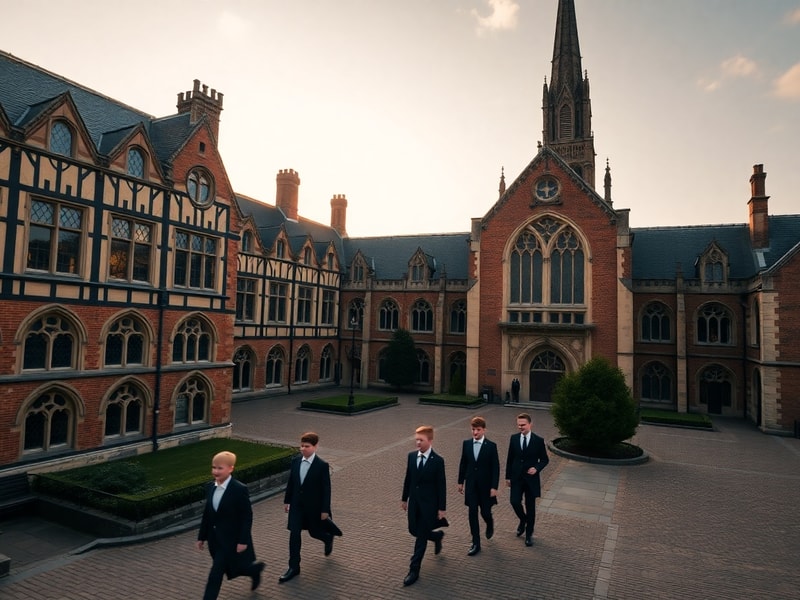
Few institutions carry the weight of history and prestige quite like Eton College. Founded in 1440 by King Henry VI, this British boarding school has evolved from a small royal foundation into one of the world’s most recognizable educational institutions. Its Gothic architecture, strict traditions, and elite alumni have cemented its place in both British and global culture.
But Eton is more than just a relic of the past. It continues to shape leaders across politics, business, and the arts, producing graduates who dominate boardrooms and headline global affairs. To understand its enduring legacy, we must examine its origins, its cultural significance, and its modern-day role in an increasingly interconnected world.
The Founding and Early Years: A Royal Vision
Eton College was established by King Henry VI in 1440, alongside King’s College in Cambridge, as part of a grand educational initiative. The king’s original vision was to provide free education for 70 poor scholars, a mission that reflected the Renaissance ideals of enlightenment and social mobility. However, the school’s early years were turbulent. The Wars of the Roses disrupted Henry VI’s plans, and funding fluctuated under subsequent monarchs.
By the 17th century, Eton had stabilized under the patronage of prominent figures like the Duke of Somerset and later King Charles II. The school’s reputation grew as it became a training ground for the sons of the British aristocracy. Its distinctive collegiate style, with its long walls and towering chapel, became a symbol of English education. The school’s traditions, such as the Fourth of June celebrations, began to take shape during this period, blending academic rigor with ceremonial pageantry.
A Tradition of Excellence: What Defines Eton?
Eton’s identity is built on a foundation of rigid structure and time-honored customs. Students, known as Collegers, wear a uniform that has remained largely unchanged for centuries: a tailcoat, waistcoat, and stiff collar. The school day is highly regimented, with classes, sports, and chapel services meticulously scheduled. This discipline extends beyond academics into every aspect of life at Eton, from the dining hall to the playing fields.
The academic program is equally demanding. Eton offers a broad curriculum that includes classical studies, modern languages, and sciences. However, its strength lies in the Eton College Collections, a vast archive of manuscripts, art, and artifacts that provide students with direct access to centuries of intellectual history. The school’s tutorial system, modeled after Oxford and Cambridge, ensures personalized attention for each student.
- Uniform and Discipline: The tailcoat uniform and strict behavioral codes reinforce a sense of identity and hierarchy.
- Academic Rigor: A blend of traditional subjects and modern disciplines prepares students for top universities.
- Extracurricular Dominance: Sports like rowing and the Eton Wall Game are central to Eton’s culture, fostering teamwork and resilience.
- Global Alumni Network: Graduates join an exclusive fraternity that spans continents and industries.
Eton’s Global Reach: From British Elite to International Leadership
While Eton remains deeply rooted in British tradition, its influence extends far beyond the shores of the United Kingdom. The school’s alumni have shaped global politics, economics, and culture, often occupying positions of immense power. Among its most famous graduates are 20 British prime ministers, including David Cameron and Boris Johnson, as well as international leaders like the former Prime Minister of India, Jawaharlal Nehru.
Eton’s global appeal is not limited to its alumni. In recent decades, the school has attracted students from across the world, drawn by its reputation for academic excellence and its ability to open doors in elite circles. International students now make up a significant portion of the student body, creating a diverse yet tightly knit community. This global perspective is reflected in the school’s curriculum, which includes exchanges with institutions like Phillips Exeter Academy in the United States and Le Rosey in Switzerland.
The Modern Eton: Adapting Without Losing Its Soul
Critics argue that Eton is a bastion of privilege, perpetuating social inequalities by offering an education accessible only to the wealthy. Tuition fees exceed £40,000 per year, placing it out of reach for most families. However, the school has taken steps to address these concerns. Financial aid programs, such as the Eton College Bursary, provide scholarships to talented students from lower-income backgrounds. In 2021, the school announced a £100 million endowment to expand access, signaling a shift toward greater inclusivity.
Eton has also embraced technological advancements without compromising its core values. Digital classrooms and online resources supplement traditional teaching methods, while partnerships with tech firms introduce students to modern industries. Yet, the school remains committed to its historical roots. The annual Fourth of June celebrations, a commemoration of the school’s founding, continue to feature processions, choir performances, and fireworks, blending centuries-old traditions with contemporary flair.
Eton in the 21st Century: Challenges and Controversies
Despite its prestige, Eton is not without its controversies. In recent years, the school has faced scrutiny over allegations of bullying, elitism, and outdated disciplinary practices. A 2020 report by the Independent Schools Inspectorate highlighted concerns about mental health support for students, prompting Eton to revise its pastoral care policies. The school has also been criticized for its slow response to issues of diversity and inclusion, though recent initiatives aim to foster a more welcoming environment.
Another challenge is Eton’s evolving relationship with the British monarchy. Historically, the royal family has played a significant role in the school’s governance, with the monarch serving as the Visitor. However, as the monarchy’s influence wanes in modern Britain, questions arise about Eton’s continued alignment with royal traditions. The school has responded by emphasizing its role as a global institution rather than a purely national one.
Yet, for all its challenges, Eton remains a symbol of educational excellence. Its ability to adapt while preserving its identity is a testament to its resilience. Whether through its alumni’s achievements or its ongoing reforms, Eton continues to shape the leaders of tomorrow.
The Future of Eton: Balancing Tradition and Progress
The next decade will be critical for Eton as it navigates the demands of a rapidly changing world. Climate change, technological disruption, and social inequality are just a few of the issues that will shape its agenda. The school has already begun to address sustainability, with plans to reduce its carbon footprint and integrate environmental studies into its curriculum.
At the same time, Eton must confront its role in perpetuating privilege. While its scholarship programs are a step in the right direction, broader systemic changes may be necessary to ensure that talent, not wealth, determines access. The school’s leadership has acknowledged these challenges, with Head Master Simon Henderson emphasizing the need for “a more diverse and inclusive Eton.”
Ultimately, Eton’s future will depend on its ability to reconcile its past with its present. The school’s traditions are a source of strength, but they must not become a barrier to progress. By embracing innovation while honoring its heritage, Eton can continue to thrive as a beacon of educational excellence.
Conclusion: Why Eton Still Matters
Eton College is more than just a school; it is a living institution that embodies the complexities of tradition, power, and progress. Its history is a tapestry of royal patronage, academic achievement, and global influence, woven together by centuries of students who have passed through its gates. While its elitism and high costs remain contentious, Eton’s contributions to society are undeniable.
In an era where education is increasingly commodified, Eton stands as a reminder of the enduring value of intellectual curiosity, discipline, and community. Whether through its famous alumni or its ongoing reforms, the school continues to shape the world in ways both seen and unseen. As it moves forward, Eton’s challenge will be to remain relevant without losing the very qualities that have defined it for nearly 600 years.
For those who walk its halls, Eton is not just a place of learning—it is an experience that leaves an indelible mark on their lives. And in a world that often prioritizes the new over the old, Eton’s ability to balance innovation with tradition ensures its place in the future.