Married at First Sight USA has become one of the most talked-about reality TV experiments in recent years. The show, now in its 12th season, brings together strangers who agree to marry one another after only a few days of knowing each other. What follows is a rollercoaster of emotions, challenges, and sometimes, unexpected success.
The premise is simple yet radical: match strangers based on scientific compatibility, let them marry immediately, and document their journey over a year. But the reality is far more complex. The show raises questions about love, commitment, and whether destiny can truly be engineered by experts.
The Science Behind the Matches
The heart of Married at First Sight lies in its team of experts. The show relies on a matchmaker and a panel of psychologists and sociologists who analyze compatibility through extensive questionnaires, video interviews, and even genetic testing. The goal is to predict long-term relationship success with data rather than just chemistry.
According to the show’s lead matchmaker, entertainment experts have praised the scientific approach, noting that it adds a layer of credibility to what could otherwise be dismissed as a gimmick. The experts consider factors like attachment styles, conflict resolution tendencies, and even political alignment to pair participants.
However, science doesn’t always get it right. Some matches appear to defy logic, while others that seem perfect on paper quickly fall apart. The show’s format forces viewers to confront whether love can truly be quantified—or if some connections are simply meant to be.
- Psychological Profiling: Participants undergo personality tests to assess compatibility.
- Genetic Testing: Some seasons have included DNA analysis to predict relationship dynamics.
- Expert Consultations: A team of psychologists evaluates long-term potential.
- In-Person Speed Dating: Participants meet briefly to gauge initial reactions.
The Emotional Journey of Strangers Turned Spouses
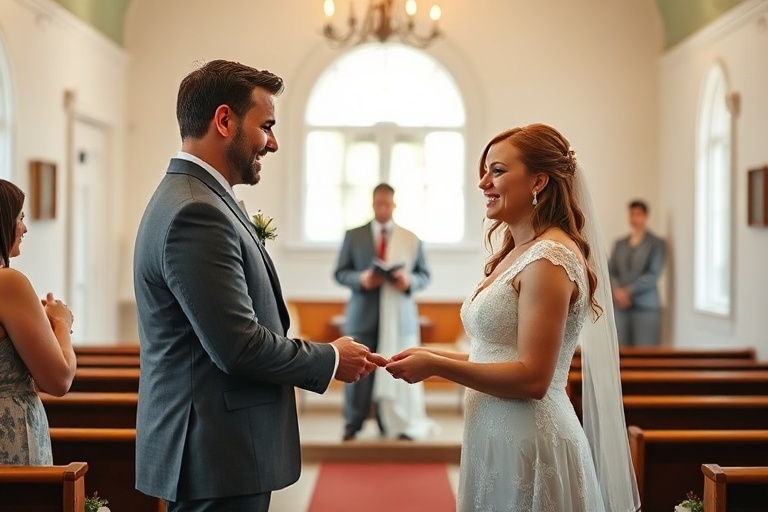
The first moments of the couples meeting are always tense. Forced to walk down the aisle and say “I do” after mere hours of knowing each other, many participants describe the experience as surreal, even terrifying. The show captures raw, unfiltered reactions—some tearful, some hesitant, and some surprisingly confident.
One of the most compelling aspects of the series is watching these relationships evolve—or dissolve—over time. Some couples thrive, finding genuine connection despite their initial doubts. Others realize quickly that their personalities or values are incompatible, leading to early exits.
Viewers often debate whether the show romanticizes impulsive decisions or highlights the fragility of modern relationships. The participants themselves offer a range of perspectives. Some call it fate. Others call it a mistake. A few even admit they were swept up in the drama rather than genuine emotion.
Controversies and Ethical Questions
No discussion of Married at First Sight would be complete without addressing its controversies. Critics argue that the show exploits people’s desires for love and validation, putting them in emotionally vulnerable positions for entertainment. Former participants have spoken out about the psychological toll, with some describing feelings of regret or manipulation.
The show’s producers defend it as a social experiment with real-world implications. They highlight the couples who stay together, some even having children, as proof that the concept works. Yet the high divorce rate among participants—well above the national average—raises ethical concerns.
Another point of contention is the financial incentive. Participants are reportedly paid, which some argue clouds their judgment. Is it possible to separate genuine feelings from the desire for money and fame?
- Exploitation Concerns: Critics argue the show prioritizes drama over participants’ well-being.
- Financial Motivations: Payments to participants may influence their decisions.
- Psychological Impact: Some former couples report long-term emotional distress.
- Cultural Influence: The show shapes perceptions of love and commitment in modern society.
The Aftermath: Who Stays Together?
As of 2024, Married at First Sight has seen a mix of outcomes. Some couples have divorced within months, while others remain married years later. The show’s most enduring couples often cite communication, patience, and a willingness to grow together as key factors in their success.
There’s also the matter of the show’s influence on real-life relationships. Some viewers take inspiration from the experiment, while others dismiss it as unrealistic. Either way, it sparks conversations about how people meet, marry, and navigate commitment in an era where dating apps and social media dominate.
For those interested in the broader culture of reality TV, entertainment trends often reflect societal values. Shows like Married at First Sight tap into a universal human desire: to find love, even if the path is unconventional.
Final Thoughts: Love as an Experiment
Married at First Sight remains a fascinating case study in love, science, and human nature. It challenges traditional notions of romance while providing a platform for open dialogue about relationships. Whether you see it as a groundbreaking social experiment or a cautionary tale, the show undeniably captivates audiences.
Ultimately, the couples who succeed on the show do so not because of the science alone, but because of their willingness to work through differences, communicate openly, and embrace vulnerability. For the rest, the experiment serves as a reminder that love, in all its forms, is unpredictable.
Love may not always follow a formula—but in a world where so many relationships begin with a swipe, perhaps there’s something to be said for a slower, more deliberate approach.