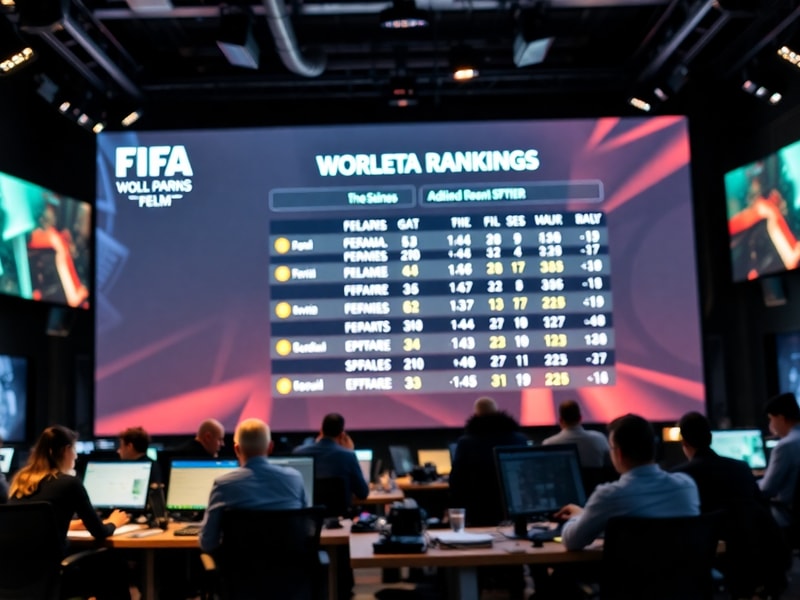
The FIFA World Rankings have been a cornerstone of international football since their introduction in 1992. Designed to measure the relative strength of national teams, the system provides a snapshot of global football hierarchy at any given moment. While debates rage on about its accuracy and fairness, the rankings remain a critical tool for seeding in tournaments, media narratives, and national team strategies.
The rankings’ influence extends beyond mere statistics. They shape public perception, guide investment in football development, and even affect diplomatic relations through the soft power of sport. Understanding how the system works reveals much about modern football’s global dynamics.
The Mechanics Behind the Rankings
The FIFA World Rankings operate on a points-based system that rewards teams for match results, the importance of those matches, and the strength of their opponents. Points are calculated using a formula that considers three key factors: match result, match status, and opponent strength.
A win typically earns teams more points than a draw, but the system also accounts for the context of each match. Friendly matches, for instance, carry less weight than World Cup qualifiers or finals. The opponent’s ranking also plays a role—beating a top-ranked team yields significantly more points than defeating a lower-ranked side.
The rankings are updated monthly, though the timing aligns with major tournaments rather than a strict calendar schedule. This flexibility allows FIFA to adjust the system as needed, though critics argue it still lacks transparency in certain calculations.
How Points Are Calculated
FIFA’s ranking formula can be broken down into these core components:
- Match result: Wins earn 3 points, draws 1 point, and losses 0 points.
- Match status: Friendly matches are worth 1.0, while World Cup matches can reach 4.0.
- Opponent strength: Teams earn more points for defeating higher-ranked opponents, with diminishing returns for beating weaker teams.
- Regional strength: Matches against teams from stronger confederations (like Europe or South America) carry more weight than those against teams from less competitive regions.
This system aims to balance consistency with competitiveness, though it has faced criticism for being overly complex and sometimes favoring certain regions over others.
The Rankings’ Impact on Global Football
The FIFA World Rankings wield significant influence in shaping football’s global landscape. For national teams, a high ranking can mean easier paths in tournaments, financial incentives, and increased prestige. Conversely, poor performances can lead to relegation in qualifiers or diminished media attention.
For confederations like CONCACAF or CAF, rankings determine how many spots a region gets in the World Cup. This has sparked debates about whether the system truly reflects football’s global balance or if it disproportionately favors traditional powerhouses.
Media coverage of the rankings also shapes public perception. A sudden rise in a team’s ranking can lead to increased investment, while a drop may trigger calls for coaching changes or structural reforms. The rankings, therefore, are as much about perception as they are about performance.
Cultural and Economic Implications
Beyond the pitch, the FIFA World Rankings have real-world consequences. A strong ranking can boost a country’s football development funding, attract sponsors, and even influence tourism. Nations like Belgium and Croatia have leveraged their rankings to grow their football brands internationally.
In some cases, rankings have become a point of national pride. Countries that climb the charts—even briefly—often celebrate it as a diplomatic victory. Meanwhile, teams that plummet may face public backlash or political scrutiny over their football governance.
For fans, the rankings provide a sense of where their team stands in the global pecking order. They fuel rivalries, shape expectations, and sometimes even dictate travel plans for supporters chasing continental glory.
Criticisms and Controversies
Despite their importance, the FIFA World Rankings have long been a lightning rod for criticism. Detractors argue that the system lacks transparency, particularly in how weights are assigned to different factors. Others point out that teams from weaker confederations struggle to gain recognition, even with strong performances.
One of the most persistent complaints is the rankings’ failure to account for recent form adequately. A team’s historical strength can outweigh poor performances in the short term, leading to situations where underperforming teams retain high rankings for months.
FIFA has attempted to address these issues with periodic updates, including a revamp in 2018 that introduced a more dynamic system. Yet, debates continue about whether the rankings should prioritize recent results or maintain a longer-term perspective.
Alternatives and Proposals
Some analysts have proposed alternative ranking systems, such as Elo-based models or machine-learning algorithms, to provide more accurate reflections of team strength. These systems often emphasize recent form over historical data, which could benefit teams on the rise.
Others argue for a hybrid approach that combines FIFA’s current system with qualitative assessments from coaches or pundits. Such a model could reduce the reliance on points alone, offering a more nuanced view of global football.
For now, the FIFA World Rankings remain the standard, despite their flaws. Their imperfections highlight the challenges of quantifying a sport as unpredictable as football, where a single tournament can upend years of accumulated points.
Looking Ahead: The Future of the Rankings
The FIFA World Rankings are unlikely to disappear, but their evolution will be closely watched. With football’s global expansion—particularly in Asia and North America—the system must adapt to reflect the sport’s growing diversity.
Technological advancements, such as real-time data analysis, could make rankings more responsive to on-field performances. Meanwhile, calls for greater transparency may push FIFA to explain its calculations more clearly.
For fans and analysts alike, the rankings will continue to serve as a barometer of football’s ever-shifting landscape. Whether they accurately capture the sport’s essence remains a debate without a clear answer, but their role in shaping football’s narrative is undeniable.
One thing is certain: as long as football is played, the world will keep ranking its teams. The challenge lies in ensuring those rankings are as fair and reflective as possible.
For more sports analysis, visit our Sports category.
Explore historical football data in our Analysis section.