Qantas: The Flying Kangaroo’s 100-Year Evolution from Australian Icon to Global Carrier
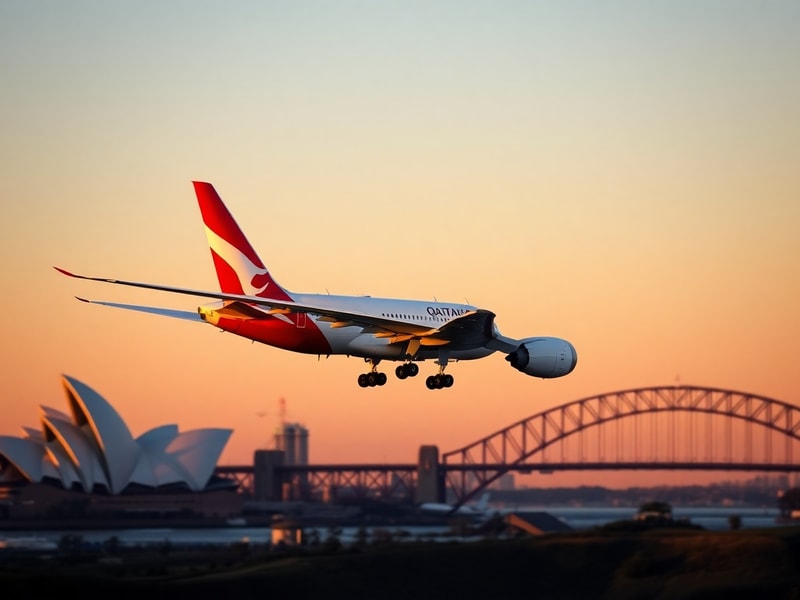
Few airlines carry the cultural weight of Qantas. Founded in November 1920 in the Australian outback with a single biplane, the carrier has grown into one of the world’s most recognizable aviation brands. Known affectionately as “The Flying Kangaroo,” Qantas now operates an expansive network across six continents, connecting travelers to over 80 destinations.
But its journey has not been without turbulence. From pioneering long-haul flights in the 1930s to navigating deregulation, privatization, and global crises like the COVID-19 pandemic, Qantas has repeatedly demonstrated resilience. Today, it stands as a symbol of Australian identity and a case study in how national carriers evolve in a globalized aviation sector.
A Legacy Built on Firsts: Innovation in the Skies
Qantas didn’t just grow—it led. In 1935, it launched the first regular international passenger service in the Southern Hemisphere, flying from Brisbane to London via Singapore. This 12,754-kilometer route, operated with a de Havilland DH.86, set a new standard for long-distance travel and cemented Qantas’ reputation for innovation.
The airline continued pushing boundaries. In 1947, it introduced the first pressurized cabin service in Australia, improving passenger comfort on high-altitude flights. By 1959, Qantas became the first carrier outside Europe and North America to operate jet aircraft, introducing the Boeing 707 into its fleet. These milestones weren’t just technical achievements—they reflected Australia’s ambition to assert itself beyond the Pacific.
Even in branding, Qantas was ahead of its time. The iconic kangaroo logo, introduced in 1944, became one of the first corporate symbols to be trademarked internationally. It transformed the airline from a regional player into a globally recognized brand, long before digital marketing existed.
From Public to Private: The Politics of Deregulation
For decades, Qantas operated as a government-owned enterprise, reflecting Australia’s post-war economic policies. But in the 1990s, the winds of change blew through Canberra. The Hawke-Keating government initiated a wave of economic reforms, including the privatization of national assets.
In 1993, Qantas was partially privatized through a public share offering. By 1995, the government sold its remaining stake, completing the transition to full private ownership. This shift brought both challenges and opportunities. On one hand, private ownership allowed for greater operational flexibility and access to global capital markets. On the other, it exposed Qantas to the pressures of competition, shareholder expectations, and international market fluctuations.
The privatization era also marked the beginning of intense rivalry with Virgin Australia, a low-cost carrier that emerged in 2000. The competition reshaped Australia’s domestic aviation landscape, forcing Qantas to rethink its business model. It responded by launching Jetstar in 2004, a budget airline that allowed Qantas to compete directly in the price-sensitive market while protecting its premium brand.
Global Alliances and the Race for Partnerships
In the 21st century, no airline survives in isolation. Qantas recognized this early, becoming a founding member of the Oneworld alliance in 1999. The alliance, which includes American Airlines, British Airways, and Japan Airlines, among others, allows Qantas to offer seamless connections across six continents.
Alliances like Oneworld are more than just ticketing agreements—they’re strategic networks that enhance loyalty programs, streamline operations, and expand market reach. For Qantas, the partnership has been crucial in maintaining its status as a leading carrier between Australia and Europe, the Americas, and Asia.
Yet, alliances come with dependencies. When global travel halted during the COVID-19 pandemic, all alliance members suffered. Qantas grounded much of its fleet, furloughed thousands of staff, and relied heavily on government support. The crisis exposed vulnerabilities in even the most robust partnerships.
The COVID-19 Shock and the Road to Recovery
March 2020 marked a turning point. As borders closed and planes were grounded worldwide, Qantas faced an existential threat. International passenger numbers dropped by over 99%. The airline parked 100 aircraft and applied for a $1.2 billion loan from the Australian government. It also controversially furloughed 20,000 employees and cut executive salaries by up to 100%.
The recovery has been uneven. Domestic travel rebounded faster than international, thanks to Australia’s strict but ultimately short-lived border controls. By 2023, Qantas reported a return to profitability, though it warned that long-haul demand would take years to fully recover. The airline also faced scrutiny over its handling of refunds and customer service during the crisis.
Despite the challenges, Qantas used the downtime strategically. It accelerated fleet modernization, retiring older Boeing 747s and introducing Airbus A350s for future ultra-long-haul routes. It also expanded its freight operations, capitalizing on the surge in e-commerce during lockdowns.
Sustainability in the Jet Age: Can Qantas Lead the Green Skies?
As climate change becomes a defining issue of the 21st century, airlines face increasing pressure to reduce emissions. Qantas has pledged to reach net-zero carbon emissions by 2050, a target that aligns with global aviation targets set by the International Air Transport Association (IATA).
To achieve this, the airline is investing in sustainable aviation fuel (SAF), which can reduce lifecycle emissions by up to 80%. Qantas has committed to using 10% SAF in its fuel mix by 2030. It’s also exploring hydrogen-powered aircraft and electric planes for regional routes, though these technologies remain in early development.
Yet, critics argue that such pledges are largely symbolic without faster industry-wide action. Aviation currently accounts for about 2.5% of global CO2 emissions—a share that could grow as air travel expands. For Qantas, balancing sustainability with profitability remains one of its toughest modern challenges.
The Future of Qantas: Challenges and Opportunities
Looking ahead, Qantas faces a complex landscape. Domestically, it must defend its market share against both legacy rivals like Virgin Australia and new entrants like Bonza, a low-cost airline launched in 2023. Internationally, it competes with Middle Eastern carriers like Emirates and Asian giants such as Singapore Airlines, all vying for lucrative Australia-Europe and Australia-Asia routes.
One of Qantas’ key strategies is premiumization—focusing on business and first-class travelers who drive a disproportionate share of profits. Its flagship “Project Sunrise” initiative aims to launch non-stop flights between Sydney, Melbourne, and London using Airbus A350-1000s. These ultra-long-haul services could redefine global air travel, but they carry high financial risk.
Culturally, Qantas remains a point of pride for Australians. It’s often featured in films, literature, and music as a symbol of national resilience and aspiration. The airline’s in-flight magazine, Qantas Travel Insider, has become a cultural artifact in its own right, offering a curated view of global destinations and Australian identity.
As Qantas celebrates its centenary in 2020, it stands at another crossroads. The next decade will test its ability to adapt—whether through innovation, sustainability, or strategic partnerships. One thing is certain: the Flying Kangaroo’s journey is far from over.
The People Behind the Wings: Qantas in Cultural Context
Beyond the aircraft and routes, Qantas is shaped by the people who work within it. Flight attendants, known as “Qantas Cabin Crew,” are trained to embody the airline’s values of safety, service, and Australian hospitality. Their uniforms—often featuring the kangaroo emblem—are instantly recognizable, even in airports halfway around the world.
The airline has also played a role in shaping Australian migration and tourism. For decades, it was the primary gateway for immigrants arriving in Australia, many of whom settled in Sydney or Melbourne. Today, Qantas partners with tourism boards to promote destinations like the Great Barrier Reef, Uluru, and the Great Ocean Road, reinforcing the link between travel and national identity.
In popular culture, Qantas has been immortalized in songs, films, and even slang. The phrase “I’m on a Qantas flight” is shorthand for embarking on a journey, whether literal or metaphorical. Its presence in media reflects its status as more than an airline—it’s a cultural institution.
The Global Stage: How Qantas Compares to Other National Carriers
To understand Qantas’ place in the world, it’s worth comparing it to other national carriers. Like Singapore Airlines, it balances premium service with operational efficiency. Like Emirates, it leverages its geographic location to connect continents. But unlike many state-owned airlines in the Middle East or Asia, Qantas operates independently, without government subsidies.
This independence brings both freedom and risk. It allows for agility but also exposes the airline to global market forces. In a sector dominated by government-backed rivals, Qantas’ privatized model is both its strength and its vulnerability.
Despite this, the airline remains a benchmark for quality and safety. It has maintained a five-star rating from Skytrax for over two decades and has one of the best safety records in global aviation, with no fatal accidents since 1951.
Conclusion: More Than Just an Airline
Qantas is more than a transportation company. It’s a historical artifact, a cultural symbol, and a business innovator. From its humble beginnings in outback Queensland to its current role as a global carrier, it reflects Australia’s own journey—ambitious, resilient, and constantly evolving.
As the aviation industry transforms under the pressures of climate change, digital disruption, and geopolitical shifts, Qantas’ ability to adapt will determine its next chapter. One thing is certain: the Flying Kangaroo isn’t ready to land just yet.