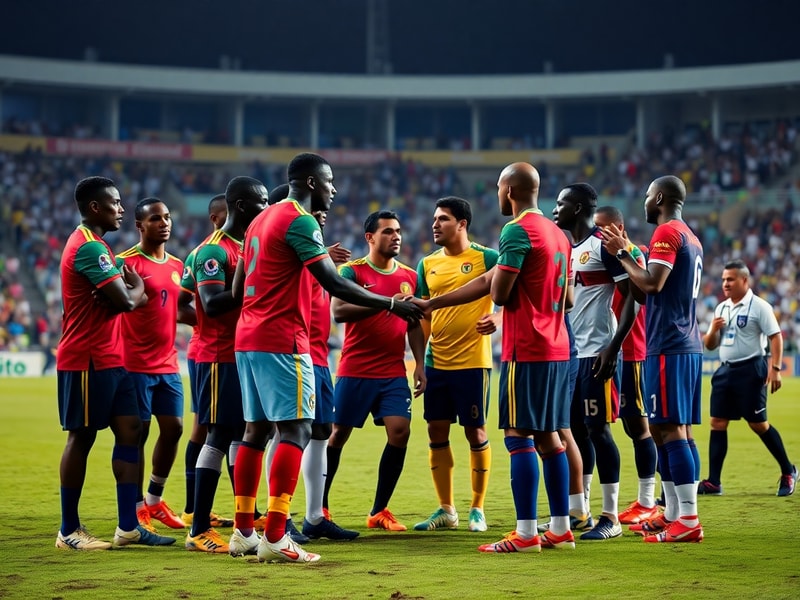
Last month’s international friendly between Ghana and Panama delivered more than just goals—it offered a glimpse into the evolving strategies of both teams ahead of upcoming tournaments. Played under heavy rain in a nearly empty stadium, the match ended 1-1, but the tactical nuances told a richer story.
The Match in Context: Why This Friendly Mattered
Friendly matches often serve as preparation grounds, but this encounter carried extra significance. For Ghana, it was an opportunity to test a new generation of players against a team that punched above its weight in recent competitions. Panama, meanwhile, used the game to fine-tune their pressing system under new coaching staff. The result—despite the weather—highlighted both progress and lingering challenges.
The match kicked off in torrential rain, forcing both teams to adapt quickly. Ghana, traditionally reliant on fluid wing play, struggled to find space in the muddy conditions. Panama, however, thrived in the physicality, using their height advantage to dominate aerial duels. This tactical contrast set the tone for the entire match.
Key Moments That Defined the Game
- Ghana’s Early Dominance: In the first 20 minutes, Ghana controlled possession with quick transitions, but their final ball remained inconsistent. A missed chance by Jordan Ayiah summed up their struggles to capitalize.
- Panama’s Direct Approach: Under pressure, Panama reverted to long balls, finding their towering striker, José Fajardo, repeatedly. This forced Ghana’s backline into repeated clearances.
- The Equalizer: Just before halftime, Panama capitalized on a defensive error, with Fajardo heading in from a corner—a moment that shifted momentum.
- Ghana’s Late Response: In the second half, Ghana introduced fresh legs, including new signing from European club football, which injected more creativity. Their equalizer came from a well-worked set piece, proving their tactical flexibility.
Tactical Analysis: How Each Team Adapted
Ghana’s coach opted for a 4-3-3 formation, but the rain disrupted their usual rhythm. Their midfield trio of Daniel Afriyie, Abdul Fatawu, and Thomas Agyepong struggled to maintain possession under pressure. Panama, playing in a 4-2-3-1, pressed higher and forced Ghana into errors. Their wingers, José Luis Rodríguez and Cecilio Waterman, caused constant problems down the flanks.
By the second half, Ghana adjusted by switching to a 3-5-2 in possession, allowing their full-backs to push higher. This created more passing lanes, but Panama’s disciplined defensive block limited clear-cut chances. The match’s tactical battle was less about innovation and more about resilience in difficult conditions.
Individual Performances Under the Microscope
- Joseph Wollacott (Ghana GK): Made crucial saves in the second half, including a reflex stop from a Rodríguez effort. His command of the box was reassuring.
- Joseph Aidoo (Ghana CB): Struggled with Panama’s physicality early but improved in the second half, organizing the backline effectively.
- José Fajardo (Panama ST): A constant menace, his hold-up play and aerial ability caused Ghana’s defense repeated problems. His goal was fully deserved.
- Abdul Fatawu (Ghana AM): Showed glimpses of his talent but was often crowded out by Panama’s midfield. His work rate, however, was notable.
What This Means for Both Teams Moving Forward
For Ghana, the match was a reality check. Their preparations for the upcoming African Cup of Nations qualifiers will need to address two key issues: improving final third efficiency and adapting to high-pressure opponents. The new signings arriving from Europe could provide the creativity needed to unlock stubborn defenses.
Panama, on the other hand, will take confidence from their physical approach. Their coach’s emphasis on direct play and set-piece dominance proved effective against a team of Ghana’s stature. However, their lack of midfield control in possession could be exploited by more technical sides. The match was a reminder that Panama is no longer an easy opponent—they’re a team with clear tactical identity.
Lessons for Fans and Analysts
The Ghana vs Panama friendly wasn’t just about the result—it was a microcosm of wider trends in international football. Teams from smaller federations are increasingly adopting structured, physical styles to compete with traditional powerhouses. Meanwhile, African teams like Ghana are balancing youth development with the need for immediate results.
The match also underscored the importance of adaptability. Both teams had to adjust mid-game due to the weather, a factor often overlooked in pre-match planning. For coaches, the ability to make real-time decisions remains as crucial as any tactical setup.
Final Thoughts: A Match That Tells a Bigger Story
In the end, Ghana and Panama left the pitch with mixed emotions. Ghana will feel they should have taken all three points, while Panama will view the draw as a step forward. Both teams, however, gained valuable insights.
What stood out most was not the scoreline, but the resilience shown by both sides. In an era where friendlies often lack intensity, this match delivered moments of real competition. It’s a reminder that even in non-competitive fixtures, the margins between success and disappointment can be razor-thin.
As both teams look ahead to their next challenges, their fans can take solace in knowing their sides are progressing—albeit in different ways. For Ghana, the focus must be on refining their attack. For Panama, the lesson is clear: physicality and structure can be powerful weapons.
This analysis was brought to you by Dave’s Locker, where we break down the game beyond the highlights.