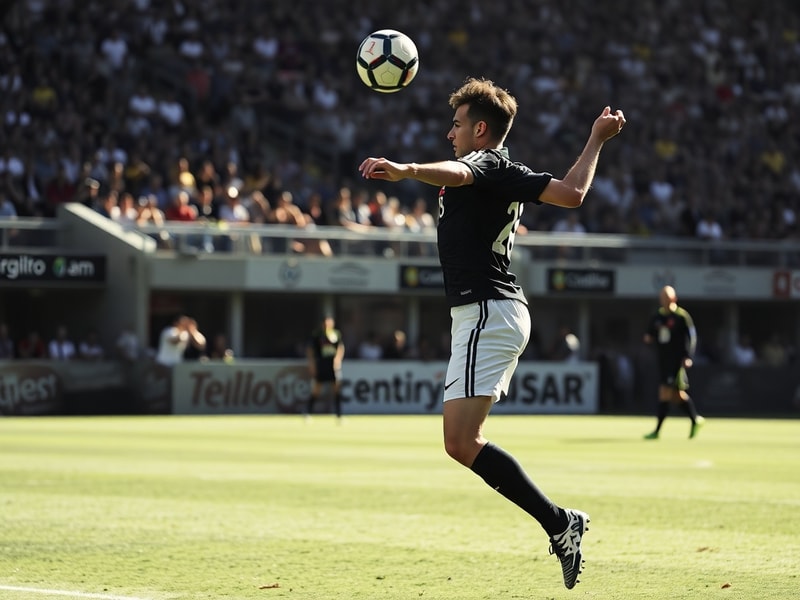
Few defenders in football history have carried the weight of national pride and tactical evolution as effectively as Fabio Cannavaro. Born on September 13, 1973, in Naples, Italy, Cannavaro rose from the working-class neighborhoods of the city to become one of the most decorated defenders of his generation. His career, spanning over two decades, is a testament to resilience, tactical intelligence, and an unshakable belief in defensive principles.
Cannavaro’s journey to greatness began at Napoli, the club he supported as a child. Unlike many talents who leave their hometown clubs early, Cannavaro stayed through his formative years, absorbing the physicality and passion of Serie A football. His breakthrough came under manager Marcello Lippi at Parma, where he refined his defensive skills and developed the leadership qualities that would define his career. By the late 1990s, Cannavaro had established himself as one of Europe’s most reliable center-backs, known for his anticipation, aerial dominance, and ability to read the game.
The Rise of a Defensive Icon
Cannavaro’s international breakthrough coincided with Italy’s resurgence in the late 1990s and early 2000s. He made his debut for the Azzurri in 1997 and quickly became a cornerstone of the national team under Lippi. His partnership with Alessandro Nesta at the heart of Italy’s defense during Euro 2000 showcased his ability to thrive under pressure, even as Italy fell just short in the final against France.
A defining moment in Cannavaro’s career came during the 2006 FIFA World Cup in Germany. At 33 years old, he captained Italy to victory, delivering a masterclass in defensive organization and composure. His performance in the tournament was nothing short of iconic. In the final against France, he neutralized Thierry Henry and Zinedine Zidane, particularly in the extra time when Zidane’s headbutt on Marco Materazzi led to Italy’s victory in the penalty shootout. Cannavaro’s leadership and defensive acumen earned him the Ballon d’Or that year, making him the first defender to win the award since Franz Beckenbauer in 1976.
This achievement cemented his legacy not just as a great defender, but as one of football’s all-time greats. His World Cup triumph remains a high point in Italian football history, a rare moment of collective joy in a sport often defined by tactical battles and defensive grit.
A Legacy Built on Tactical Brilliance
Cannavaro’s playing style was a blend of aggression and intelligence. Standing at just 5’9”, he relied on his timing, positioning, and physicality to dominate aerial duels and tackle situations. His ability to step out of defense and intercept passes was a hallmark of his game, and his vocal presence on the pitch ensured that teammates remained organized.
During his prime, Cannavaro was often compared to other legendary Italian defenders like Franco Baresi and Gaetano Scirea. Like them, he possessed an innate understanding of defensive structures and the ability to play out from the back. This made him a perfect fit for both club and country under systems that prioritized possession and controlled transitions.
At club level, Cannavaro’s most successful stint came at Real Madrid, where he won two La Liga titles and a UEFA Champions League medal. His partnership with Iván Helguera and later Sergio Ramos showcased his adaptability. While critics argued that his time in Spain was past his prime, Cannavaro’s influence was undeniable. He brought stability to a defense that had previously struggled with consistency, and his experience was invaluable in guiding younger players.
His later years at Juventus and briefly at Al-Ahli in Dubai demonstrated his enduring professionalism. Even as his pace declined, Cannavaro’s reading of the game and ability to position himself correctly kept him relevant. This adaptability is a key reason why he is regarded as one of the most complete defenders in football history.
Cannavaro’s Influence Beyond the Pitch
Cannavaro’s impact extended beyond his playing career. After retiring in 2011, he transitioned into coaching, initially as an assistant at Al-Ahli before taking on roles at Guangzhou Evergrande and Tianjin Quanjian in China. His coaching philosophy mirrored his playing style: emphasis on defensive organization, pressing triggers, and a clear tactical identity.
Cannavaro’s post-retirement journey has not been without controversy. His tenure in China was marked by mixed results, and he faced criticism for his handling of dressing room dynamics. Yet, his commitment to developing young players and his deep understanding of the game remain widely respected. In interviews, he often emphasizes the importance of hard work and tactical discipline, values he instilled during his playing days.
Off the pitch, Cannavaro has been involved in various charitable initiatives, particularly in his native Naples. His connection to the city and its people has remained strong, and he has used his platform to support local causes, including youth football development programs. This aspect of his persona adds depth to his legacy, showing a man who values community and responsibility as much as sporting success.
The Enduring Appeal of Cannavaro’s Story
Cannavaro’s career offers several lessons that resonate beyond football. His rise from a working-class background to global stardom is a story of perseverance and belief. In an era where attacking players often steal the spotlight, Cannavaro’s defensive mastery reminds us of the beauty and necessity of solidity at the back.
For young players aspiring to become defenders, Cannavaro’s career is a masterclass in how to excel without the ball. His ability to influence games without scoring or creating highlights speaks to the quiet power of defensive excellence. It’s a reminder that football is a team sport, and every role, no matter how unglamorous, is vital to success.
Cannavaro’s legacy is also a reflection of Italian football’s golden era. Alongside players like Gianluigi Buffon, Andrea Pirlo, and Francesco Totti, he was part of a generation that blended tactical sophistication with flair. This era produced some of the most tactically astute teams in history, and Cannavaro was at its core.
Today, Cannavaro remains a sought-after pundit and ambassador for the game. His insights into modern football, particularly the challenges faced by defenders in an era dominated by attacking transitions, are highly valued. Whether discussing the evolution of the sweeper role or the increasing importance of ball-playing defenders, Cannavaro’s perspective is rooted in experience and wisdom.
Key Takeaways from Cannavaro’s Career
- Defensive Mastery: Cannavaro’s positioning, timing, and leadership set him apart as one of the greatest defenders of all time.
- Tactical Intelligence: His ability to adapt to different systems and eras demonstrates his deep understanding of the game.
- Leadership: Captaining Italy to World Cup glory in 2006 remains his crowning achievement, showcasing his ability to inspire and organize.
- Longevity: His career spanned over two decades, proving that defensive excellence is timeless when built on fundamentals.
- Mentorship: His transition into coaching highlights his commitment to passing on knowledge to the next generation.
As football continues to evolve, Cannavaro’s legacy serves as a benchmark for defensive excellence. In an era where attacking players often dominate headlines, his career is a reminder of the beauty and necessity of a strong defense. For fans and players alike, Cannavaro represents the art of defending at its highest level—a blend of instinct, intelligence, and unyielding commitment.
His story is one of quiet dominance, where the greatest victories are not always celebrated with goals or trophies, but with the knowledge that the foundation of success was unbreakable.
For more insights into legendary football careers, explore our Sports and Analysis sections.