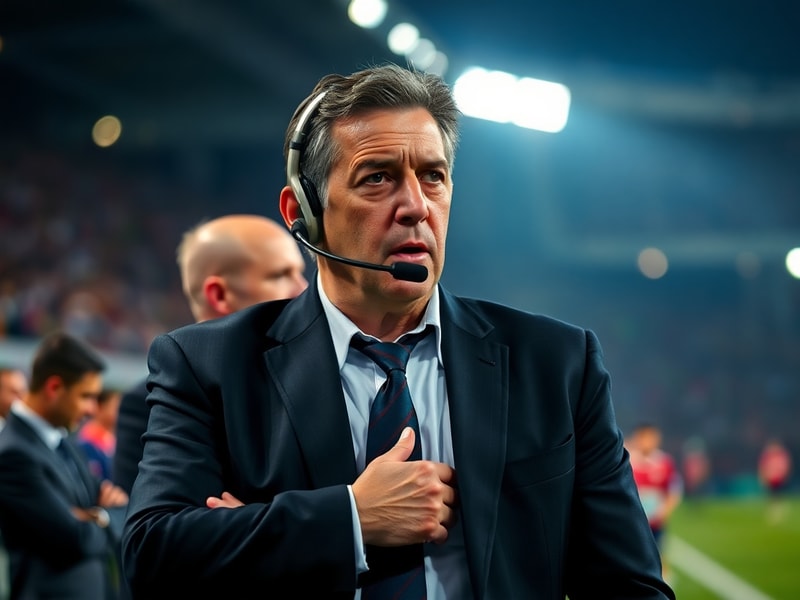
Carlos Queiroz stands as one of football’s most enduring and itinerant figures, a coach whose career has stretched across four decades and five continents. Known for his meticulous tactical approach and an unyielding commitment to defensive organization, Queiroz has left an indelible mark on the game, both as a coach and as a mentor to generations of players and coaches. His journey is not merely a chronological list of clubs and countries, but a testament to adaptability, resilience, and a deep understanding of the sport’s evolving demands.
Queiroz’s influence extends beyond the touchline. As an assistant to Sir Alex Ferguson at Manchester United during the late 1990s, he was part of one of the most successful managerial teams in English football history. His later roles with national teams, including Iran and Morocco, have showcased his ability to elevate squads to new heights on the global stage. This article explores Queiroz’s career trajectory, his tactical philosophy, and the enduring legacy he continues to build.
Early Career and Rise in Portuguese Football
Carlos Queiroz was born on March 1, 1953, in Nampula, Mozambique, then a Portuguese colony. He began his coaching career in Portugal, where he quickly gained recognition for his analytical mind and disciplined approach. His early work with clubs like Estoril Praia and Nacional da Madeira laid the foundation for a career that would soon take him across Europe and beyond.
Queiroz’s big break came in 1984 when he joined Sporting CP as an assistant coach. His partnership with manager Keith Burkinshaw proved successful, and Queiroz was soon entrusted with more responsibilities. By 1989, he had taken over as head coach at Sporting, leading the club to the Portuguese Cup in his first season. This early success demonstrated his ability to blend tactical discipline with man-management, qualities that would define his career.
His tenure at Sporting was just the beginning. Queiroz’s reputation as a coach who could develop young talent while maintaining a structured system caught the attention of clubs and federations across Europe. His work in Portugal set the stage for a global career that would span over 30 years.
Assistant to Ferguson: The Manchester United Years
In 1997, Queiroz joined Manchester United as an assistant coach under Sir Alex Ferguson. This period marked a pivotal chapter in his career, as he became part of one of the most successful managerial teams in football history. During his time at Old Trafford, Queiroz played a key role in shaping the squad’s development, particularly in identifying and integrating young talent.
Queiroz’s influence was evident in the club’s youth development system. He worked closely with Ferguson to refine the academy structure, ensuring that players like David Beckham, Ryan Giggs, and Paul Scholes received the technical and tactical grounding needed to excel at the highest level. His emphasis on positional play and defensive structure became integral to United’s identity during this era.
Queiroz’s time at Manchester United also provided him with invaluable experience in managing top-level players and navigating the pressures of elite football. His ability to communicate complex tactical ideas in a clear and concise manner earned him respect within the club’s hierarchy. This experience would later serve him well as he transitioned into head coaching roles across Europe and Asia.
A Global Career: From South Africa to Iran and Beyond
Queiroz’s post-Man United career was defined by a willingness to take on challenges in diverse footballing landscapes. His first major head coaching role after leaving United was with South Africa in 2000. He guided the national team to the 2002 FIFA World Cup, a tournament that saw South Africa advance from the group stage—a rare achievement for an African side at the time. This accomplishment underscored Queiroz’s ability to adapt his tactics to different styles of play and elevate the performance of national teams.
Queiroz’s next stop was Real Madrid in 2003, a role that highlighted both his strengths and the challenges of managing elite clubs. His tenure at the Santiago Bernabéu was marked by a focus on defensive solidity, which clashed with the club’s tradition of attacking football. Despite his tactical acumen, he was dismissed in 2004 after a disappointing season. The experience at Real Madrid, while short-lived, provided Queiroz with firsthand insight into the complexities of managing a club of such stature.
Queiroz’s most notable international tenure came with Iran, where he served as head coach from 2011 to 2019. During his time with the national team, he led Iran to two FIFA World Cup appearances (2014 and 2018), a feat that cemented his reputation as a coach capable of achieving success on the global stage. His work with Iran also demonstrated his ability to blend technical and tactical development with cultural sensitivity, a skill honed over decades of working in diverse footballing environments.
Queiroz’s global career is a testament to his adaptability. Whether in the Middle East, Africa, or Asia, he has consistently demonstrated an ability to implement his footballing philosophy while respecting the unique challenges of each region. His willingness to take on roles in less traditional footballing markets has set him apart from many of his peers.
Tactical Philosophy and Coaching Legacy
Queiroz’s tactical approach is rooted in defensive organization and structured pressing. He prioritizes positional discipline, often deploying a flexible 4-2-3-1 or 4-1-4-1 formation that allows for quick transitions and counterattacks. His teams are known for their compactness in defense and their ability to exploit spaces in transition, a style that has proven effective across different leagues and competitions.
One of Queiroz’s defining traits is his emphasis on youth development. Throughout his career, he has championed the integration of young players into senior squads, a philosophy that has yielded dividends in clubs like Manchester United and national teams like Iran. His belief in structured development pathways has influenced a generation of coaches who prioritize long-term player growth over short-term results.
Queiroz’s coaching legacy extends beyond tactics and player development. He is widely respected for his leadership and man-management skills. Players and staff who have worked with him often highlight his ability to foster a positive team culture while maintaining high standards. This combination of tactical rigor and human-centric leadership has made him a sought-after figure in football.
His influence can be seen in the careers of many coaches who have worked under him. The principles he instilled in his assistants and players have rippled through the game, contributing to the evolution of coaching methodologies worldwide. Queiroz’s career is a reminder that success in football is not just about tactics, but about creating environments where players and staff can thrive.
Queiroz’s Impact on National Teams
Queiroz’s work with national teams has been particularly impactful. His tenure with Iran is a case in point. When he took over in 2011, Iran was a team with potential but lacking consistency. Queiroz’s structured approach, combined with his ability to integrate young talent, transformed the national side into a competitive force in Asian football. Under his guidance, Iran won the AFC Asian Cup in 2019, a tournament that showcased the team’s technical and tactical maturity.
Queiroz’s strategies for national teams often revolve around building a cohesive unit that can compete against more established sides. His emphasis on defensive solidity and structured play has allowed teams like Iran and South Africa to punch above their weight in international competitions. This ability to elevate national teams is a testament to his adaptability and his understanding of the unique pressures of international football.
Looking Ahead: The Next Chapter
As of 2024, Carlos Queiroz remains active in football, continuing to share his expertise with clubs and federations around the world. His recent roles have included stints as a technical advisor and consultant, roles that allow him to influence the game without the day-to-day pressures of head coaching. Queiroz’s ongoing contributions underscore his enduring passion for the sport and his desire to leave a lasting impact.
Queiroz’s career offers several lessons for aspiring coaches. His ability to adapt to different footballing cultures, his emphasis on youth development, and his commitment to tactical discipline are principles that resonate in today’s game. For clubs and federations seeking experienced leaders, Queiroz remains a model of consistency and professionalism.
Looking to the future, Queiroz’s potential return to club management or a high-profile national team role would be eagerly anticipated by the footballing world. His wealth of experience and his reputation for developing players and teams make him a valuable asset in any footballing environment.
Queiroz’s Enduring Influence
Carlos Queiroz’s career is a reminder that success in football is not just about short-term results, but about building sustainable systems and cultures. His journey from Mozambique to the sidelines of some of the world’s biggest clubs and national teams is a testament to his resilience, adaptability, and deep understanding of the game. For fans and aspiring coaches alike, Queiroz’s career offers a blueprint for longevity and impact in football.
As the game continues to evolve, Queiroz’s contributions will likely be remembered as foundational to modern coaching methodologies. His emphasis on tactical discipline, youth development, and structured play has left an indelible mark on the sport, influencing generations of coaches and players.
For those interested in exploring more about tactical evolution in football or the careers of influential coaches, visit our Analysis and Sports sections for further reading.