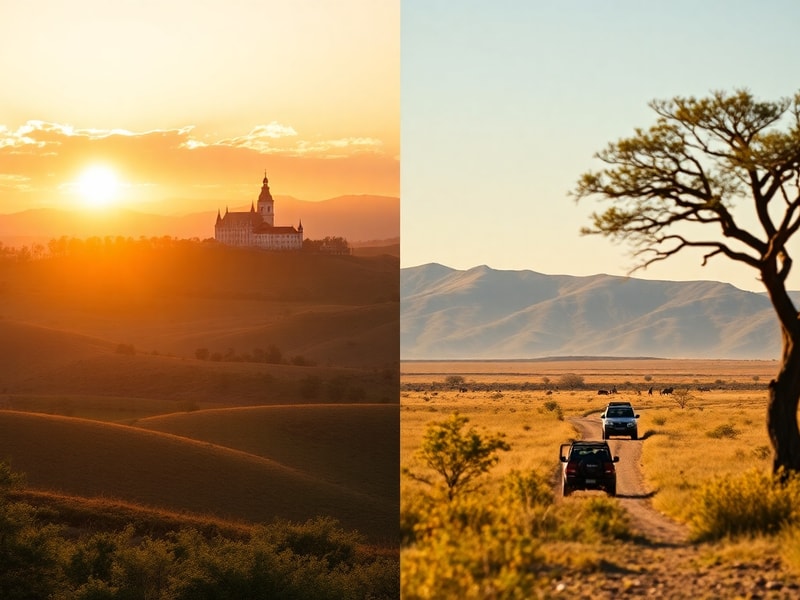
When examining the global landscape, two nations often stand out for their unique cultural heritage, economic trajectories, and geopolitical significance: Czechia (formerly the Czech Republic) and South Africa. Despite their geographical and developmental differences, both countries offer rich histories and distinct identities that shape their roles in international affairs.
Czechia, a landlocked nation in Central Europe, boasts a well-developed economy and a deep-rooted European cultural identity. South Africa, on the other hand, is a diverse African nation known for its complex history, natural resources, and emerging market status. Comparing these two nations reveals contrasts in governance, economic strategies, and societal progress that are worth exploring.
The Economic Landscape: Stability vs Emerging Potential
Czechia’s economy is one of the most stable in Central Europe. The country benefits from its integration into the European Union, which provides access to a vast single market and substantial foreign investment. Its industrial base, particularly in automotive manufacturing and machinery, drives export-led growth. The Czech koruna remains a stable currency, and the nation consistently ranks high in economic freedom indices.
South Africa presents a different economic picture. As Africa’s most industrialized economy, it has a diversified base that includes mining, agriculture, and services. However, challenges such as high unemployment (over 30% in recent years) and persistent inequality hinder sustained growth. The Johannesburg Stock Exchange is the largest in Africa, yet the country grapples with infrastructure deficits and energy crises that dampen investor confidence.
While Czechia enjoys steady GDP growth and low inflation, South Africa’s economy is more volatile, shaped by global commodity prices and internal policy shifts. Both nations prioritize foreign direct investment, but their approaches differ significantly—Czechia leverages its EU membership, while South Africa focuses on regional integration through the African Continental Free Trade Area.
Key Economic Indicators Comparison
- GDP per capita (nominal, 2023): Czechia – $28,000; South Africa – $7,000
- Unemployment rate (2023): Czechia – 2.4%; South Africa – 32.9%
- Ease of Doing Business Rank (World Bank, 2020): Czechia – 41; South Africa – 84
- Major Export Sectors: Czechia – Automotive, machinery, electronics; South Africa – Mining, platinum, gold, agricultural products
Political Systems and Governance Challenges
Czechia operates as a parliamentary republic with a stable democratic tradition. Since the Velvet Revolution of 1989, the country has maintained a strong commitment to EU and NATO integration. Political governance is characterized by coalition-building, though recent years have seen increased polarization. The Czech government has managed to navigate economic crises effectively, maintaining fiscal discipline and attracting foreign investors.
South Africa, by contrast, has a more turbulent political history. Since the end of apartheid in 1994, the African National Congress (ANC) has dominated politics, though internal divisions and corruption scandals have weakened governance. The country faces challenges such as land reform debates, service delivery protests, and a struggling state-owned enterprise sector. Despite these issues, South Africa remains a key player in African diplomacy and peacekeeping efforts.
Both nations have made strides in human rights and democratic institutions, but their paths differ. Czechia’s political stability contrasts sharply with South Africa’s ongoing struggle to balance transformation with stability. While Czechia’s challenges are more about managing prosperity, South Africa’s are rooted in overcoming historical injustices and systemic inequality.
Cultural Identity and Global Influence
Czechia is renowned for its rich cultural heritage, from classical composers like Dvořák and Smetana to literary figures such as Kafka and Čapek. The country’s historic cities—Prague, Brno, and Český Krumlov—are UNESCO World Heritage sites that attract millions of tourists annually. Czechia’s cultural exports, including its beer industry and filmmaking, contribute to its soft power in Europe and beyond.
South Africa’s cultural influence is equally profound but rooted in a different narrative. The nation’s diversity—with 11 official languages and a mix of African, European, and Asian influences—creates a vibrant cultural tapestry. From the music of Miriam Makeba and Ladysmith Black Mambazo to the literary works of Nadine Gordimer and J.M. Coetzee, South Africa has shaped global conversations on identity and justice. Its natural wonders, such as Kruger National Park and Table Mountain, further enhance its appeal as a travel destination.
Both nations leverage their cultural strengths to enhance their global standing. Czechia’s focus on heritage tourism and artistic exports contrasts with South Africa’s emphasis on reconciliation and social transformation through art and media. Yet, both countries demonstrate how culture can serve as a bridge to international understanding and economic opportunity.
Tourism and International Perception
Tourism plays a vital role in both economies. Czechia welcomed over 30 million tourists in 2023, drawn primarily to Prague’s medieval architecture and the country’s spa towns. The tourism sector contributes around 3% to the national GDP, with visitors spending approximately €9 billion annually. The Czech government actively promotes sustainable tourism, balancing visitor numbers with heritage preservation.
South Africa, with its iconic landmarks and wildlife, attracts around 10 million international visitors per year. Tourism contributes about 3.7% to the GDP, but the sector has faced setbacks due to safety concerns and infrastructure limitations. Initiatives such as the “Brand South Africa” campaign aim to reposition the country as a premier destination, emphasizing its natural beauty and cultural diversity.
While Czechia’s tourism is more evenly distributed across regions, South Africa’s is heavily concentrated in a few key areas—Cape Town, the Kruger National Park, and the Garden Route. Both nations recognize the need to diversify their offerings to appeal to a broader range of travelers.
For travelers interested in exploring these destinations, Dave’s Locker offers curated guides and tips for experiencing Czechia and South Africa authentically. Whether it’s discovering hidden gems in Prague or embarking on a safari in South Africa, the right preparation can transform a trip into an unforgettable journey.
Conclusion: Two Nations, One Shared Future
Czechia and South Africa stand at different points along their developmental journeys, yet both offer valuable lessons in resilience, cultural pride, and economic adaptation. Czechia’s stability and integration into European structures provide a model for small, open economies, while South Africa’s ongoing transformation highlights the complexities of post-colonial progress.
As global dynamics shift, both nations continue to redefine their roles. Czechia’s focus on innovation and sustainability contrasts with South Africa’s emphasis on inclusive growth and social justice. Yet, what unites them is a commitment to leveraging their unique strengths in an increasingly interconnected world.
For observers and policymakers alike, the comparison between Czechia and South Africa underscores the diversity of paths nations can take toward prosperity. Whether through economic policy, cultural diplomacy, or tourism, both countries demonstrate that context shapes destiny—but human ingenuity and determination can overcome any challenge.