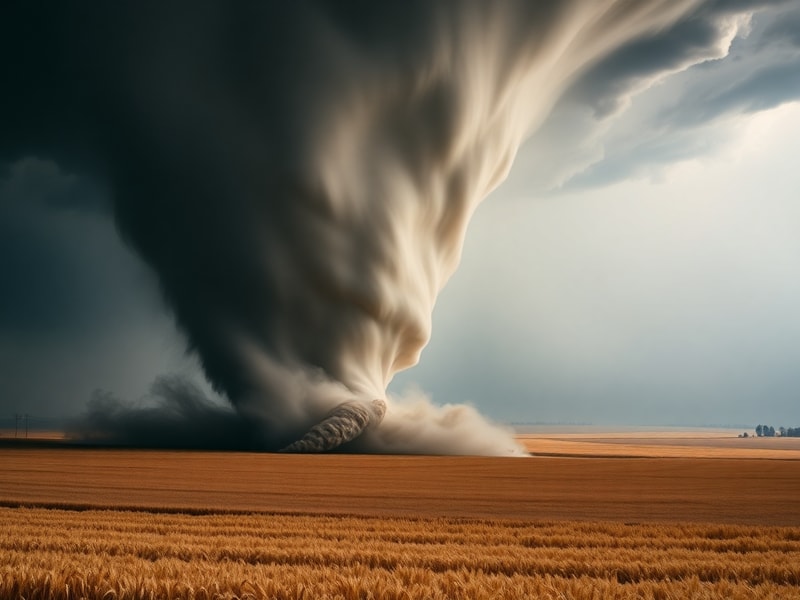
How Tornado Trackers Work: From Early Warning to Real-Time Data
Tornado tracking technology has transformed how meteorologists predict and study these destructive weather events. Modern systems rely on a combination of radar, satellites, and ground-based sensors to monitor atmospheric conditions. The National Weather Service in the United States, for example, uses a network of Doppler radar stations that detect rotation within thunderstorms—often the first sign of a potential tornado.
These systems don’t just track tornadoes after they form. They analyze wind speed, temperature gradients, and moisture levels to identify conditions that could spawn twisters. Advanced algorithms process this data in real time, providing warnings up to 30 minutes before a tornado touches down in some cases. While no system is perfect, the improvements in detection accuracy have saved countless lives over the past few decades.
The Global Reach of Tornado Tracking
While the U.S. experiences the highest frequency of tornadoes—averaging around 1,200 per year—other regions also face these violent storms. Canada, Bangladesh, and parts of Europe and South America have documented tornado activity. However, the tracking infrastructure varies dramatically by country. The U.S. and Japan operate some of the most sophisticated systems, while many developing nations rely on basic weather stations and manual reporting.
In Bangladesh, where tornadoes can be particularly deadly due to dense population and fragile infrastructure, efforts are underway to improve early warning systems. The country has partnered with international organizations to deploy mobile weather alerts and community-based observation networks. Meanwhile, in Europe, where tornadoes are less frequent but still dangerous, researchers use a combination of radar data and historical patterns to refine predictions.
Cultural Responses to Tornado Tracking
Different societies have developed unique ways of responding to tornado threats. In the American Midwest, where tornado season is a yearly reality, communities often conduct tornado drills in schools and businesses. Emergency alert systems broadcast warnings through television, radio, and now smartphone apps. The iconic tornado sirens that dot rural landscapes serve as both a psychological reassurance and a call to action.
In contrast, some regions lack the resources for advanced warning systems. In parts of Africa and Southeast Asia, tornadoes are less predictable, and communities rely on traditional knowledge passed down through generations. Elders may interpret changes in animal behavior or cloud patterns as signs of impending storms. While these methods aren’t as precise as modern technology, they highlight the resilience of human adaptation.
Pop culture has also embraced tornado tracking, often dramatizing it for entertainment. Films like Twister (1996) romanticized the pursuit of tornadoes by storm chasers, while documentaries like Into the Storm (2014) aimed to educate audiences about the science behind these events. Even video games such as Gaming titles have featured tornado mechanics, blending education with simulation.
From Storm Chasers to AI: The Future of Tornado Tracking
The next frontier in tornado tracking involves artificial intelligence and machine learning. Researchers are training AI models to analyze vast datasets from radar, satellites, and weather stations, identifying patterns that human forecasters might miss. These systems could improve lead times for warnings and reduce false alarms—a persistent challenge in severe weather prediction.
Drones are also playing an increasingly important role. Equipped with sensors, they can fly into storms to collect data at close range, providing insights that ground-based radar cannot. Projects like the Tornado Intercept Vehicle in the U.S. have demonstrated how manned and unmanned systems can work together to gather critical information.
Another promising development is the integration of social media and crowdsourcing. During severe weather events, platforms like Twitter and Facebook become real-time data sources. Meteorologists monitor hashtags and geotagged posts to corroborate official warnings. This citizen science approach helps fill gaps in areas with limited radar coverage.
The Challenges Ahead
Despite technological advancements, tornado tracking still faces significant hurdles. One major issue is climate change, which is altering weather patterns and potentially increasing the frequency of severe storms. Warmer temperatures and shifting jet streams can create environments more conducive to tornado formation, though the exact relationship remains a subject of study.
Another challenge is public perception. While technology has improved, many people still underestimate the danger of tornadoes or fail to heed warnings. A false alarm can lead to complacency, while a missed warning can have catastrophic consequences. Balancing urgency with accuracy remains a delicate task for forecasters.
Infrastructure also plays a role. In wealthier nations, advanced radar networks and early warning systems are standard. But in poorer regions, limited resources mean that many people receive warnings too late—or not at all. International aid and technology transfer could help bridge this gap, but political and economic barriers often stand in the way.
Preparing for the Worst: Practical Steps for Tornado Safety
For those living in tornado-prone areas, preparation is key. The first step is understanding the risks. Residents should know their community’s tornado history and familiarize themselves with local warning systems. Many areas use the Enhanced Fujita Scale (EF-Scale) to categorize tornado intensity, from EF0 (weak) to EF5 (violent).
Here are some essential safety measures:
- Identify a safe room: A basement, storm cellar, or interior room on the lowest floor of a sturdy building is ideal. Avoid windows and exterior walls.
- Have an emergency kit ready: Include water, non-perishable food, a flashlight, batteries, a first-aid kit, and a portable weather radio.
- Stay informed: Sign up for local alerts and warnings. Many communities use the News Emergency Alert System (EAS) to broadcast warnings.
- Practice drills: Schools and workplaces should conduct regular tornado drills to ensure everyone knows what to do.
- Have a plan for pets and livestock: Ensure animals have a safe shelter and that their identification tags are up to date.
After a tornado passes, safety remains a priority. Downed power lines, gas leaks, and unstable structures pose additional risks. Only return home when authorities declare it safe, and be cautious of aftershocks or secondary storms.
Technology will continue to evolve, but human vigilance remains irreplaceable. Whether through advanced radar, AI, or community-based systems, the goal is the same: to minimize the impact of these unpredictable and devastating natural events.
A Global Perspective: Learning from Each Other
The fight against tornadoes is a shared challenge, one that transcends borders. By sharing knowledge, resources, and technologies, nations can build more resilient systems. International organizations like the World Meteorological Organization (WMO) facilitate this exchange, helping countries with limited infrastructure learn from leaders in tornado tracking.
For example, the U.S. has shared its Doppler radar technology with several countries, including Turkey and South Africa. These partnerships have improved early warning capabilities in regions where tornadoes were once a poorly understood threat. Meanwhile, developing nations are contributing their own insights, such as traditional knowledge and low-cost observation techniques.
As climate change intensifies, the need for global cooperation will only grow. Tornadoes may be a localized phenomenon, but their impact is felt worldwide. By working together, we can turn the tide against these violent winds and build a safer future for all.
Conclusion
Tornado tracking has come a long way since the days of relying solely on human observers. Today’s technology offers unprecedented precision and lead time, saving lives and reducing damage. Yet challenges remain, from climate change to infrastructure disparities. The future of tornado tracking lies in innovation, collaboration, and preparedness.
For communities in tornado alley and beyond, the message is clear: stay informed, stay prepared, and never underestimate the power of nature. With the right tools and knowledge, we can face even the fiercest storms with confidence.