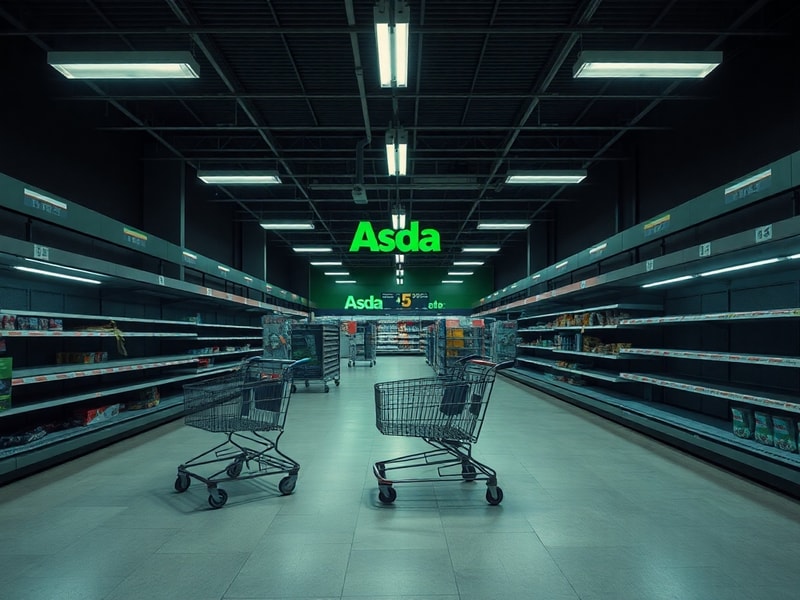
ASDA’s Financial Slide: What Led to the £2 Billion Loss?
ASDA’s recent announcement of a £2 billion loss for 2023 has sent ripples through the UK retail sector. The figure, revealed in the supermarket giant’s annual report, marks one of the most significant financial downturns in the company’s nearly 70-year history. While the pandemic initially buoyed grocery sales, ASDA’s struggle to adapt to shifting consumer habits and competitive pressures has become impossible to ignore.
The loss follows a pattern seen across traditional supermarket chains as discounters like Aldi and Lidl continue to chip away at market share. ASDA’s revenue declined by 2.3% year-on-year, with like-for-like sales dropping 3.7%. These numbers reflect more than just a temporary dip—they highlight structural challenges that have long simmered beneath the surface. Investors and analysts are now asking: what went wrong, and can ASDA turn things around?
The Role of Changing Consumer Behavior
Consumer preferences have shifted dramatically in recent years, and ASDA has struggled to keep pace. The rise of online grocery shopping, accelerated by the pandemic, has left traditional brick-and-mortar stores scrambling. While ASDA has invested in its e-commerce platform, it remains far behind competitors like Tesco and Sainsbury’s in digital sales growth.
Another key factor is the growing appeal of discount retailers. Aldi and Lidl have consistently undercut ASDA on price while expanding their product ranges and store footprints. In 2023, Aldi overtook Morrisons to become the UK’s fourth-largest supermarket, a milestone that underscores the erosion of ASDA’s market position. Shoppers, facing rising living costs, have increasingly prioritized affordability over brand loyalty.
ASDA’s own price cuts, while intended to compete, have squeezed profit margins. The company slashed prices on over 500 essential items in 2023, a move that temporarily boosted footfall but failed to translate into sustained revenue growth. This strategy, while effective in the short term, has left ASDA in a precarious position where volume gains do not offset lost profitability.
Operational Missteps and Supply Chain Strains
Beyond external market forces, ASDA’s internal challenges have played a significant role in its financial decline. The company has faced criticism for inconsistent store experiences, with some locations appearing outdated compared to rivals. While ASDA has committed to a £1 billion store refurbishment program, the rollout has been slow, leaving many shoppers unimpressed.
Supply chain disruptions have also taken a toll. Like many retailers, ASDA has grappled with inflation-driven cost increases, from higher fuel prices to wage hikes for staff. These pressures have forced the company to absorb some costs rather than passing them on to consumers, further eroding margins. Additionally, ASDA’s reliance on branded products—many of which have seen price hikes—has made it vulnerable to consumer pullback on non-essential items.
The company’s workforce has not been immune to these struggles. ASDA has faced multiple strikes and industrial action over pay disputes, particularly in its distribution centers. Labor shortages and disputes have disrupted operations, leading to stock shortages and frustrated customers. These issues compounded ASDA’s operational headaches, making it difficult to execute even basic business functions smoothly.
Ownership and Strategic Drift
ASDA’s ownership has also played a pivotal role in its recent struggles. The supermarket was acquired by the US private equity giant Kohlberg Kravis Roberts (KKR) in 2021, a move that raised eyebrows given the company’s declining performance. While KKR promised a fresh injection of capital and strategic reinvention, the transition has not been seamless.
Under KKR’s ownership, ASDA has experimented with various initiatives, from expanding its George clothing line to testing smaller-format stores. Yet these efforts have lacked cohesion. The company’s marketing campaigns have often felt disjointed, failing to resonate with core shoppers. For example, ASDA’s recent “Live Better” slogan, while aspirational, has done little to differentiate the brand in a crowded market.
Analysts suggest that ASDA’s strategic drift stems from a lack of clear vision. While competitors like Tesco have doubled down on convenience stores and Lidl has focused on private-label innovation, ASDA has spread its resources thin. The company’s decision to exit the wholesale business, once a key revenue stream, has also been questioned. Without a unifying strategy, ASDA risks becoming a retail relic rather than a revitalized brand.
Can ASDA Recover? The Path Forward
The road to recovery for ASDA will require a multi-pronged approach. First and foremost, the company must regain its footing in the digital space. E-commerce sales now account for over 10% of the UK grocery market, and ASDA’s share lags behind its peers. Investing in faster delivery options, improving its app experience, and leveraging AI for personalized promotions could help close the gap.
Price competitiveness remains critical, but ASDA must strike a balance between affordability and profitability. The company’s private-label strategy, particularly its Extra Special and Smart Price ranges, could be a differentiator. Expanding these lines while maintaining quality could attract budget-conscious shoppers without sacrificing margins.
Another opportunity lies in ASDA’s store estate. The company operates over 600 locations, many of which are large, out-of-town supermarkets. While these stores drive volume, they are costly to maintain. ASDA could explore smaller, urban formats or even partnerships with local businesses to reduce overheads and improve accessibility.
Finally, ASDA must address its workforce challenges. Fair wages, better working conditions, and clear career progression paths could reduce turnover and improve customer service. A motivated workforce is often the secret weapon for retailers aiming to win back shoppers.
The supermarket’s future hinges on its ability to adapt without losing sight of its core strengths. ASDA still commands a loyal customer base, particularly among older demographics and families. If it can blend its traditional appeal with modern conveniences, the company may yet avoid the fate of other once-dominant retailers.
ASDA vs. The Discounters: A David vs. Goliath Battle
ASDA’s struggle against discount retailers is a tale of two very different business models. Aldi and Lidl have thrived by offering a stripped-down shopping experience focused on value. Their stores are smaller, their product ranges are limited, and their prices are consistently lower than ASDA’s. This approach has resonated with UK shoppers, particularly during the cost-of-living crisis.
ASDA, by contrast, has historically positioned itself as a mid-market supermarket. It offers a wider selection of branded products, a larger store footprint, and a more traditional shopping experience. While this strategy worked for decades, it has become a liability in an era where consumers prioritize savings over choice.
To compete, ASDA has attempted to mimic the discounters by expanding its private-label offerings. However, its Smart Price range, once a budget staple, has struggled to match the perceived quality of Aldi’s own-label products. The company’s recent “Price Lock” campaign, which guarantees no increases on 100 essential items, is a step in the right direction, but it remains to be seen whether it will be enough to win back price-sensitive shoppers.
Lessons from ASDA’s Struggles: What Other Retailers Can Learn
ASDA’s decline offers several cautionary lessons for other retailers, particularly those in the grocery sector. First, the importance of agility cannot be overstated. Consumer preferences evolve rapidly, and companies that fail to adapt risk being left behind. Tesco’s pivot to convenience stores and Ocado’s focus on online grocery delivery are examples of how proactive strategies can drive growth.
Second, private-label innovation is no longer optional—it’s essential. Retailers that invest in their own brands can differentiate themselves while protecting margins. Lidl’s success with its Delicious range and Aldi’s focus on quality private-label products have been key to their expansion.
Finally, the role of culture and employee engagement should not be underestimated. Retailers with high turnover and disgruntled staff often struggle to deliver a consistent customer experience. ASDA’s recent labor disputes highlight the need for fair wages and better working conditions as part of any long-term recovery plan.
For other supermarket chains watching ASDA’s struggles, the message is clear: complacency is costly. The grocery market is more competitive than ever, and only those willing to innovate and adapt will survive.
The Human Cost: How ASDA’s Losses Affect Employees and Communities
Beyond the balance sheets and market share numbers, ASDA’s financial woes have real-world consequences. The company employs over 160,000 people across the UK, many of whom rely on their wages to support their families. Job cuts, reduced hours, and store closures could devastate local communities, particularly in areas where ASDA is the primary employer.
In recent months, ASDA has announced plans to close several smaller-format stores and reduce its presence in certain regions. These moves, while necessary for cost-cutting, have left some shoppers without convenient access to groceries. In rural areas and low-income neighborhoods, the loss of a supermarket can have a cascading effect, making it harder for residents to access affordable food.
The company’s labor disputes have also taken a toll on its workforce. ASDA’s refusal to match the minimum wage increases offered by competitors like Tesco and Sainsbury’s has led to walkouts and protests. These disputes not only disrupt operations but also damage ASDA’s reputation as an employer. In an era where corporate responsibility is increasingly scrutinized, ASDA’s labor practices could further erode trust with consumers.
For communities that have shopped at ASDA for generations, the supermarket’s decline feels personal. Many shoppers have fond memories of the store, from its famous “Price Drop” stickers to its sponsorship of local events. The loss of ASDA would not only be financial—it would be cultural, signaling the end of an era for British retail.
ASDA must balance its financial recovery with sensitivity to the human impact of its decisions. Protecting jobs, supporting local suppliers, and maintaining a presence in underserved communities should be central to any turnaround strategy.
ASDA’s £2 billion loss is more than a corporate setback—it’s a bellwether for the challenges facing traditional supermarkets in an increasingly competitive market. The company’s struggles reflect broader trends in consumer behavior, operational inefficiencies, and strategic missteps. While the road to recovery will be long and arduous, ASDA’s future is not yet written. With the right investments in digital innovation, private-label expansion, and workforce engagement, the supermarket giant could yet reclaim its footing. For now, however, the question remains: can ASDA adapt before it’s too late?