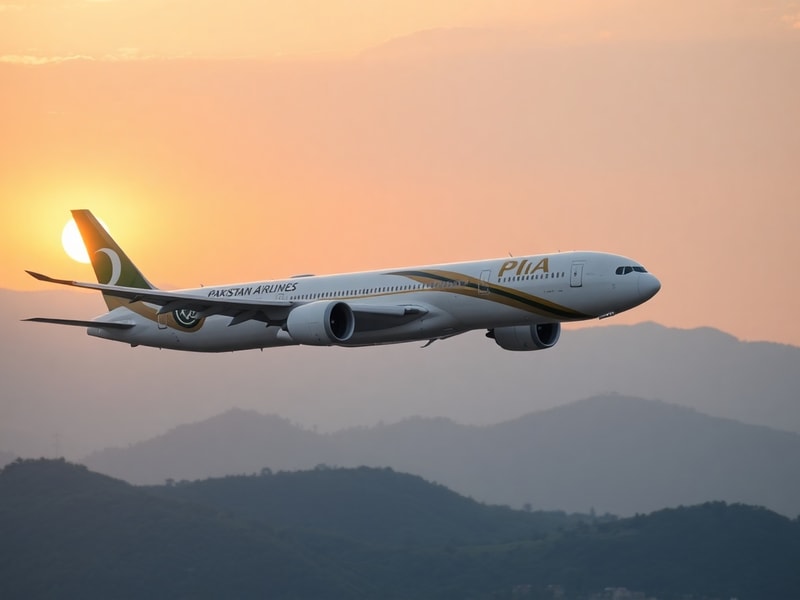
Pakistan International Airlines (PIA) stands as the country’s flag carrier, a symbol of national pride that has connected Pakistan to the world for over seven decades. Founded in 1946, just months before the nation’s independence, PIA has grown from a modest carrier into a global airline with a fleet of modern aircraft and a network spanning four continents. Despite financial challenges and operational hurdles, the airline remains a critical lifeline for travelers, businesses, and the Pakistani diaspora. Its history is marked by both triumphs and controversies, reflecting the broader struggles and resilience of the nation it represents.
From Humble Beginnings to a National Icon
PIA’s origins trace back to the pre-independence era when the British colonial government established Orient Airways in 1946. The airline began operations with a single Douglas DC-3 aircraft, flying between Karachi, Delhi, and Dhaka. After Pakistan’s creation in 1947, the government nationalized the airline and renamed it Pakistan International Airlines Corporation (PIAC), later simplifying it to PIA. By the 1960s, PIA had expanded its fleet to include jetliners like the Boeing 707 and 720, becoming one of the first Asian airlines to operate jet aircraft. This era cemented PIA’s reputation as a pioneer in regional aviation.
The airline’s golden years came in the 1970s and 1980s, when it was regarded as one of the world’s most profitable airlines. PIA introduced non-stop flights to New York in 1973, a milestone that underscored its ambition to compete on the global stage. It also became known for its hospitality, earning a reputation for exemplary service that set it apart from other carriers in the region. However, the decline of state-owned enterprises in the 1990s, coupled with mismanagement and political interference, began to erode these gains. By the 2000s, PIA was grappling with mounting debts, aging aircraft, and a tarnished brand image.
The Financial Struggles and Governance Challenges
PIA’s financial troubles are well-documented. As of 2024, the airline carries a debt burden exceeding $1.8 billion, a figure that has ballooned due to years of operational losses, corruption, and inefficiencies. A 2021 report by the Pakistan Auditor General highlighted irregularities in procurement processes, including the purchase of overpriced aircraft and spare parts. These findings, along with allegations of political appointments in key positions, have fueled public skepticism about the airline’s management. The government’s repeated bailouts have done little to address the root causes of PIA’s financial woes.
One of the most controversial periods was the European Union’s 2020 ban on PIA flights, citing concerns over pilot licensing and safety standards. The ban, which lasted until 2022, was a severe blow to the airline’s international credibility. Investigations revealed that over 260 PIA pilots held licenses issued by a fraudulent examination center in Pakistan. This scandal not only led to the suspension of PIA’s EU operations but also triggered a broader conversation about the airline’s regulatory oversight. While the ban has since been lifted, the damage to PIA’s reputation lingers, serving as a stark reminder of the consequences of institutional neglect.
Key Factors Contributing to PIA’s Financial Crisis
- Overstaffing: PIA employs over 14,000 people, a workforce far larger than what its current operations require. This bloated payroll contributes significantly to the airline’s losses.
- Outdated Fleet: A large portion of PIA’s fleet consists of aging aircraft, including the Boeing 777s that are nearing the end of their operational lifespan. The lack of investment in newer planes has hurt fuel efficiency and passenger comfort.
- Poor Route Management: Many of PIA’s international routes are unprofitable, yet they are maintained due to political pressure rather than economic viability. Domestic flights, while more cost-effective, struggle with competition from low-cost carriers.
- Corruption and Mismanagement: Reports of embezzlement, kickbacks in procurement deals, and nepotism in hiring have plagued PIA for years. These issues have deterred potential investors and partners.
PIA’s Efforts to Revive Its Fortunes
In recent years, PIA has attempted to chart a path toward recovery. The airline has embarked on a fleet modernization program, acquiring eight new Airbus A320 aircraft to replace its older planes. These additions aim to improve fuel efficiency and reduce maintenance costs. PIA has also focused on expanding its cargo operations, a segment that has shown promise in generating revenue. Additionally, the airline has explored partnerships with private carriers to operate some of its routes, a move aimed at reducing operational burdens.
Another critical step has been the government’s push for privatization. In 2023, the Pakistani cabinet approved plans to sell up to 49% of PIA’s shares to private investors, a move intended to infuse much-needed capital and improve governance. However, the privatization process has been slow, bogged down by bureaucratic hurdles and political opposition. Industry analysts argue that privatization alone won’t guarantee success unless accompanied by structural reforms, such as reducing the workforce and cutting unprofitable routes.
PIA has also prioritized safety improvements in response to past scandals. The airline has revamped its pilot training programs and implemented stricter oversight mechanisms to ensure compliance with international aviation standards. These efforts have been recognized by the International Air Transport Association (IATA), which granted PIA the IOSA certification in 2023, a significant milestone for the airline’s rebranding efforts.
PIA’s Role in Pakistan’s Economy and Society
Beyond its commercial operations, PIA plays a vital role in Pakistan’s economy and social fabric. The airline is a major employer, providing livelihoods to thousands of families across the country. Its operations facilitate trade, tourism, and remittances, contributing an estimated $1 billion annually to Pakistan’s GDP. For the Pakistani diaspora, PIA remains a lifeline, offering affordable and convenient travel options to and from their home country. The airline’s flights to cities like Manchester, Toronto, and Sydney are often packed with passengers carrying not just luggage, but also the hopes and dreams of a community spread across the globe.
PIA also serves as a cultural ambassador for Pakistan. Its inflight entertainment, featuring Pakistani music, films, and literature, introduces international travelers to the country’s rich heritage. The airline’s cabin crew, known for their hospitality, often become the first point of contact for visitors, shaping their perceptions of Pakistan. In this way, PIA transcends its role as a mere transportation provider, becoming a soft power tool for the nation.
However, PIA’s social impact is not without controversy. The airline has faced criticism for its handling of labor disputes, including strikes by pilots and engineers over unpaid salaries and poor working conditions. These disruptions have not only inconvenienced passengers but also tarnished PIA’s reputation as a reliable carrier. Addressing these issues will be crucial for the airline’s long-term stability and public trust.
The Road Ahead: Challenges and Opportunities
PIA’s future hinges on its ability to overcome entrenched challenges while capitalizing on emerging opportunities. The airline’s privatization, if executed successfully, could bring in the expertise and innovation needed to modernize operations. However, the process must be transparent and free from political interference to attract serious investors. Privatization should be accompanied by a clear roadmap for reducing costs, improving efficiency, and enhancing passenger experience.
Digital transformation is another area where PIA can make significant strides. The airline has lagged behind competitors in adopting digital booking systems, customer service automation, and data analytics. Investing in these technologies could streamline operations, reduce overheads, and improve customer satisfaction. For instance, implementing AI-driven chatbots for customer inquiries or a mobile app for seamless bookings could position PIA as a forward-thinking carrier.
On the international front, PIA must focus on profitable routes while phasing out those that drain resources. Expanding into untapped markets, such as Central Asia or Africa, could diversify its revenue streams. Partnerships with global airlines, through codeshare agreements or joint ventures, could also help PIA tap into new customer bases without the heavy investment of opening new routes.
The human element will be equally critical. PIA must address its labor issues by engaging in constructive dialogue with unions, ensuring fair wages, and providing safe working conditions. Training programs for staff, particularly in customer service and technical roles, can elevate the airline’s standards and align them with global benchmarks. A motivated workforce is the backbone of any successful airline, and PIA’s revival depends on it.
Ultimately, PIA’s story is one of resilience and potential. Despite its flaws, the airline remains a testament to Pakistan’s ability to build and sustain institutions of national importance. Its revival will require bold decisions, unwavering commitment, and a departure from the status quo. For millions of Pakistanis, PIA is more than an airline—it’s a symbol of what the nation can achieve. The question now is whether Pakistan is ready to invest in that symbol once again.