Mojtaba Khamenei: The Hidden Architect of Iran’s Power Structure
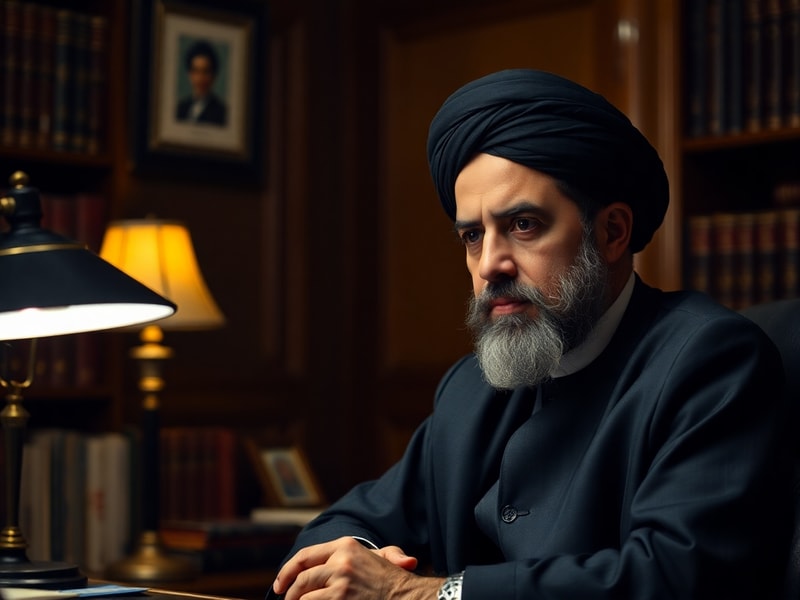
When the name Mojtaba Khamenei surfaces in political discussions, it often carries implications far beyond Iran’s borders. The son of Supreme Leader Ayatollah Ali Khamenei, Mojtaba wields influence that places him at the nexus of power, religion, and strategy in one of the world’s most closed systems. While often mentioned in whispers or official narratives, his role remains shrouded in layers of secrecy and institutional control. Understanding Mojtaba requires more than parsing public statements—it demands examining the architecture of Iran’s political elite, the evolution of its leadership succession, and the quiet mechanisms that sustain the Islamic Republic’s grip on power.
From the Shadows: Mojtaba’s Rise in the Islamic Republic
Mojtaba Khamenei was born in 1969, the second son of Ayatollah Ali Khamenei, who would later ascend to the position of Supreme Leader in 1989 following the death of Ayatollah Ruhollah Khomeini. Unlike his father, who rose through the ranks of religious scholarship and revolutionary politics, Mojtaba’s path has been less about theological prominence and more about institutional influence. He studied at the prestigious Qom Seminary, but his reputation is not built on religious texts alone. Instead, Mojtaba’s influence stems from his deep integration into the Islamic Republic’s intelligence and security networks.
Reports suggest that Mojtaba has played a behind-the-scenes role in shaping Iran’s political direction, particularly in moments of crisis. Analysts point to his presence during critical junctures such as the 2009 Green Movement protests and the 2017–2018 nationwide uprisings. While he has never held an official government title, his proximity to power allows him to influence key decisions. This behind-the-scenes maneuvering has led some observers to describe him as a “kingmaker” within Iran’s opaque power structure—a figure whose decisions ripple through institutions without ever appearing in official rosters.
His influence extends into the financial and ideological domains as well. Mojtaba is believed to oversee vast financial networks tied to religious endowments and foundations. These entities, known as “bonyads,” operate beyond normal parliamentary oversight, funneling resources into political and military operations. Such control over funding streams gives him leverage over key stakeholders, including the Islamic Revolutionary Guard Corps (IRGC) and various political factions within the regime.
Power Behind the Throne: Networks and Alliances
Mojtaba Khamenei’s authority is not derived from a single position but from a web of alliances that span Iran’s political, military, and economic elite. His most visible connection is to the IRGC, which acts as both a military force and a political actor. The IRGC’s loyalty to the Supreme Leader is well-documented, but Mojtaba’s personal relationships within the corps have reportedly solidified his role as a strategic advisor. This alliance ensures that his recommendations—whether on domestic crackdowns or regional military engagements—are taken seriously by those who control Iran’s coercive apparatus.
He is also closely tied to the Assembly of Experts, the clerical body responsible for selecting and overseeing the Supreme Leader. While the Assembly’s formal role is to vet candidates and monitor the Leader’s conduct, its real influence lies in its ability to shape succession. Some analysts argue that Mojtaba’s positioning within this body is strategic, positioning him as a potential successor or at least a gatekeeper in any future transition. His father, now 85, has not named a successor, and speculation about Mojtaba’s ambitions has grown amid reports of internal debates about the future of the Islamic Republic.
Mojtaba’s influence is further amplified by his control over key media outlets and cultural institutions. Through these channels, he helps shape the narrative around Iran’s identity, nationalism, and resistance to Western influence. His messaging often emphasizes continuity with the revolutionary ideals of 1979, positioning the regime as the sole defender against foreign interference. This ideological alignment reinforces his father’s legacy while positioning Mojtaba as a custodian of the Islamic Republic’s founding principles.
Key Players in Mojtaba’s Network
- Islamic Revolutionary Guard Corps (IRGC): Provides military and financial backing, ensuring loyalty through patronage and coercion.
- Assembly of Experts: A clerical body that could influence succession, with Mojtaba positioned as a potential kingmaker.
- Bonyads (Religious Endowments): Control vast economic resources, funding political and military operations.
- Basij Militia: Mobilizes public support and suppresses dissent, often under Mojtaba’s ideological guidance.
- Hardline Clerics: Align with Mojtaba’s vision of maintaining revolutionary purity and resistance to reform.
Regional Implications: Iran’s Next Generation of Leadership
The question of Mojtaba Khamenei’s future role is not merely academic—it has profound implications for Iran’s regional strategy and global standing. As Iran expands its influence across the Middle East through proxies in Iraq, Syria, Lebanon, and Yemen, the question of who controls the levers of power becomes critical. Mojtaba’s network, particularly his ties to the IRGC, suggests he would continue the Islamic Republic’s aggressive foreign policy, prioritizing resistance to U.S. influence and support for allied militias.
His approach to regional conflicts is likely to mirror the current strategy: a blend of plausible deniability, proxy warfare, and ideological commitment. This could mean sustained support for groups like Hezbollah in Lebanon or the Houthis in Yemen, as well as continued involvement in Syria through the IRGC’s ground forces and advisers. Analysts warn that any succession involving Mojtaba would likely lead to a consolidation of power within hardline factions, reducing the likelihood of diplomatic openings with the West.
Internally, Mojtaba’s rise could further entrench Iran’s authoritarian tendencies. His control over security forces and media suggests a leadership style that prioritizes control over pluralism. This could exacerbate tensions with reformist factions and civil society, potentially leading to increased crackdowns on dissent. The 2022 Mahsa Amini protests, which saw widespread calls for systemic change, demonstrated the fragility of the regime’s control. Mojtaba’s influence could harden the regime’s response to such movements, prioritizing stability through repression over gradual reform.
The Succession Question: Is Mojtaba the Heir Apparent?
For years, speculation has swirled around whether Mojtaba Khamenei is being groomed to succeed his father. While Ayatollah Khamenei has not publicly endorsed any successor, several indicators point to Mojtaba’s strategic positioning. His name frequently appears in Iranian media as a defender of revolutionary values, often in contrast to reformist figures who advocate for change. Additionally, his control over financial and intelligence networks gives him a structural advantage over potential rivals.
Yet succession in the Islamic Republic is not a straightforward process. The Supreme Leader is chosen by the Assembly of Experts, a body composed of senior clerics. While Mojtaba’s influence within this assembly is significant, he faces challenges from other factions, including traditional clerical elites and military commanders. Some analysts suggest that Mojtaba may not inherit the title directly but could instead become a power broker behind the scenes, much like his father did in the late 1980s.
Another possibility is a collective leadership model, where power is shared among multiple figures to prevent the concentration of authority in one individual. This approach has been floated in past succession debates, particularly in light of Iran’s aging leadership. However, Mojtaba’s personal ambitions and the loyalty he commands from key institutions make this scenario less likely. His continued presence in the political arena suggests that he views himself as a central figure in Iran’s future, whether as Supreme Leader or as an éminence grise pulling the strings.
Regardless of the path forward, one thing is clear: Mojtaba Khamenei represents the continuity of Iran’s revolutionary ideology. His rise is not a departure from the Islamic Republic’s founding principles but an affirmation of them. In a system where power is carefully guarded and succession is a high-stakes game, Mojtaba’s influence ensures that Iran’s hardline factions will remain dominant for the foreseeable future.
For the international community, understanding Mojtaba’s role is essential to anticipating Iran’s next moves. His influence over the IRGC, control over financial networks, and ideological alignment with the regime’s core principles mean that any policy toward Iran must account for his presence. Whether through sanctions, diplomacy, or strategic engagement, global actors will need to navigate a landscape where power is increasingly concentrated in the hands of a select few—led by a figure who operates as much in the shadows as in the light.