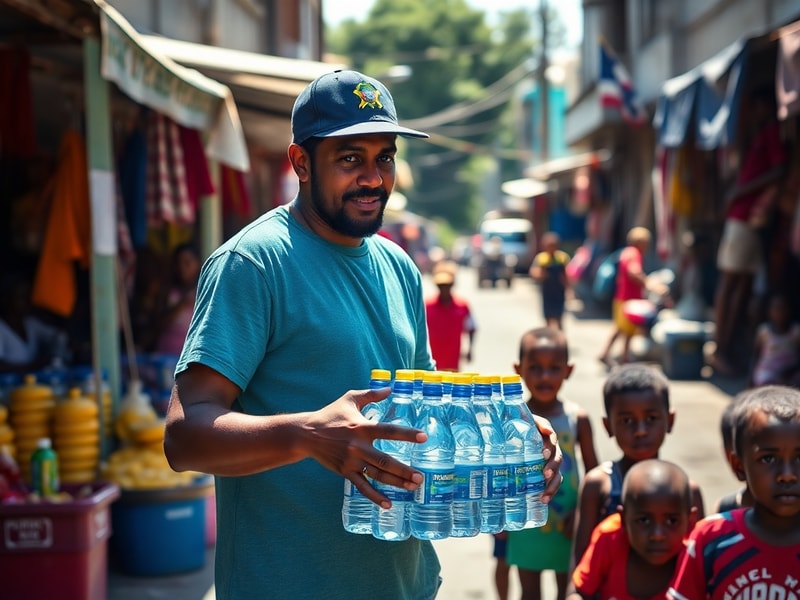
Brazil and Haiti share a complex history that stretches back centuries, intertwined by colonialism, slavery, migration, and cultural exchange. While separated by thousands of miles, the two nations have forged unexpected connections, particularly through migration flows and diaspora communities. The relationship between Brazil and Haiti reflects broader global patterns of movement and integration, offering insights into how societies adapt to new influences.
The Roots of a Shared History
Brazil’s colonial past under Portuguese rule created deep ties with West Africa, but Haiti’s history of revolution and independence also left a mark on the Americas. Brazil was the last country in the Western Hemisphere to abolish slavery, in 1888, decades after Haiti declared independence in 1804. This historical gap shaped different trajectories, yet both nations grappled with racial hierarchies and social inequality.
Haiti became the world’s first Black-led republic, a symbol of resistance against colonial oppression. Brazil, meanwhile, became the largest recipient of enslaved Africans, embedding African traditions into its national identity. These parallel yet distinct struggles for liberation created a cultural bridge that persists today.
Migration Flows: From Brazil to Haiti and Back
One of the most visible connections between the two countries is the movement of people. Brazil has become a destination for Haitian migrants seeking economic opportunities, particularly after the devastating 2010 earthquake that displaced hundreds of thousands. Many Haitians traveled through the Dominican Republic and into Brazil, drawn by job prospects in construction and agriculture.
By 2015, Brazil was home to one of the largest Haitian diaspora communities outside the Caribbean. Cities like São Paulo, Rio de Janeiro, and Brasília became hubs for Haitian culture, where Creole and Portuguese intertwined in markets, churches, and neighborhoods. While some Haitians thrived in Brazil, others faced challenges, including language barriers, work exploitation, and social integration.
Yet migration is not a one-way street. A smaller but growing number of Brazilians have moved to Haiti, often in humanitarian or professional roles. Organizations like the United Nations and NGOs have sent Brazilian peacekeepers and aid workers, contributing to reconstruction efforts after natural disasters and political crises. These exchanges highlight how Brazil, once a recipient of international aid, now plays a role in global humanitarian efforts.
Key Factors Driving Migration
- Economic opportunities: Brazil’s labor market, especially in construction, attracted Haitians after the 2010 earthquake.
- Language affinity: Portuguese and French Creole share Latin roots, easing communication.
- Historical ties: Brazil’s African heritage resonated with Haitian migrants seeking cultural familiarity.
- Political instability in Haiti: Political crises and gang violence continued to push people outward.
Cultural Exchange: Music, Food, and Identity
Brazil’s cultural landscape has been enriched by Haitian influences, particularly in music and cuisine. Haitian kompa, a lively genre blending African rhythms with Caribbean sounds, found a home in Brazilian clubs and festivals. Meanwhile, Brazilian samba and forró have made their way into Haitian music scenes, creating a fusion of styles.
Food is another area where the two cultures intersect. Haitian griot, a crispy fried pork dish, is now a staple in Brazilian cities with large Haitian communities. Brazilian feijoada, a slow-cooked bean stew with pork, has also gained popularity in Haiti, often served in restaurants catering to international workers.
Language serves as a daily reminder of the connection. Some Brazilian schools now offer Creole classes, while Haitian migrants in Brazil adapt by learning Portuguese. This linguistic exchange reflects a broader cultural integration that goes beyond mere coexistence.
Challenges and Opportunities in Integration
Despite the cultural richness, integration is not without difficulties. Haitian migrants in Brazil often face discrimination in hiring practices and housing markets. Language barriers can hinder access to healthcare and legal services, creating systemic barriers.
Brazilian society, too, is learning to adapt. Some communities have embraced Haitian traditions, while others struggle with fear of the unknown. NGOs and local governments have launched programs to foster inclusion, from language classes to cultural festivals. These efforts highlight the potential for mutual growth when societies welcome new influences.
For Haiti, remittances from the diaspora in Brazil provide vital economic support. In 2022, remittances to Haiti totaled over $3 billion, with Brazilian Haitians contributing a significant portion. This financial lifeline helps families back home, demonstrating how migration can strengthen transnational bonds.
Lessons for Global Migration
The Brazil-Haiti relationship offers lessons for other migration corridors. It shows how historical ties can shape modern mobility, and how cultural exchange can enrich both host and origin societies. Yet it also underscores the importance of policies that protect migrants’ rights and foster inclusion.
As climate change and economic instability drive more people to seek opportunities abroad, the Brazil-Haiti story becomes increasingly relevant. It is a reminder that migration is not just about movement—it is about transformation, for individuals and societies alike.
Both nations continue to navigate the complexities of this relationship, balancing challenges with opportunities. Whether through music, food, labor, or remittances, Brazil and Haiti remain connected in ways that transcend geography. Their story is not just one of migration, but of resilience, adaptation, and shared humanity.