Why the Netherlands Is More Than Just Windmills and Tulips
Beyond the Tulips: Why the Netherlands Reshapes Travel, Culture, and Innovation
When travelers picture the Netherlands, windmills, wooden shoes, and endless fields of tulips usually come to mind. Yet this small Western European nation has become a global case study in how tradition and innovation can coexist—and even fuel each other. From its progressive urban policies to its role in shaping global trade, the Netherlands punches far above its weight in influence. Its cities don’t just charm visitors; they challenge assumptions about sustainability, mobility, and social equity.
At the heart of this transformation is a society that has long embraced pragmatism over dogma. The Dutch built a nation on water, reclaiming land from the sea through centuries of engineering ingenuity. Today, that same spirit drives their response to climate change, urban congestion, and digital transformation. The Netherlands is not just a destination for tourists; it’s a laboratory for the future of human settlement.
The Dutch Blueprint: How Amsterdam and Rotterdam Lead Global Urban Change
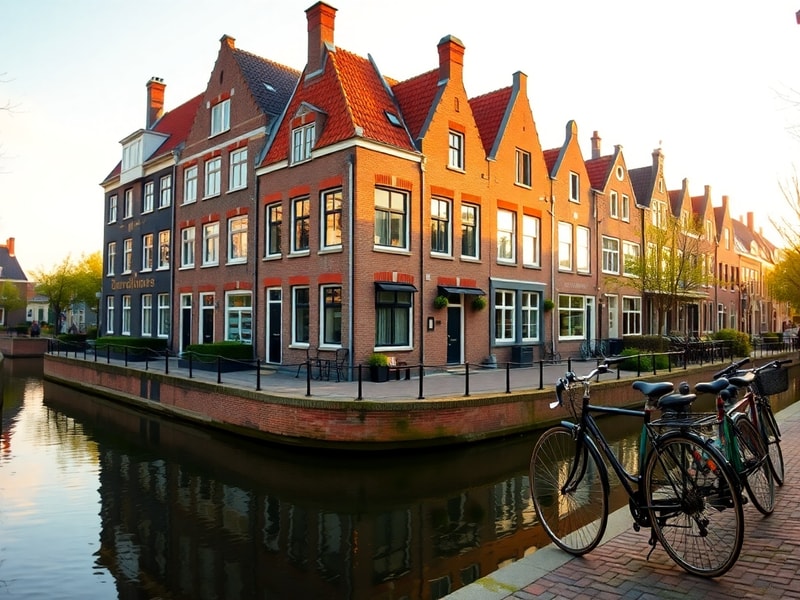
Amsterdam’s reputation as a city of bicycles and canals masks a deeper transformation. Beneath the postcard scenery lies one of the world’s most ambitious urban experiments: a city actively reducing car dependency while expanding housing and green space. The city’s goal to eliminate all gasoline-powered vehicles by 2030 is more than environmental rhetoric—it’s a structural reimagining of urban life.
Rotterdam, meanwhile, has embraced a different kind of leadership. As a port city shaped by trade and migration, it has evolved into a hub for circular economy innovation. Its Floating Pavilion project, built on water to adapt to rising sea levels, symbolizes the city’s adaptive mindset. Both cities reflect a broader Dutch philosophy: problems are not obstacles, but opportunities to rethink systems.
The results are measurable. Amsterdam’s bike lanes now carry more daily commuters than all other forms of transport combined. Rotterdam’s port remains Europe’s largest, yet it’s transitioning toward zero-emission logistics. These aren’t isolated trends—they’re coordinated strategies backed by decades of policy foresight.
Beyond Borders: The Netherlands in the Global Economy and Climate Conversation
The Netherlands plays an outsized role in international trade and environmental governance. As the second-largest agricultural exporter in the world—despite its tiny size—it demonstrates how innovation can overcome geographic limitations. Dutch greenhouse technology, precision farming, and sustainable packaging have redefined food production globally.
Climate adaptation is another area where Dutch expertise is in high demand. With nearly a third of the country lying below sea level, the Netherlands has developed flood defenses that are now studied worldwide. Projects like the Delta Works and Room for the River have become global benchmarks for climate resilience. Countries from Bangladesh to New Orleans now look to Dutch engineers for guidance on managing rising waters.
This influence extends into digital innovation. Amsterdam’s high-tech ecosystem, supported by a network of incubators and research universities, has made it a magnet for tech startups and AI researchers. The city’s embrace of smart city technologies—traffic sensors, energy grids, and digital governance tools—positions it at the forefront of the Fourth Industrial Revolution.
Yet this leadership comes with challenges. Housing shortages, rising rents, and the strain of overtourism in Amsterdam have sparked public debate. The government’s recent cap on tourist rentals and expansion of social housing reflect a society grappling with growth without losing its identity. It’s a reminder that even in a nation celebrated for balance, trade-offs are inevitable.
A Cultural Paradox: Tradition as a Foundation for Modernity
The Netherlands’ cultural identity is a tapestry woven from both heritage and avant-garde thinking. The Dutch Golden Age of the 17th century produced Rembrandt, Vermeer, and a global trading empire. Today, that legacy lives on in institutions like the Rijksmuseum and the Van Gogh Museum, which draw millions of visitors annually.
But the country’s cultural influence extends far beyond art. Amsterdam’s annual Pride celebration, rooted in the first major gay rights protests in the 1960s, remains one of the world’s most visible LGBTQ+ festivals. The Netherlands was the first country to legalize same-sex marriage in 2001—a milestone that continues to shape global conversations about equality.
The Dutch also pioneered social policies now seen as progressive elsewhere. Decriminalization of sex work, liberal drug policies in designated zones, and widespread use of euthanasia under strict conditions reflect a society that prioritizes individual freedom within a framework of social responsibility.
This balance between individual liberty and collective welfare is perhaps the country’s most enduring export. It challenges the notion that personal freedom must come at the expense of social cohesion—and vice versa. In an era of polarizing debates, the Dutch model offers a compelling alternative: a society that trusts its citizens to make informed choices.
Five Lessons the World Can Learn from the Netherlands
The Netherlands’ global impact isn’t accidental. It stems from deliberate choices, tested over generations. Here are five key principles that define its success—and could inspire others:
- Infrastructure as Public Good: From cycling networks to flood defenses, the Dutch treat essential infrastructure as a shared responsibility, not a luxury.
- Adaptation Over Resistance: Whether facing rising seas or digital disruption, the Netherlands doesn’t cling to the past—it redesigns for the future.
- Knowledge as Currency: Investment in education, research, and innovation has turned limited natural resources into intellectual capital.
- Policy with Longevity: Dutch urban planning and environmental laws are built to last, avoiding the short-termism that plagues many societies.
- Cultural Confidence: The country doesn’t apologize for its progressive policies. It leads with them, creating global standards rather than following them.
The Path Forward: Challenges and Opportunities
Despite its achievements, the Netherlands faces real pressures. Housing shortages in Amsterdam and Utrecht have reached crisis levels, with young professionals and students often priced out of the market. The tourism sector, while economically vital, has eroded local quality of life in historic districts. And the country’s famous tolerance is being tested by rising political polarization and debates over immigration.
Yet these challenges are not signs of failure—they’re proof of vitality. A society that stops questioning itself is one that stops evolving. The Netherlands’ willingness to confront these issues head-on—whether through citizen assemblies, policy reviews, or bold pilot projects—suggests it will continue to innovate rather than stagnate.
For the rest of the world, the Dutch experience offers a vital lesson: progress isn’t about choosing between tradition and modernity. It’s about using the wisdom of the past to build a better future. In an age of climate emergencies, social fragmentation, and technological upheaval, that may be the most valuable export of all.