Few names in modern art carry the quiet authority of Fernandez Pardo. His work sits at the intersection of precision and emotion, where geometric discipline meets raw human feeling. Over three decades, Pardo has built a reputation not through spectacle but through consistency—each painting, drawing, and sculpture a deliberate step toward clarity. His art doesn’t shout; it lingers, inviting viewers to slow down and observe the subtle interplay of form and shadow.
Early Life and Artistic Foundations
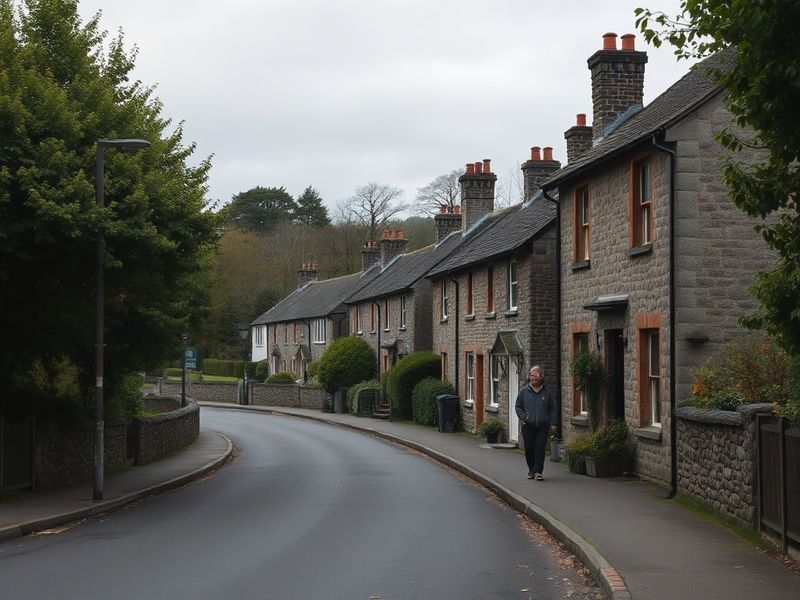
Born in Seville in 1968, Fernandez Pardo grew up surrounded by the city’s layered history—its Moorish architecture, Baroque churches, and the shifting light of the Andalusian landscape. These influences didn’t manifest in overt symbolism but in an instinctive understanding of space and structure. His father, a carpenter, taught him the value of craftsmanship, while his mother, a schoolteacher, encouraged a disciplined approach to learning.
Pardo enrolled at the University of Seville’s Faculty of Fine Arts in 1986, where he studied under painters deeply rooted in the Spanish tradition. Yet, rather than emulate his mentors, he gravitated toward the minimalism of Agnes Martin and the structural rigor of Eduardo Chillida. This tension between tradition and innovation became the foundation of his artistic voice.
By the early 1990s, Pardo was experimenting with monochrome palettes and repetitive forms—strips of muted color, carefully measured intervals, and surfaces that seemed to absorb rather than reflect light. His early exhibitions in Madrid and Barcelona were met with curiosity. Critics noted his ability to strip away the decorative, leaving only the essential. It was a risky approach in an art world increasingly dominated by bold statements and conceptual shock value.
The Evolution of a Signature Style
Pardo’s mature style crystallized in the late 1990s, characterized by what he calls “controlled ambiguity.” His works often feature narrow vertical or horizontal bands of color—ochre, slate gray, faded terracotta—separated by razor-thin lines of white or black. These divisions aren’t symmetrical but balanced, as if each stripe were a note in a silent composition.
One of his most celebrated series, Límites (Limits), explores the psychological weight of boundaries. The paintings don’t depict physical barriers but evoke the feeling of standing at the edge of a decision, a memory, or a threshold. In Límites No. 12 (2004), a narrow band of deep umber presses against a strip of pale cream, the tension almost palpable. The work doesn’t tell a story; it creates a space where the viewer’s own experiences fill the silence.
Sculpture became another key language for Pardo. Using materials like oxidized steel, patinated bronze, and reclaimed wood, he constructs forms that feel both ancient and contemporary. His Estructuras Suspensas (Suspended Structures) series, for instance, features thin metal rods balanced in precarious arrangements. They defy gravity just enough to unsettle, yet their precision suggests a hidden order. These pieces often hang in public spaces, where they interact with natural light and air currents, adding a dynamic element to the stillness.
Philosophy and Process: Less Is More
At the core of Pardo’s practice is a belief in reduction. “Every mark must justify its existence,” he has said. “If I can remove it without altering the essence, then I must.” This philosophy extends to his studio habits. He works in silence, often in the early hours, using a straightedge and masking tape to define edges with surgical exactness. Even when he paints, he does so in slow, deliberate strokes, allowing each layer to dry before proceeding.
His tools are minimal: Japanese brushes, palette knives, sandpaper, and a ruler he’s had since his student days. The process is meditative. Pardo has described it as a form of active meditation, where the mind must remain present to avoid error. “The mistake,” he once told an interviewer, “is not in the execution but in the intention.”
This commitment to discipline is reflected in his public persona. Unlike many artists who thrive on controversy or media presence, Pardo avoids the spotlight. He rarely gives interviews, and his website contains only a handful of images and a single, cryptic statement: “Art is the space between what is said and what is felt.”
Legacy and Influence
Pardo’s influence is most visible in the work of younger Spanish artists who favor restraint over spectacle. Galleries in Madrid, Bilbao, and Valencia now feature entire exhibitions dedicated to his approach, often grouped under labels like “New Minimalism” or “Poetic Geometry.” Internationally, his work has been exhibited in Berlin, New York, and Tokyo, where critics have praised its universality. A 2018 retrospective at the Reina Sofía Museum in Madrid drew record crowds, with visitors lingering for hours in front of single canvases.
Yet Pardo’s impact extends beyond galleries. His 2015 collaboration with architect Santiago Calatrava on a public art installation in Valencia’s Turia Gardens demonstrated how his aesthetic could translate into civic space. The piece, Horizonte Compartido (Shared Horizon), consists of a series of stainless-steel arcs that mirror the curves of Calatrava’s bridges. During sunset, the sculpture catches the light, casting shifting shadows that interact with the park’s walkers. It’s a rare example of public art that doesn’t demand attention but rewards perception.
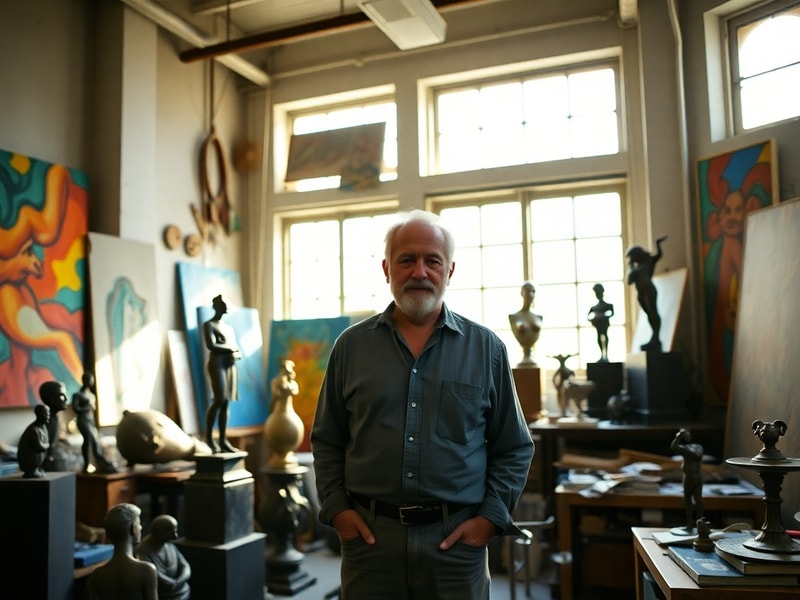
Despite this growing recognition, Pardo remains grounded. He continues to live and work in Seville, in a converted 18th-century house near the Guadalquivir River. The studio occupies the top floor, where north-facing windows provide even, natural light. He rarely travels for openings, preferring to let his work speak for itself. “Artists should be judged by what they leave behind,” he has said, “not by how loudly they announce it.”
Fernandez Pardo’s art is a reminder that subtlety can be profound. In an era of instant gratification and constant noise, his work asks for patience—for viewers to stand close enough to see the brushstrokes, to trace the edges, to feel the weight of a single color. It’s not art that dazzles; it’s art that endures. And in that endurance lies its power.
For those interested in exploring similar voices in contemporary art, our Art category features a curated selection of minimalist and conceptual works from emerging and established artists alike. If you’re drawn to the interplay of structure and emotion, you might also appreciate the curated Design section, where form and function merge in thoughtful ways.