Football has long served as a bridge between nations, transcending political divides and cultural barriers. Nowhere is this more evident than in the complex relationship between Iran and FIFA, soccer’s global governing body. The intersection of sports and geopolitics has created a narrative that goes beyond matches and rankings, revealing how football can both challenge and reinforce national identity.
Iran’s football history stretches back to the early 20th century, but its international presence gained real momentum in the 1970s. The national team qualified for the FIFA World Cup for the first time in 1978, just months before the Islamic Revolution reshaped the country’s political and social landscape. That World Cup appearance in Argentina would be the first of several highs and lows for Iranian football, set against a backdrop of revolution, war, and global isolation. Today, Iran remains one of Asia’s football powerhouses, yet its path to the world stage continues to be shaped by forces far beyond the pitch.
The Rise of Iran on the Global Football Stage
Iran’s footballing journey is marked by steady progress and occasional breakthroughs. The national team, known as the “Team Melli,” has qualified for six FIFA World Cups since 1978, including consecutive appearances in 2014, 2018, and 2022. These qualifications have not only brought international recognition but have also galvanized a nation where football is more than a sport—it’s a cultural phenomenon.
The Islamic Republic of Iran Football Federation (IRIFF), founded in 1979, has overseen a system that blends traditional values with modern training methods. Youth development has become a priority, with academies in cities like Tehran, Isfahan, and Tabriz producing talents who now play in top European leagues. Stars like Sardar Azmoun, who plays for Bayer Leverkusen in Germany, and Alireza Jahanbakhsh, formerly of Brighton & Hove Albion in the English Premier League, have become national icons, inspiring a new generation.
The team’s performances at the AFC Asian Cup further illustrate its regional dominance. Iran has won the tournament three times—in 1968, 1972, and 1976—before the revolution, and reached the final in 2004, 2016, and 2019. These achievements have cemented its status as one of Asia’s football heavyweights, though the ultimate prize—a World Cup knockout stage berth—remains elusive.
Key Moments in Iran’s World Cup History
- 1978 (Argentina): Iran’s first-ever World Cup appearance ended with three heavy defeats, but it marked the beginning of a global football presence.
- 1998 (France): Coach Jalal Talebi led Iran to its first World Cup win in 20 years, defeating the United States 2–1 in a historic match.
- 2006 (Germany): Iran failed to advance past the group stage, but the team’s participation kept football alive in the public consciousness during a period of international tension.
- 2014 (Brazil): Iran drew with Nigeria and Bosnia-Herzegovina, narrowly missing out on the Round of 16 on goal difference.
- 2018 (Russia): After a 1–0 win over Morocco, Iran was eliminated following a 1–0 loss to Spain and a 2–0 defeat to Portugal.
- 2022 (Qatar): Iran topped its group in the Asian qualifiers and entered the World Cup with optimism, but a 2–0 loss to England and 1–0 defeat to the USA ended its campaign in the group stage.
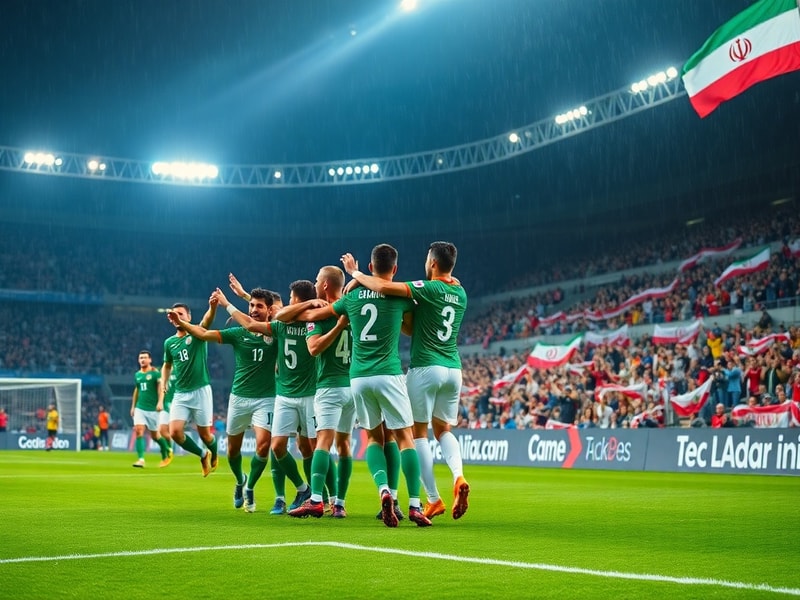
Each of these tournaments has been more than a sporting event for Iranians. Broadcasts of matches draw millions of viewers, and stadiums fill with fans waving the national flag and chanting in unison. Football has become a rare space where political divisions soften and national pride unites.
FIFA and Iran: A Relationship Defined by Rules and Resistance
The relationship between Iran and FIFA is not merely administrative—it is deeply political. FIFA, as the global regulator of football, enforces rules on human rights, governance, and stadium safety. Iran’s government, a theocracy with a complex legal system, has often clashed with these standards, particularly regarding women’s rights and stadium access.
For decades, Iranian women were banned from attending men’s football matches, a policy rooted in conservative interpretations of Islamic law. This changed in 2019 after years of advocacy and pressure from FIFA, which threatened to suspend Iran from international competitions unless the ban was lifted. In October 2019, a group of women attended a World Cup qualifier in Tehran for the first time in nearly 40 years. That symbolic moment, however, did not end the debate. While access has improved, enforcement remains inconsistent, and women’s attendance is often restricted or monitored.
FIFA’s stance has evolved from passive compliance to active enforcement. In 2022, FIFA fined the Iranian FA $10,000 for failing to ensure equal access for women during World Cup qualifiers. Though the fine was symbolic, it underscored FIFA’s willingness to hold member associations accountable—even when doing so risks political backlash.
Iran’s government has responded with a mix of defiance and adaptation. Authorities have invested in stadium infrastructure and safety measures to meet FIFA standards, but cultural resistance persists. The tension reflects a broader global struggle: can global sports organizations enforce universal values like gender equality and human rights without becoming instruments of foreign policy?
Football as a Mirror of Iranian Society
Football in Iran is not just about performance—it’s about representation. The national team’s players reflect the country’s diversity: Persians, Azeris, Kurds, Arabs, Baloch, and others all wear the same jersey. Yet, this unity is complicated by regional and ethnic tensions that occasionally surface in the media and among fans.
The Team Melli’s anthem, “Ey Iran,” is a patriotic song that predates the revolution. Sung before matches, it evokes a sense of shared history and national pride. But the song’s lyrics, which reference pre-revolutionary Iran, have also sparked controversy, with some conservatives calling for its replacement. The debate highlights how football can amplify cultural and political divides within Iranian society itself.
Beyond the national team, domestic football in Iran faces challenges. The Persian Gulf Pro League, established in 2001, has grown in popularity, drawing large crowds and television audiences. Clubs like Persepolis and Esteghlal, both based in Tehran, boast passionate fan bases and fierce rivalries. However, financial instability, corruption scandals, and poor infrastructure have hindered development.
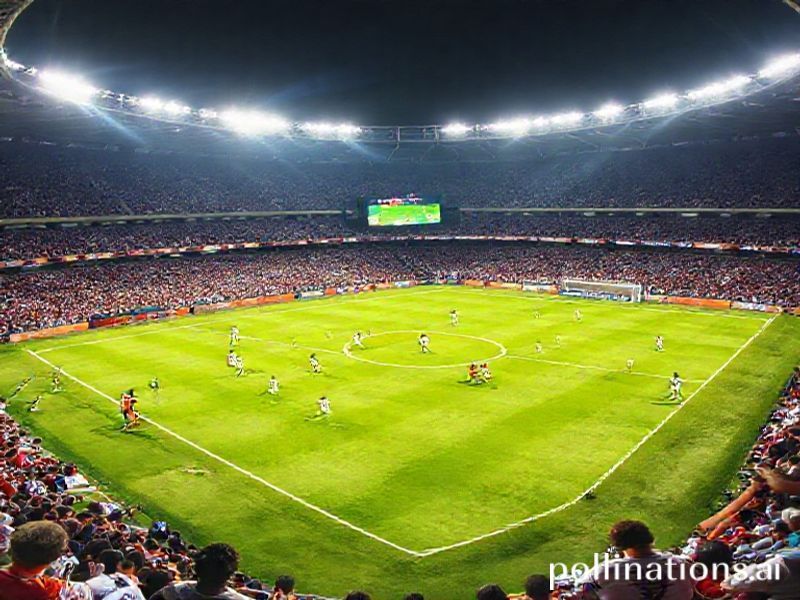
Stadiums often suffer from overcrowding and outdated facilities. Safety standards lag behind those in Europe and South America, and the risk of tragedy looms large. In 2022, a crush of fans at a match in Tehran’s Azadi Stadium led to a stampede that killed at least five people. The incident exposed the fragility of Iran’s football infrastructure and the urgent need for reform.
The Future of Iran and FIFA: Can Football Bridge Divides?
The future of Iran’s football relationship with FIFA hinges on two parallel tracks: compliance and reform. On the compliance side, Iran must continue to meet FIFA’s evolving standards on human rights, stadium safety, and governance. This includes not only allowing women to attend matches but ensuring their safety and dignity inside stadiums.
On the reform side, Iran’s football authorities must address systemic issues within the domestic league. Investment in youth academies, coaching education, and infrastructure is essential if Iran is to produce world-class talent consistently. The recent emergence of players like Milad Mohammadi, who played for Club Brugge in Belgium, signals progress, but the pipeline remains uneven.
There is also the question of political influence. The Iranian government maintains oversight of the IRIFF, and appointments to key positions often reflect political loyalty rather than sporting merit. This has led to accusations of cronyism and has stifled innovation in team management and coaching.
For FIFA, the challenge is to balance enforcement with diplomacy. Suspending Iran from international competition could have unintended consequences, isolating the country further and potentially pushing it toward alternative alliances—such as with Russia or China—in football governance. Conversely, turning a blind eye to human rights abuses risks undermining FIFA’s credibility as a global leader in ethical sports governance.
Football in Iran remains a powerful force for unity and identity. It offers a glimpse of what could be—a nation where talent transcends politics, and where the love of the game brings people together across divides. Yet, as long as FIFA’s rules and Iran’s laws remain in tension, the beautiful game will continue to reflect the complexities of a country caught between tradition and change.
For fans around the world, Iran’s story in football is a reminder that the pitch is not just a stage for athletic prowess. It is a microcosm of history, power, and culture—and sometimes, the most important matches are not played on the field, but in the boardrooms and corridors of global sports governance.