Halle Open: Germany’s Hidden Gem in the Grass-Court Season
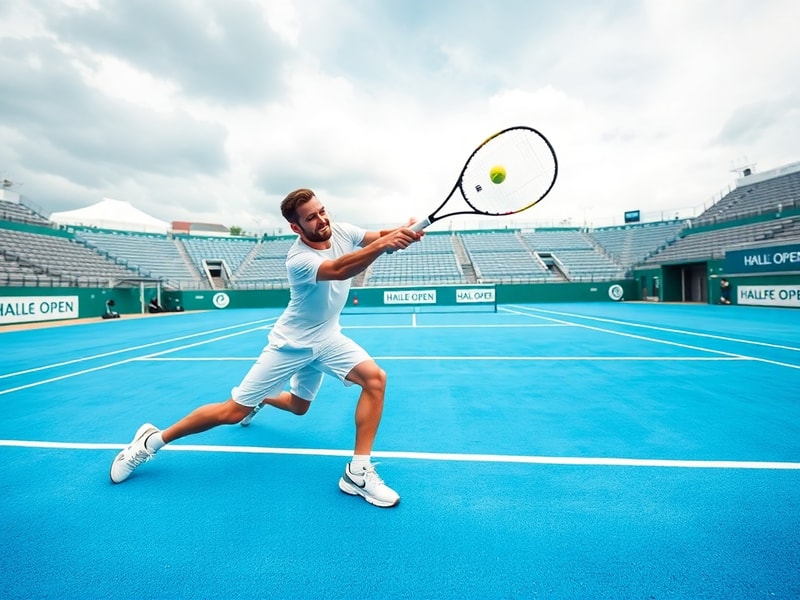
The Halle Open has quietly cemented itself as one of Germany’s most prestigious grass-court tournaments, blending tradition with modern competition. While overshadowed by Wimbledon or the ATP Finals, this event offers a unique snapshot of early-summer tennis, where rising stars clash with seasoned veterans on fast, low-bouncing courts. The tournament’s history stretches back to 1993, but its significance has grown in recent years as players use it as a critical warm-up for Wimbledon. With a compact schedule and a focus on grass-court mastery, the Halle Open delivers high-energy matches in front of passionate German crowds.
Why the Halle Open matters in the grass-court season
For many top-ranked players, the Halle Open serves as a litmus test for Wimbledon readiness. Unlike the Queen’s Club Championships in London, which draws a similar caliber of field, Halle’s smaller stadium and intimate atmosphere create a different kind of pressure. Matches here often hinge on serve-and-volley tactics, precision groundstrokes, and the ability to adapt to unpredictable bounces. The tournament’s five-set finals format—unusual for ATP 500 events—adds another layer of intensity, forcing competitors to dig deeper physically and mentally.
Another distinguishing factor is the event’s grass. Unlike Wimbledon’s meticulously maintained courts, Halle’s grass tends to be faster, rewarding aggressive play and slice shots. This surface dynamic has led to unexpected upsets over the years, where underdogs outmaneuver higher-ranked opponents by exploiting the court’s quirks. In 2023, for instance, Borna Ćorić defeated Stefanos Tsitsipas in a tight three-set final, showcasing how adaptability can triumph over raw power on grass.
Beyond the on-court action, the Halle Open plays a vital role in Germany’s tennis ecosystem. It’s one of the few ATP events held in the country, drawing local heroes like Alexander Zverev and Jan-Lennard Struff. Their participation not only energizes the crowd but also inspires the next generation of German players. For sponsors and broadcasters, the tournament offers a prime opportunity to engage with a dedicated tennis audience that values both tradition and innovation.
Key moments and standout performances
The Halle Open has produced its share of legendary matches and career-defining victories. Below are some of the tournament’s most memorable moments:
- Roger Federer’s dominance: The Swiss maestro won the tournament a record ten times, including five consecutive titles from 2003 to 2007. His 2008 final against Philipp Kohlschreiber remains a fan favorite, featuring a five-set thriller that showcased Federer’s grass-court mastery.
- Roger Federer’s farewell: In 2021, Federer played his first match on grass since knee surgery, defeating Dominik Koepfer before falling to Felix Auger-Aliassime. Though he didn’t advance far, the emotional moment marked a poignant chapter in his storied career.
- Alexander Zverev’s breakthrough: The German star claimed his first Halle title in 2017, defeating Roger Federer in the semifinals and Richard Gasquet in the final. This victory catapulted Zverev into the global spotlight and signaled his arrival as a force on grass.
- Unexpected champions: Players like Tommy Haas (2012) and Pierre-Hugues Herbert (2019) have lifted the trophy, proving that Halle rewards grit over pedigree. Herbert’s 2019 win, in particular, highlighted the tournament’s ability to elevate lesser-known talents.
These moments underscore Halle’s reputation as a tournament where the past and future of tennis collide. Whether it’s a veteran chasing redemption or a young player announcing their arrival, the Halle Open consistently delivers drama and intrigue.
The tournament’s broader impact on grass-court tennis
The Halle Open’s influence extends beyond its immediate results. For coaches and analysts, the tournament provides a treasure trove of data on grass-court performance trends. Serve speeds, return percentages, and net-rushing statistics from Halle often predict Wimbledon success. In 2022, for example, the top four seeds in Halle all reached the semifinals at Wimbledon, reinforcing the tournament’s predictive power.
Financially, the Halle Open is a model of sustainability in professional tennis. Unlike larger events that rely on massive sponsorship deals, Halle thrives on local partnerships and community engagement. The tournament’s organizers have also invested in grass-court facilities across Germany, helping to grow the sport at the grassroots level. This approach contrasts with the ATP’s push toward global expansion, highlighting a more localized, fan-centric philosophy.
Another area where Halle sets itself apart is in player well-being. The tournament’s compact schedule—just one week of play—reduces the physical strain on competitors, allowing them to recover quickly for Wimbledon. This contrasts with events like the Citi Open in Washington, D.C., which often forces players to play multiple tournaments in succession. For athletes managing injuries or workload, Halle offers a pragmatic alternative to the packed ATP calendar.
The Halle Open also plays a cultural role in Germany, where tennis struggles to compete with football for mainstream attention. By hosting a high-profile ATP event, the tournament provides a rare platform for tennis to shine in a football-dominated media landscape. Local media coverage is extensive, and the event draws thousands of spectators who might not otherwise attend a tennis match. This grassroots engagement is crucial for the sport’s long-term growth in the country.
A tournament with room to evolve
Despite its strengths, the Halle Open faces challenges in maintaining its relevance. One pressing issue is the increasing physical demands of the ATP Tour. With players like Carlos Alcaraz and Jannik Sinner prioritizing Grand Slams and Masters 1000 events, smaller tournaments risk losing top talent. To combat this, Halle could explore innovative formats, such as a doubles-focused day or exhibition matches featuring retired legends, to keep the event fresh.
Another opportunity lies in expanding its digital footprint. While the tournament has a strong local following, its global reach remains limited. Enhanced streaming options, behind-the-scenes content, and player interviews could attract a broader audience, especially in regions where tennis is growing, such as Asia and South America. Social media engagement, particularly on platforms like TikTok and Instagram, could also help Halle connect with younger fans who consume content differently than traditional tennis audiences.
Ultimately, the Halle Open’s greatest asset is its authenticity. In an era where sports are increasingly commercialized and homogenized, Halle offers a rare blend of tradition, competition, and community. It’s a tournament where fans can get close to the action, where players can test their grass-court skills without the overwhelming pressure of a Grand Slam, and where the sport feels more human and less like a spectacle. As tennis continues to evolve, events like Halle serve as a reminder of what makes the sport special—a balance of history, passion, and unpredictability.