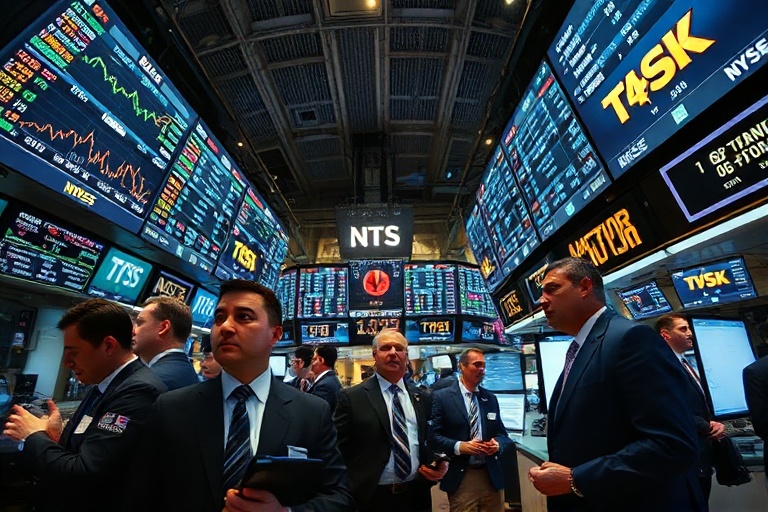
How Financial Companies Shape the Economy and Your Wallet
Financial companies form the backbone of modern economies, channeling capital between savers and borrowers while underpinning everything from daily transactions to multibillion-dollar mergers. These institutions—ranging from commercial banks and investment firms to insurance providers and fintech startups—operate under a complex web of regulations designed to maintain stability, protect consumers, and foster growth. Yet their influence extends beyond balance sheets. When a regional bank collapses or a digital payment platform halts service, the ripple effects can disrupt businesses, freeze payrolls, and erode public trust in the financial system.
The core functions and types of financial companies
At their most fundamental level, financial companies facilitate the movement and management of money. Commercial banks accept deposits and extend loans, enabling families to buy homes and small businesses to expand. Investment banks, on the other hand, advise corporations on mergers and acquisitions, underwrite securities, and trade in global markets. Insurance companies pool risk, offering policies that protect against everything from car accidents to natural disasters. Fintech firms—often digital-first and app-based—are now reshaping this landscape by automating services, reducing costs, and reaching underserved populations.
These institutions can be categorized broadly:
- Depository institutions: Banks and credit unions that hold customer funds and offer loans.
- Investment institutions: Asset managers, broker-dealers, and private equity firms that deploy capital for returns.
- Contractual institutions: Insurance companies and pension funds that collect premiums and pay out claims or benefits.
- Fintech and payment processors: Digital platforms that streamline transactions, lending, and financial planning.
Each category plays a distinct role, yet they increasingly overlap. Traditional banks now offer robo-advisors, while fintech lenders partner with merchants to embed financing options at checkout. This convergence is blurring the lines between sectors and intensifying competition.
Regulation and risk: balancing innovation with stability
Financial companies operate in one of the most heavily regulated industries on earth. After the 2008 financial crisis, governments worldwide imposed stricter capital requirements, stress tests, and transparency rules to prevent another systemic collapse. In the United States, the Dodd-Frank Act expanded oversight of banks, while the SEC polices securities markets. The European Union’s MiFID II directive standardized trading practices across member states. These frameworks aim to curb reckless risk-taking and protect consumers from predatory practices.
Yet regulation also creates friction. Compliance costs can stifle innovation, particularly for smaller players. Consider the rise of “shadow banking”—non-bank lenders and peer-to-peer platforms that operate outside traditional supervision. While these entities can fill gaps in credit markets, their lack of oversight raises concerns about transparency and systemic risk. The collapse of Silicon Valley Bank in March 2023, triggered by a bank run and poor risk management, underscored how quickly localized failures can cascade into broader crises.
Regulators face a constant challenge: fostering innovation without compromising stability. Central banks now monitor fintech firms as closely as traditional banks, and some jurisdictions are exploring “sandbox” environments where startups can test new products under relaxed rules. The goal is to encourage progress while maintaining safeguards.
Technology’s double-edged sword in finance
Technology has democratized access to financial services but also introduced new vulnerabilities. Mobile banking apps allow customers in remote areas to open accounts and transfer funds with a few taps. Algorithmic trading platforms execute millions of stock trades per second, improving liquidity and price discovery. Blockchain-based systems promise faster, cheaper cross-border payments. Yet these innovations come with risks—cyberattacks, data breaches, and algorithmic bias can undermine trust and stability.
One of the most transformative trends is the rise of embedded finance. Instead of visiting a bank or downloading a separate app, consumers now encounter financial services seamlessly within platforms they already use. Ride-sharing apps offer instant loans to drivers. E-commerce sites provide “buy now, pay later” options at checkout. Social media platforms integrate payment tools. This shift reduces friction but also raises concerns about data privacy and consumer protection.
Cryptocurrencies and decentralized finance (DeFi) represent another frontier. Proponents argue that blockchain can eliminate intermediaries, reduce costs, and empower individuals. Critics counter that these systems are prone to fraud, manipulation, and extreme volatility. The collapse of FTX in 2022—once a $32 billion crypto exchange—exposed glaring gaps in oversight and governance, reinforcing calls for stricter regulation of digital assets.
What’s next for financial companies?
The financial industry is at an inflection point. Climate change is reshaping risk models, with insurers and banks re-evaluating exposure to industries tied to fossil fuels. Artificial intelligence is automating everything from fraud detection to personalized financial advice, though it also raises ethical questions about transparency and accountability. Geopolitical tensions are fragmenting global supply chains and capital flows, forcing companies to rethink their operational strategies.
For consumers and businesses alike, the stakes are high. Those who adapt to digital-first models will thrive, while laggards risk irrelevance. Regulators must strike a delicate balance—encouraging progress without letting risk spiral out of control. And in an era of instant transactions and global interconnectivity, even the smallest misstep can have outsized consequences.
Ultimately, financial companies are not just about numbers on a balance sheet. They are the engines that power economies, the guardians of household wealth, and the arbiters of trust in an increasingly complex world. Their evolution will shape everything from the price of your morning coffee to the stability of your retirement fund.