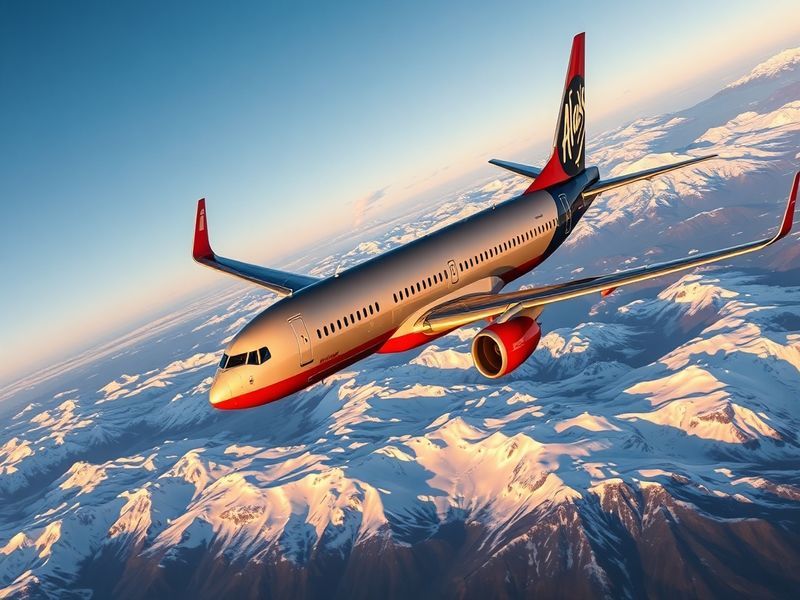
How Alaska Air Grew from a Tiny Carrier to a Major Airline
Alaska Air Group, parent company of Alaska Airlines and Horizon Air, has grown from a modest regional carrier into one of the most respected airlines in North America. With a focus on customer service, operational reliability, and strategic expansion, the airline has carved out a unique position in the highly competitive aviation industry. Its success story offers lessons in adaptability, brand loyalty, and the challenges of merging corporate cultures.
The Evolution of Alaska Air
Founded in 1932 as McGee Airways in Anchorage, Alaska, the airline began as a small floatplane operation serving remote Alaskan communities. Over the decades, it expanded through mergers and acquisitions, including the 1972 purchase of Alaska Airlines by executives who maintained the carrier’s regional identity while pushing for broader reach. The 2016 merger with Virgin America marked a turning point, catapulting Alaska Air into the national spotlight.
This acquisition was more than a fleet expansion—it was a cultural integration. Virgin America was known for its stylish cabins and tech-forward approach, while Alaska Airlines had built its reputation on dependability and a strong connection to the West Coast. Merging the two required careful navigation of operational systems, employee morale, and customer expectations. The result was a hybrid model that blended Virgin’s innovation with Alaska’s operational discipline.
Key Milestones in Alaska Air’s Growth
- 1940s: Began scheduled service between Anchorage and Bristol Bay.
- 1970s: Expanded to the Lower 48 states with service to Seattle and Portland.
- 1985: Became a public company, enabling further growth.
- 2000s: Launched a major route expansion to Hawaii and Mexico.
- 2016: Completed the Virgin America merger, doubling its size.
- 2023: Achieved the highest customer satisfaction rating among North American airlines in the J.D. Power survey for the 16th consecutive year.
Operational Excellence and Customer Focus
Alaska Air’s reputation for reliability stems from a disciplined approach to operations. The airline has consistently ranked at the top of on-time performance metrics, a critical factor for business travelers and cost-conscious consumers alike. Unlike many competitors that prioritize rapid growth over punctuality, Alaska has maintained a conservative expansion strategy, focusing on adding routes that align with its existing network.
Customer service has been another cornerstone of its success. The airline’s Mileage Plan loyalty program is frequently cited as one of the best in the industry, offering flexible redemption options and elite perks without the complexity of larger programs. Even during industry-wide disruptions, such as the 2020 pandemic, Alaska Air maintained a relatively smooth operation, avoiding the mass layoffs and cancellations seen elsewhere.
This commitment to service extends to its employees. Alaska Air has one of the most unionized workforces in the industry, and labor relations have generally been stable. The company’s leadership has emphasized collaboration with unions, a rarity in an industry often plagued by labor disputes. This approach has fostered a culture of accountability and pride among staff, which translates into better service for passengers.
The Challenges of Scaling Up
Despite its successes, Alaska Air faces significant challenges as it grows. The integration of Virgin America’s operations and workforce proved difficult, with some operational hiccups in the early years post-merger. Additionally, the airline’s heavy reliance on West Coast and Hawaii routes leaves it vulnerable to economic downturns in those regions. Competition from ultra-low-cost carriers like Spirit and Frontier has also intensified, pressuring Alaska to adjust its pricing strategy.
Another challenge is fleet standardization. While Alaska Air’s fleet of Boeing 737s is modern and efficient, the diversity of aircraft inherited from Virgin America complicated maintenance and pilot training. The airline has since worked to streamline its fleet, but this process takes time and significant investment.
Strategic Responses to Industry Pressures
- Route Optimization: Focused on high-demand, high-margin routes while reducing service to less profitable destinations.
- Technology Upgrades: Invested in digital tools to improve booking, check-in, and in-flight connectivity.
- Sustainability Initiatives: Committed to carbon neutrality by 2040, including sustainable aviation fuel (SAF) adoption and fleet modernization.
- Partnerships: Expanded codeshare agreements with airlines like American and Qantas to offer broader global connectivity.
Broader Implications for the Airline Industry
Alaska Air’s story reflects broader trends in the airline industry, particularly the tension between growth and stability. While giants like Delta and United dominate through sheer scale, Alaska has thrived by focusing on a niche—West Coast and Hawaii connectivity—and executing it exceptionally well. This strategy has allowed it to compete without the overhead of a sprawling global network.
The airline’s success also highlights the importance of brand loyalty in an era of commoditized travel. In a market where most airlines are seen as interchangeable, Alaska Air has cultivated a distinct identity rooted in its Pacific Northwest heritage and commitment to service. This differentiation has been crucial in retaining customers despite competitive pricing from budget carriers.
Looking ahead, Alaska Air’s ability to adapt will be tested. The rise of remote work may reduce business travel demand, a key revenue segment. Meanwhile, the push for sustainability requires substantial investment, which could strain margins. Yet, if history is any indication, the airline is likely to navigate these challenges with the same pragmatism that has defined its growth.
Conclusion
Alaska Air’s journey from a small Alaskan carrier to a major airline is a testament to the power of strategic focus and operational discipline. By blending the best of its legacy with the innovations of its Virgin America acquisition, the airline has crafted a model that balances growth with stability. Its emphasis on customer service and employee relations sets it apart in an industry often defined by cutthroat competition and instability.
As the airline industry continues to evolve, Alaska Air’s story offers valuable insights into the importance of staying true to core values while adapting to change. Whether it’s through fleet modernization, sustainability efforts, or route optimization, the company’s approach underscores a simple truth: in aviation, as in life, consistency and reliability are just as important as expansion.
For travelers and industry observers alike, Alaska Air remains a compelling case study in how to build a lasting brand in a volatile sector. Its future may not be without challenges, but its past suggests it is more than equipped to meet them.
For more on airline industry trends, visit our Travel section. To explore the impact of airline mergers, check out our Business category.