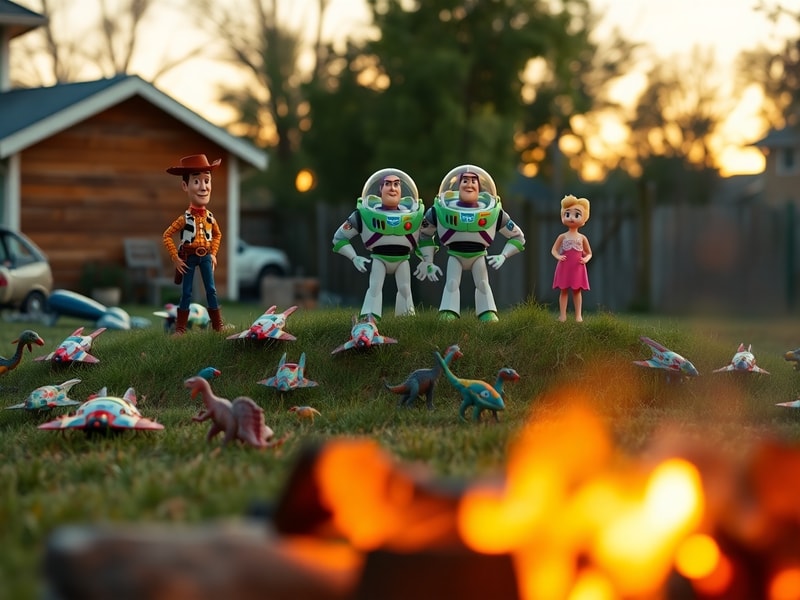
Pixar’s Toy Story franchise has spent decades redefining animated storytelling, blending humor, heart, and nostalgia into a formula that feels as timeless as the toys themselves. With Toy Story 6 officially greenlit and rumored to be in early development, the series stands on the brink of another evolution—one that could redefine its legacy while addressing modern questions about legacy, change, and what it means to matter.
Why a sixth Toy Story feels inevitable—and necessary
After Toy Story 4 wrapped up Woody and Bo Peep’s journey with emotional finality, many assumed the story had reached its natural endpoint. Yet the franchise’s cultural footprint never truly faded. Reboots, spin-offs like Lightyear, and endless merchandising kept the characters alive in the public imagination. More importantly, the themes of growth, belonging, and purpose remain universally relevant. A new film isn’t just a commercial opportunity—it’s an artistic challenge: can Pixar craft a narrative that honors the past while addressing the present?
Some fans argue the series should have stopped after Toy Story 3, where the bittersweet farewell to Andy felt definitive. Others point to the success of Lightyear (2022) as proof that the world still craves Toy Story stories—just with fresh perspectives. The key difference with Toy Story 6 may lie in its willingness to confront uncomfortable truths: what happens when the toys are no longer the center of a child’s life? How do they reconcile their own aging with the passage of time?
Pixar has a history of evolving its storytelling. Toy Story 2 deepened Woody’s character by exploring his origin and insecurities. Toy Story 3 grappled with mortality and legacy. Toy Story 4 examined love, purpose, and letting go. Each sequel built on the last, transforming the franchise from a simple buddy comedy into a meditation on identity. A sixth film could push this even further—perhaps by introducing a new human protagonist, exploring the digital age’s impact on play, or even questioning whether toys should exist at all in a world dominated by screens and AI.
The emotional and creative stakes of Toy Story 6
Any new Toy Story film faces a delicate balance: nostalgia must coexist with innovation. The original trilogy thrived on its emotional core—Andy’s love for his toys, the fear of abandonment, the bittersweet transition into independence. But after three decades, those themes risk feeling repetitive unless treated with fresh insight.
One promising direction could involve introducing a new generation of toys. Rather than focusing solely on Woody, Buzz, and the gang, the story might center on a child in middle school or high school, where play is no longer the primary activity. The toys could struggle with obsolescence, forced to redefine their purpose in a world that no longer revolves around them. This would mirror real-life experiences of adults revisiting childhood passions in a digital age.
Another possibility is a meta-narrative: what if the toys become aware of their own fictional nature? A storyline involving a child who writes stories about them, or a glitch in the animation process that reveals their programmed existence, could add a layer of existential depth rarely seen in family films. Pixar has experimented with self-awareness before—Inside Out and Soul played with meta-themes—but doing so within the Toy Story universe could feel both bold and thematically coherent.
There’s also the question of legacy. Toy Story 6 isn’t just another sequel—it’s a potential capstone to a franchise that has shaped multiple generations. Pixar must ask: does the story still have something new to say, or is it time to let the toys rest? The answer may lie in how the film handles the passage of time. After all, the most powerful Toy Story moments weren’t about action or humor—they were about change, loss, and growth.
What fans and critics might expect from the next chapter
Based on industry reports and fan speculation, Toy Story 6 could take one of several directions. One rumor suggests the film will focus on Bonnie’s younger sister, who inherits the toys after Andy and Bonnie move on. This would allow the story to explore generational shifts and the idea that new children bring new meanings to old toys. Another possibility is a time-jump narrative, where the toys are rediscovered by a child decades later, forcing them to adapt to a drastically different world.
Regardless of the plot, certain elements will likely remain constants:
- Tom Hanks and Tim Allen’s returns as Woody and Buzz—their chemistry is irreplaceable and anchors the franchise.
- A new human protagonist, possibly a child of color or from a different background, reflecting modern audiences.
- A visual evolution, with Pixar pushing its animation technology to render toys in hyper-realistic detail or even toy-like textures.
- Emotional weight, with themes of passing the torch, letting go, and finding new purpose.
The biggest challenge will be avoiding fan service for its own sake. The best sequels don’t just revisit old characters—they evolve them. Toy Story 4 succeeded because it focused on Bo Peep’s independence and Woody’s willingness to step aside. A sixth film must do the same, ensuring that the toys’ journey feels meaningful rather than sentimental.
The broader implications: Can Toy Story remain relevant in 2025?
The franchise’s longevity raises important questions about nostalgia in modern entertainment. In an era where reboots and sequels dominate, Toy Story 6 could either reinforce the trend or set a new standard for meaningful continuation. Its success may depend on how it addresses contemporary anxieties—about technology replacing human connection, about growing up in a world that feels increasingly transient, and about the role of art and play in an age of algorithms.
Pixar has always excelled at blending personal and universal themes. If Toy Story 6 can tap into the anxieties of modern childhood—social media, environmental concerns, shifting family dynamics—it could resonate even more deeply than its predecessors. The toys, after all, are metaphors for the things we love and the fear of being replaced. In a world where AI-generated content and deepfake nostalgia are becoming commonplace, the idea of a handmade toy fighting for relevance feels strikingly relevant.
There’s also the matter of representation. The original films centered on a white, middle-class family. Future installments could diversify the human cast, reflecting a broader range of experiences. This isn’t just about political correctness—it’s about ensuring that the story’s themes of belonging and purpose resonate with all children, regardless of background.
Ultimately, Toy Story 6 isn’t just another sequel. It’s a test of whether a franchise built on nostalgia can evolve into something timeless. If Pixar succeeds, it could redefine what it means to grow up—not as an end, but as a new beginning. If it fails, it risks becoming a hollow echo of its former self.
One thing is certain: the toys will never truly go away. They’re too ingrained in our cultural DNA. But their next adventure must prove they still have something new to say.