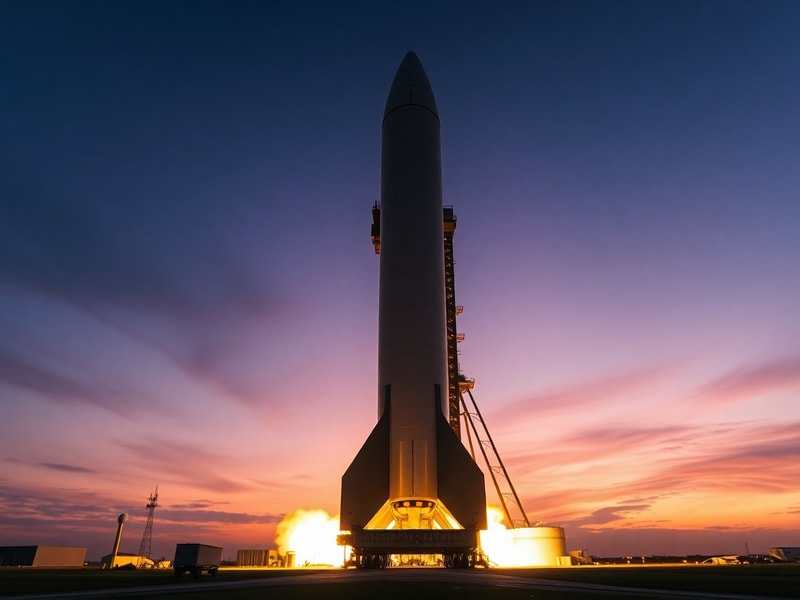
From Vision to Valuation: How SpaceX’s IPO Could Redefine Private Spaceflight
SpaceX’s potential initial public offering (IPO) has become one of the most anticipated financial events in modern aerospace history. While the company has not yet filed for a public listing, industry analysts and investors are already speculating about its valuation, timing, and global implications. With a track record of innovation that includes reusable rockets, satellite internet via Starlink, and crewed missions to the International Space Station, SpaceX stands at the confluence of technology, finance, and human ambition.
Unlike traditional aerospace giants that grew under government contracts, SpaceX was built in the 21st century with a Silicon Valley mindset. Elon Musk’s company didn’t just aim to reach space—it sought to make space accessible, affordable, and routine. This philosophy has attracted a global following, from engineers in India to investors in Singapore and regulators in Brussels. The IPO, whenever it happens, will not only unlock liquidity for early stakeholders but also signal a new phase in humanity’s relationship with the cosmos.
The Global Race to Go Public
SpaceX is not alone in eyeing public markets. In 2024, several high-profile space companies—including Rocket Lab, Astra Space, and even some Chinese commercial launch firms—have pursued IPOs or SPAC mergers. The space sector is maturing rapidly, moving from a government-dominated domain to a competitive commercial arena. This shift reflects a broader trend: the privatization of space exploration, often called “NewSpace.”
In Europe, companies like Isar Aerospace and Rocket Factory Augsburg are preparing for public listings, supported by EU funding and venture capital. Meanwhile, in China, several state-backed and private aerospace firms have gone public on the Shanghai and Shenzhen exchanges, reflecting Beijing’s strategic push to dominate the commercial space sector. SpaceX’s IPO would not only validate this global movement but also set a benchmark for valuation and performance.
According to a report by Northern Sky Research, the global space economy is projected to reach $1.8 trillion by 2035. Within that, commercial launch services are expected to grow at a compound annual rate of 14%. A successful SpaceX IPO could accelerate this growth by attracting institutional investors who have historically shied away from private space ventures.
What Would an IPO Mean for Investors and the Public?
For retail and institutional investors, a SpaceX IPO would offer a rare opportunity to own a piece of a company that has redefined aerospace innovation. Unlike traditional defense contractors such as Lockheed Martin or Boeing, SpaceX built its reputation on disruption—lowering launch costs by 90%, pioneering reusable rockets, and deploying a global satellite broadband network. These achievements have translated into real revenue: in 2023, SpaceX generated over $7 billion in revenue, primarily from Starlink subscriptions and NASA contracts.
Yet, investing in SpaceX would not come without risks. The company remains privately held, and its financial disclosures are limited. In 2022, reports suggested that SpaceX was valued at $137 billion in private markets. By 2024, that figure had risen to over $180 billion in some secondary market transactions. But public investors would scrutinize not just the numbers but the company’s long-term strategy—especially in the face of competition from China’s rapidly advancing space program and domestic rivals like Blue Origin.
A SpaceX IPO could also influence global stock markets. Technology and aerospace stocks often experience volatility, and SpaceX’s entry could trigger sector rotation, drawing capital away from traditional tech giants like Apple or Nvidia. In Japan, where retail investors have shown growing interest in space-related equities, a SpaceX listing could spark a new wave of investment interest.
Cultural and Geopolitical Ripples
Beyond finance, a SpaceX IPO would carry significant cultural and geopolitical weight. Since its founding in 2002, SpaceX has become a symbol of American innovation and entrepreneurial spirit. Its success has inspired a new generation of engineers, artists, and dreamers across the globe. The company’s live-streamed rocket launches have amassed millions of viewers, turning spaceflight into a form of mass entertainment—akin to a global Super Bowl where the stakes are cosmic.
But the company’s global influence extends beyond culture. In Africa, where internet penetration remains low, Starlink’s satellite network has become a lifeline for remote communities. In India, SpaceX is partnering with local firms to expand broadband access. These international partnerships underscore how SpaceX is not just an American company but a global platform—one that could be reshaped by public ownership.
The geopolitical dimension is equally complex. In 2022, Russia cited SpaceX’s support for Ukraine as a reason to withdraw from international space cooperation. Meanwhile, China has accelerated its own commercial space initiatives, launching over 60 orbital missions in 2023 alone. A SpaceX IPO would intensify the strategic rivalry between the U.S. and China in space, influencing defense policies, export controls, and international alliances.
Timing, Challenges, and What Comes Next
Timing remains the biggest unknown. SpaceX has repeatedly delayed its IPO, citing market conditions, regulatory scrutiny, and internal priorities such as Starship development. In early 2024, reports suggested that the IPO might not occur until 2025 or later, giving the company more time to stabilize Starlink’s subscriber growth and Starship’s flight testing.
Regulatory hurdles also loom large. The U.S. Securities and Exchange Commission (SEC) has increased scrutiny of private companies with large retail investor bases. SpaceX’s public debut would require extensive disclosures about risks, including Starship’s development delays and potential liability from satellite collisions in low Earth orbit.
Despite these challenges, the momentum is undeniable. Here’s what could unfold:
- Phase One: SpaceX files confidentially with the SEC, as it did in 2018 with its initial IPO plans, before going public.
- Phase Two: The company conducts investor roadshows in major financial hubs—New York, London, Tokyo, and Dubai—highlighting Starlink’s growth and Starship’s potential.
- Phase Three: A highly anticipated IPO, potentially structured as a dual listing in the U.S. and another market like Singapore or London to attract global capital.
If successful, the IPO could unlock billions for expansion, including Mars colonization efforts and intercontinental point-to-point travel via Starship. It could also pressure competitors like Blue Origin and Relativity Space to accelerate their own public debuts.
Conclusion: A New Chapter in Cosmic Capitalism
SpaceX’s IPO, whenever it arrives, will mark more than a financial milestone—it will signal a new chapter in cosmic capitalism. The company has already transformed how we reach space. Now, it may transform how we invest in it. For a world grappling with climate change, energy scarcity, and geopolitical tension, space represents not just a frontier of exploration but a frontier of economic possibility.
As regulators, investors, and dreamers prepare for this moment, one thing is clear: the sky is no longer the limit. It’s the launchpad.