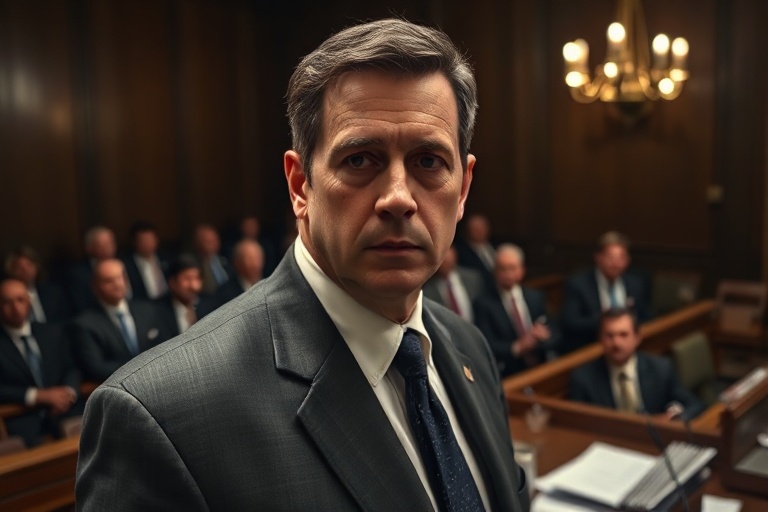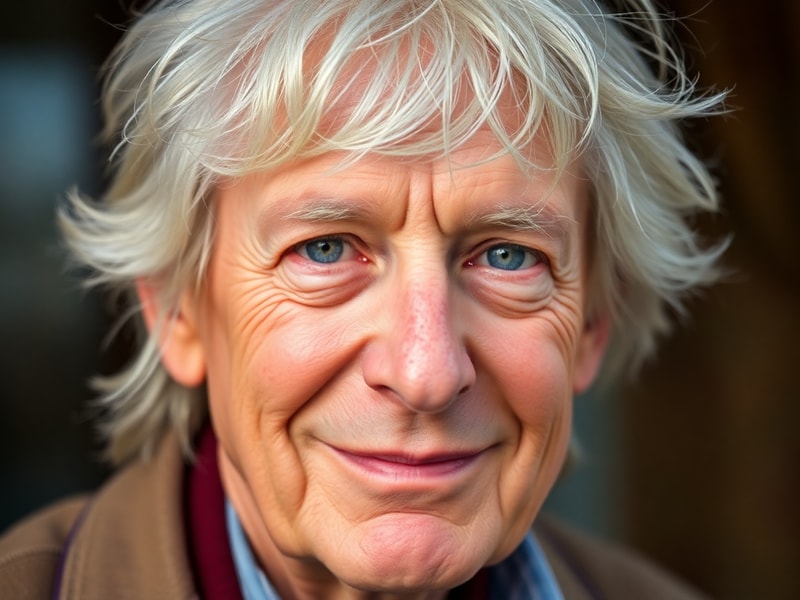
Bill Nighy is one of those actors whose presence alone elevates any project. With a career spanning over four decades, he has moved effortlessly between British television, Hollywood blockbusters, and independent films. Known for his sharp wit, understated charisma, and ability to disappear into characters, Nighy has become a global figure without ever chasing the spotlight. His work reflects a deep understanding of craft, timing, and the subtle art of making even the most eccentric roles feel grounded.
The Early Years: From Sussex to the Stage
Born William Francis Nighy on March 12, 1949, in Caterham, Surrey, Nighy grew up in a working-class family. His father worked as a lorry driver, and his mother was a psychiatric nurse. The modest surroundings of post-war Britain shaped his worldview—a perspective that would later inform his performances with authenticity and depth. Nighy initially pursued a career in journalism but quickly pivoted toward acting after joining a local theatre group.
His early stage work in the 1970s and 1980s established him as a formidable talent in the British theatre scene. He trained at the Guildford School of Acting and later became a member of the Royal Shakespeare Company. These formative years taught him the discipline of classical acting, a skill that would serve him well in both period dramas and contemporary roles. Nighy’s ability to balance humor with gravitas caught the attention of critics and directors, setting the stage for his transition to television and film.
Breakthrough and British Icons
Nighy’s breakthrough came in the 1980s and 1990s with roles that showcased his range. In the 1990s, he starred in the BBC sitcom Amongst Barbarians, where his comedic timing first garnered widespread acclaim. This led to more prominent roles in British television, including State of Play and The Crow Road, both of which highlighted his ability to portray complex, morally ambiguous characters.
His film career took off with Love Actually in 2003, where he played the lovably awkward rock star Billy Mack. The role introduced him to a global audience and remains one of his most beloved performances. Nighy’s portrayal of Mack was a masterclass in blending humor with pathos, proving that he could carry a film with little more than a smirk and a well-timed one-liner.
Around the same time, Nighy began collaborating with director Richard Curtis, a partnership that would define much of his early 21st-century career. Their work together extended beyond Love Actually to include The Girl in the Café, a 2005 television film that earned Nighy an Emmy nomination. His ability to convey deep emotion with minimal dialogue became a signature of his craft.
Hollywood and Genre-Blending Roles
By the mid-2000s, Nighy had firmly established himself in Hollywood, often playing characters that were eccentric, world-weary, or outright bizarre. His role as Davy Jones in Pirates of the Caribbean (2006-2011) introduced him to a new generation of fans. The character’s grotesque yet magnetic appeal—complete with barnacle-encrusted dreadlocks and a tentacled beard—showcased Nighy’s willingness to commit fully to even the most outlandish roles.
Nighy’s versatility allowed him to navigate genres with ease. In Shaun of the Dead (2004), he played the put-upon manager of a failing electronics store, delivering deadpan humor that resonated with audiences. In contrast, his role in Notes on a Scandal (2006) demonstrated his dramatic chops, earning him an Academy Award nomination for Best Supporting Actor. The film’s exploration of obsession and manipulation highlighted Nighy’s ability to disappear into complex, morally ambiguous roles.
His work in science fiction and fantasy further cemented his appeal. In Underworld (2003) and I, Frankenstein (2014), Nighy brought gravitas to roles that balanced action with introspection. These performances proved that he could thrive in genres often dismissed as mere entertainment, elevating them with his presence.
The Unassuming Global Icon
What sets Nighy apart from many of his peers is his refusal to embrace the trappings of celebrity. Unlike actors who chase awards or media attention, Nighy has consistently prioritized the work itself. His interviews are often marked by self-deprecating humor and a reluctance to take himself too seriously. This authenticity has endeared him to audiences worldwide, making him a beloved figure in both British and international cinema.
Nighy’s global appeal is also tied to his ability to reflect the complexities of modern life. Whether he’s playing a washed-up rock star, a supernatural villain, or a troubled teacher, his characters often grapple with themes of identity, failure, and redemption. This relatability has made him a cultural touchstone, particularly in an era where audiences crave depth and nuance in their entertainment.
His influence extends beyond film and television. Nighy has lent his voice to animated films like Arthur Christmas (2011), where his delivery brought warmth and humor to the role of Father Christmas. He has also been a vocal advocate for arts education, emphasizing the importance of storytelling in shaping cultural narratives.
A Legacy of Craft and Authenticity
As Nighy approaches his seventh decade in the industry, his legacy is one of quiet excellence. He has worked with some of the most respected directors in the world, including Stephen Frears, Martin McDonagh, and Danny Boyle, yet he has never been content to rest on his laurels. Each role is approached with the same level of commitment, whether it’s a small indie film or a major studio production.
Nighy’s ability to transcend cultural boundaries is a testament to his craft. In Japan, where he has a particularly strong following, his roles in films like The Best Exotic Marigold Hotel (2011) resonated with audiences who appreciated his blend of humor and humanity. His performances in entertainment have become touchstones for discussions about aging, ambition, and the passage of time.
Looking ahead, Nighy shows no signs of slowing down. Recent roles, such as his turn in Living (2022), where he played an aging bureaucrat confronting his own mortality, have reaffirmed his status as one of the most respected actors of his generation. The film’s exploration of existential dread and quiet resilience is a reminder of Nighy’s ability to find depth in even the most mundane of circumstances.
For aspiring actors and fans alike, Nighy’s career offers valuable lessons. It’s a career built not on hype or trend-chasing, but on a deep respect for the craft of acting. His willingness to take risks, whether in genre films or intimate dramas, has ensured that his work remains fresh and relevant. In an industry often driven by fleeting trends, Nighy’s commitment to authenticity stands as a rare and enduring example of what it means to be a true artist.
As the entertainment landscape continues to evolve, Bill Nighy remains a steady presence—a reminder that great acting is timeless. His work invites audiences to reflect on the human condition, whether through laughter, tears, or the quiet spaces in between. In a world of fleeting fame, Nighy’s legacy is built to last.