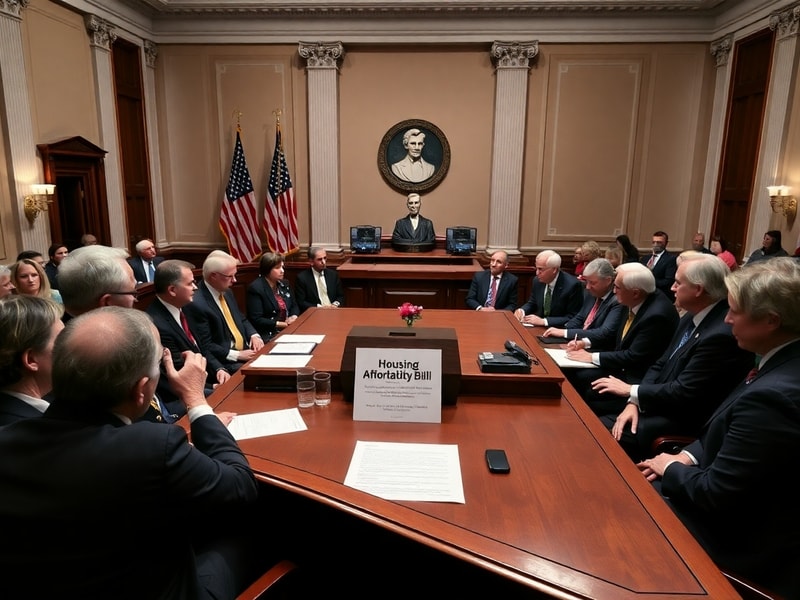
The Senate’s latest push on housing affordability arrives as home prices climb 5.7% year-over-year and rents remain stubbornly high in cities like Austin, Phoenix, and Miami. Lawmakers unveiled a bipartisan bill on Tuesday aimed at lowering costs by expanding low-income housing tax credits, incentivizing starter-home construction, and streamlining local permitting for affordable projects. The proposal signals a rare moment of consensus in Washington, where housing shortages and affordability have become a top voter concern ahead of the 2026 midterms.
What the bill proposes
The legislation, co-sponsored by Senators Maria Cantwell (D-WA) and Todd Young (R-IN), targets three pressure points in the housing market. First, it would increase the annual cap on low-income housing tax credits by 50%, giving developers more tools to build or renovate affordable units. Second, it offers a 10% tax credit to builders who construct homes priced below 120% of the local median, specifically designed to help first-time buyers enter the market. Third, the bill allocates $3 billion in grants to cities and counties that cut red tape for affordable housing projects, including faster permitting and reduced impact fees.
Senator Young framed the bill as a market-based solution rather than a top-down mandate. “We’re not telling communities how to build,” he said during a Senate Banking Committee hearing. “We’re giving them the resources to build smarter and faster.” The proposal also includes a provision for rural housing, allowing smaller towns to tap into the same tax credits with relaxed density requirements.
Where it fits in the broader landscape
Housing affordability has moved from a niche issue to a national flashpoint, with polls showing 72% of Americans now view it as a critical problem. The Senate bill joins a patchwork of state and local efforts, including California’s $10 billion bond for homeless housing and Minneapolis’ 2018 elimination of single-family zoning. Yet federal action remains fragmented. The Biden administration’s 2025 budget proposed $50 billion for affordable housing, but congressional Republicans have so far blocked those funds.
The Senate’s approach leans heavily on carrots rather than sticks. Unlike previous failed attempts to impose nationwide zoning reforms, this bill avoids mandates and instead relies on financial incentives. It also sidesteps contentious debates over rent control and eviction moratoriums, focusing instead on supply-side solutions. Housing advocates cautiously praised the bill but warned that $3 billion in grants may not be enough to move the needle in high-cost metros.
Meanwhile, the National Association of Realtors endorsed the proposal, calling it “a step in the right direction” for first-time buyers. The organization’s latest data shows that the median homebuyer now needs to earn $114,600 annually to afford a typical U.S. home, up from $89,000 in 2020. The Senate bill’s tax credit for starter homes could help narrow that gap, though critics argue it may primarily benefit suburban builders rather than urban renters.
What comes next
The bill faces a steep climb toward passage. It must clear the Senate Banking Committee, win over deficit-conscious House Republicans, and survive potential amendments from both sides of the aisle. Senate Majority Leader Chuck Schumer has indicated support, but the House Financial Services Committee remains divided. Representative Maxine Waters (D-CA) has pushed for stronger protections for renters, while Representative Patrick McHenry (R-NC) has argued that the tax credits could distort local housing markets.
Even if the bill passes, its impact would unfold gradually. The tax credit increases would take effect in 2026, and the permitting grants would be distributed over five years. Housing economists caution that the effects may be modest in cities with entrenched supply constraints. “This is a helpful nudge,” said Jenny Schuetz, a senior fellow at the Brookings Institution. “But it won’t solve the structural issues driving up prices, like restrictive zoning and NIMBY opposition.”
For now, the bill’s bipartisan origins offer a glimmer of hope in an otherwise polarized Congress. Yet its real test may lie not in Washington, but in state capitals and city halls, where local governments hold the keys to faster, cheaper housing development. As the debate unfolds, one thing is clear: the Senate’s bill is a small step in a much longer journey toward affordability.
For more on how housing policies intersect with urban development, visit our News and Politics sections for ongoing coverage of legislative shifts and their real-world effects.