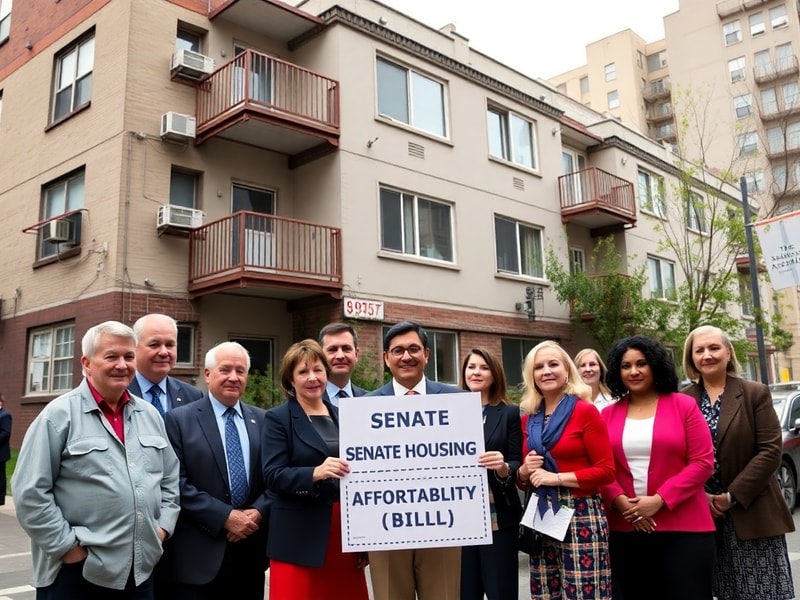
The Senate’s latest housing affordability bill landed in the headlines this week with a mix of cautious optimism and sharp skepticism. After months of closed-door negotiations, the proposed legislation aims to tackle the nation’s escalating housing crisis by expanding tax credits, loosening zoning restrictions, and funneling billions into affordable housing construction. Supporters argue it’s a long-overdue step toward stabilizing a market where median home prices have surged 45% over the past five years, pricing millions of renters out of ownership. Critics, however, warn the bill’s incentives are too narrow, its funding too modest, and its timeline too slow to make a meaningful difference for working families in high-cost cities.
What’s in the Senate’s Housing Affordability Bill?
The legislation, officially titled the Housing Opportunity and Market Enhancement Act, combines several existing proposals into a single $65 billion package. Key components include:
- Expanded Mortgage Credit Certificates (MCCs): First-time homebuyers in designated low-income areas would receive a permanent federal tax credit of up to $2,000 annually, reducing monthly mortgage payments.
- Zoning Reform Incentives: Cities that relax single-family zoning laws to allow duplexes, triplexes, or accessory dwelling units (ADUs) would qualify for federal grants to fund infrastructure and affordable housing projects.
- Rental Assistance Expansion: The bill increases funding for Section 8 vouchers by $10 billion and creates a new $5 billion fund to help tenants in areas with rapid rent increases.
- Manufactured Housing Support: $3 billion is earmarked for loans and grants to upgrade mobile home parks, which house nearly 22 million Americans.
- Tax Credit Boost for Developers: A 30% increase in the Low-Income Housing Tax Credit (LIHTC) allocation aims to spur the construction of 150,000 new affordable units annually.
While these measures address different facets of the crisis, economists and housing advocates point out that the funding levels represent a fraction of what’s needed. The National Low Income Housing Coalition estimates the U.S. is short 7.3 million affordable rental homes. Even with this bill, the gap would shrink by less than 5%.
Why Zoning Reform Is the Bill’s Most Controversial Element
The zoning reform incentives have drawn the most bipartisan pushback. Proponents, including Senator Cory Booker (D-NJ) and Senator Mike Lee (R-UT), argue that restrictive zoning laws—particularly bans on multi-family housing in single-family neighborhoods—have artificially inflated home prices by limiting supply. A 2023 study by the Urban Institute found that cities with the strictest zoning codes saw home prices rise 30% faster than those with more flexible regulations.
Opponents, however, frame the incentives as federal overreach into local governance. The National Association of Realtors warns that relaxing zoning could lead to overcrowding, strain public services, and disrupt neighborhood character. In conservative-leaning states like Texas, where local governments have historically resisted federal housing mandates, the bill risks sparking legal challenges over states’ rights.
Yet the debate isn’t purely ideological. A growing number of moderate Republicans, including Senator Todd Young (R-IN), have signaled support for zoning reform as a way to address labor shortages by making housing more accessible to essential workers like nurses and teachers. The bill’s bipartisan cosponsors argue that economic pragmatism may outweigh traditional partisan divides.
Broader Implications for Renters, Homebuyers, and the Economy
The housing crisis has evolved into a drag on economic mobility. A recent report from the Federal Reserve found that 40% of renters spend more than 30% of their income on housing, a threshold that strains household budgets and limits spending in other sectors. The Senate bill attempts to address this by targeting both the supply and demand sides of the market, but its impact will depend on implementation speed and state participation.
For renters, the most immediate relief could come from the expanded Section 8 vouchers and rental assistance fund. However, the vouchers’ effectiveness hinges on landlord participation, which remains low in many high-demand markets due to stigma and administrative hurdles. The manufactured housing provisions could offer a lifeline to the 6% of Americans who live in mobile homes, often in communities vulnerable to predatory landlords or park closures.
Homebuyers, particularly in coastal cities, may see modest benefits from the MCC expansion, but the tax credit’s income limits (set at 120% of the area median income) exclude many middle-class families in markets like Los Angeles or New York. Developers, meanwhile, could benefit from the LIHTC boost, but the 30% increase may not be enough to offset rising construction costs, which have climbed 20% since 2020.
The bill’s long-term economic impact is equally uncertain. Proponents argue that increasing housing supply will stabilize prices, reduce inflationary pressures, and boost productivity by allowing workers to live closer to job centers. Skeptics counter that without stricter rent control measures or tenant protections, landlords could absorb the tax credits by raising rents, negating any affordability gains.
Will the Bill Survive the Legislative Gauntlet?
The path forward is fraught with obstacles. The bill must clear the Senate Banking Committee, where moderate Democrats like Senator Kyrsten Sinema (D-AZ) have expressed reservations about its cost. Republicans, despite some support for zoning reform, are divided over the tax credit expansions and federal funding levels. House Republicans have already signaled they may ignore the bill entirely, favoring state-level solutions over federal intervention.
Even if the bill passes, its provisions would roll out gradually. The LIHTC increase takes effect in 2025, while the zoning grants would be distributed over three years. Affordability advocates argue this timeline is too slow for a crisis that has already priced out an entire generation of potential homeowners. Housing economists, however, note that large-scale housing policy changes rarely produce immediate results.
For now, the debate highlights a broader tension in American housing policy: Can incremental federal action meaningfully address a crisis decades in the making? Or will the Senate’s bill become another missed opportunity, leaving states and municipalities to tackle the problem piecemeal?
The answer may depend on whether the bill’s supporters can shift the narrative from political talking points to tangible relief for families struggling to find a place to call home.