Joshua Jefferson: The Uncompromising Vision of an Indie Filmmaker
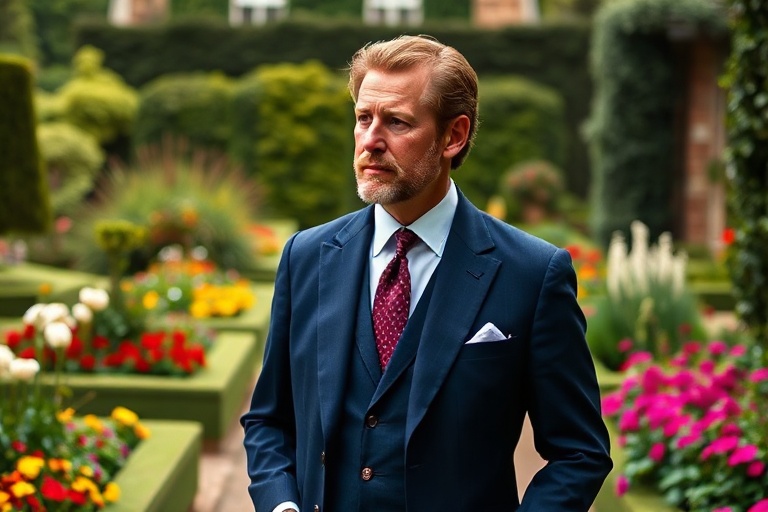
Joshua Jefferson’s name might not ring immediate bells outside certain circles, but within the niche of independent filmmaking and experimental storytelling, he has quietly built a reputation as a filmmaker who refuses to follow the beaten path. At 34, Jefferson has directed three feature-length projects, all self-funded and distributed primarily through niche platforms like Vimeo and Bandcamp, rather than through traditional studio channels. His work is often described as “visually hypnotic” by critics who praise his use of natural light and minimal dialogue, a deliberate choice he says stems from a desire to let the audience’s imagination fill in the gaps.
Born and raised in Portland, Oregon, Jefferson grew up surrounded by the city’s vibrant arts scene. His mother was a high school art teacher, and his father ran a small indie bookstore that doubled as an occasional gallery space. “I grew up thinking that art was something you did in your spare time, not a career,” Jefferson recalled in a 2022 interview. “But by the time I was 16, I had already shot three short films on a camcorder my dad bought me at a thrift store.” His early work was rough around the edges—jittery camera work, uneven sound—but it was clear from the start that he had an eye for composition and pacing.
From Portland to the Film Festival Circuit
Jefferson’s first feature, Cicadas and Static, premiered at the 2018 Slamdance Film Festival, a smaller, more experimental counterpart to Sundance. The film follows a reclusive sound engineer in rural Oregon who records environmental noises to create ambient music. Shot in black-and-white on a shoestring budget of $12,000, the movie was praised for its atmospheric tension and the way it blurred the line between documentary and fiction. “It felt like watching a real-life mood board come to life,” wrote one critic for Filmmaker Magazine.
Despite its critical acclaim, Cicadas and Static struggled to find a wider audience. Jefferson opted not to pursue traditional distribution deals, instead releasing it as a pay-what-you-want download on his website. “I didn’t want to compromise my vision for a bigger paycheck,” he explained. “If people are going to watch it, it should be because they genuinely connect with it, not because some algorithm shoved it in front of them.” The film’s cult following grew organically, with fans creating fan art, writing essays, and even staging live performances of the film’s soundtrack.
The Challenges of Self-Funded Filmmaking
Jefferson’s approach to filmmaking is as much about philosophy as it is about art. He funds his projects through a mix of personal savings, crowdfunding campaigns, and side gigs like teaching film workshops at community centers. “Every dollar I spend on a film is a dollar I’m not spending on rent or groceries,” he admitted. “But I’ve never felt the need to chase commercial success. If anything, the struggle is part of the process.”
His second feature, The Hollow Places Between, took three years to complete. The film explores the concept of “liminal spaces”—those eerie, transitional places like stairwells or parking lots where reality feels slightly distorted. Shot in abandoned buildings and forests around the Pacific Northwest, the movie leans heavily on sound design to create a sense of unease. Jefferson worked closely with a sound artist to layer field recordings, ambient music, and subtle electronic tones into the final cut. “Sound is the unsung hero of filmmaking,” he said. “It can make the difference between a scene feeling real or feeling like a cartoon.”
While The Hollow Places Between didn’t secure distribution deals from major platforms, it did catch the attention of niche distributors in Europe. The film was picked up by a small French company that specializes in “slow cinema,” a movement characterized by minimalist storytelling and long takes. “I never expected to find an audience overseas,” Jefferson said. “But I’ve learned that art doesn’t have borders. If people connect with what you’re doing, they’ll find a way to engage with it.”
Jefferson’s Latest Project: A Departure from the Past
His most recent work, The Weight of Light, marks a significant departure from his earlier films. For the first time, Jefferson incorporated dialogue—though sparingly—and shifted the focus to a more traditional narrative structure. The story follows a photographer documenting the decline of a small coastal town, only to uncover a mystery tied to the town’s history. “I wanted to challenge myself,” Jefferson explained. “I didn’t want to get stuck making the same film over and over.”
The project was funded through a Kickstarter campaign that raised nearly $40,000, more than triple his previous budgets. This allowed him to shoot on 35mm film for the first time, a decision that added both expense and a distinct visual texture to the movie. “There’s something about film that digital just can’t replicate,” he said. “The grain, the way the light interacts with the emulsion—it’s alive in a way that pixels aren’t.”
So far, The Weight of Light has been screened at a handful of festivals, including the Portland International Film Festival and the Indie Memphis Film Festival. Early reviews have been mixed but intriguing. Some critics praised the film’s visual beauty and emotional depth, while others found the pacing too slow. “It’s a film that demands patience,” wrote one reviewer. “But for those willing to sit with it, there’s a quiet power in its restraint.”
What’s Next for Joshua Jefferson?
When asked about his future plans, Jefferson is characteristically vague. He’s currently working on a series of short films that will serve as companion pieces to The Weight of Light, exploring the backstories of minor characters from the film. Beyond that, he’s open to collaboration but wary of compromising his creative vision. “I’m not interested in making films that feel like they were designed by a committee,” he said. “If I ever do a big studio project, it’ll have to be something I’m deeply passionate about—and even then, I’m not sure I’d want to.”
For now, Jefferson remains a fixture in the world of independent film, not because he’s chasing fame, but because he’s committed to the craft. His films may not be for everyone, but for those who connect with them, they offer something rare: a cinematic experience that feels personal, intentional, and unapologetically his own.
As he once put it: “Filmmaking isn’t about making movies. It’s about making moments—moments that linger in the mind long after the credits roll.”
For those interested in exploring Jefferson’s work further, his films are available for streaming on his official website.