Czechia vs Mexico: Football’s Clash of Precision and Passion
Czechia vs Mexico: A Football Clash Through the Lens of Culture and Competition
The meeting between Czechia and Mexico on the football pitch is more than a match—it’s a collision of styles, histories, and footballing philosophies. While Czechia brings the technical precision of Central European football, Mexico counters with the flair and passion typical of CONCACAF. This contrast often produces matches that are as much about culture as they are about tactics. Over the years, these two teams have crossed paths in friendly matches and World Cup qualifiers, each encounter revealing layers of identity that extend beyond the 90 minutes.
Football in Czechia is woven into the national psyche. The country’s football heritage traces back to the Austro-Hungarian Empire, and its clubs—especially Sparta Prague and Slavia Prague—have long been cradles of technical excellence. The national team, once Czechoslovakia, won the European Championship in 1976 and reached the final again in 1996. Even after the peaceful dissolution of Czechoslovakia in 1993, Czechia maintained a reputation for disciplined, possession-based play under managers like Karel Brückner and Pavel Vrba. Their football reflects a Central European mindset: methodical, cerebral, and built on collective effort.
Mexico, by contrast, embodies the vibrant, improvisational spirit of Latin American football. La Tri’s identity is rooted in creativity, dynamism, and a deep connection to its fans. The national team has reached the World Cup knockout stages multiple times, including a quarterfinal appearance in 2006, and has produced legends like Hugo Sánchez, Rafael Márquez, and Javier Hernández. Mexican football is not just a sport—it’s a cultural movement, celebrated in stadiums filled with mariachi-inspired chants and colorful hieleras (ice buckets) of beer. The team’s style is often characterized by pressing, quick transitions, and a fearless approach to big games.
When these two teams meet, the result is a fascinating tactical duel. Czechia tends to control possession, using short passing and positional play to break down defenses. Their midfielders—often technically gifted—dictate tempo and look to exploit spaces with diagonal runs. Mexico, however, thrives on intensity. They press high, force turnovers, and attack with speed. Their wingers stretch play, while forwards like Chicharito or more recent talents like Santiago Giménez excel in one-on-one situations. This clash of styles has led to tightly contested matches, with both teams capable of scoring late or capitalizing on set pieces.
One of the most memorable encounters between Czechia and Mexico took place during the 2016 Olympics in Rio de Janeiro. In a group-stage match, a late goal from Lukáš Juliš secured a 2–1 victory for Czechia. The win was symbolic—proof that Central European discipline could overcome Latin American flair, at least in that moment. Yet Mexico has had its share of triumphs too. In a 2018 friendly, Mexico defeated Czechia 3–1 in a match that showcased their attacking prowess, with Hirving Lozano and Carlos Vela combining brilliantly.
The cultural significance of these matches extends beyond the pitch. For Czech fans, football is a point of national pride, a way to assert identity in a post-communist Europe where smaller nations often feel overshadowed. The national team’s performances are closely followed in a country where football is the most popular sport. Meanwhile, in Mexico, international matches are a unifying force. Millions gather in plazas, bars, and homes to watch, turning each game into a nationwide celebration—or, occasionally, a moment of collective reflection after a tough loss.
Key Tactical Differences: Precision vs. Passion
The tactical battle between Czechia and Mexico is a microcosm of broader footballing philosophies. Czech teams typically prioritize structure over spontaneity. Their formations often revolve around a double pivot in midfield, allowing for both defensive stability and gradual buildup. Fullbacks push high but remain disciplined, while wingers track back to support the midfield. This system rewards patience and technical ability, traits that have produced players like Tomáš Rosický and Pavel Kadeřábek.
Mexico, on the other hand, thrives on chaos in a controlled way. Their 4-3-3 or 4-2-3-1 formations are designed for pressing. The front three harries opponents into mistakes, while the midfield box—often featuring a destroyer like Edson Álvarez—intercepts passes and transitions quickly into attack. The fullbacks advance high, acting as auxiliary wingers. This approach demands physicality, stamina, and mental resilience. It’s a system that has evolved under coaches like Miguel Herrera and, more recently, Tata Martino, who introduced a more possession-oriented style with pressing triggers.
These contrasting approaches create a dynamic tension on the field. Czechia’s ability to retain possession can suffocate Mexico’s rhythm, forcing El Tri to adapt mid-match. Conversely, Mexico’s high press can disrupt Czechia’s buildup, leading to rushed clearances or turnovers that turn into dangerous counters. Historically, Mexico has had the upper hand in recent meetings, but Czechia’s resilience in big games—evident in their Euro 2020 and Euro 2024 campaigns—makes them dangerous opponents.
Cultural Exchange on the Pitch
The Czechia-Mexico rivalry, if it can be called that, is not rooted in deep-seated animosity but rather in mutual respect. Both teams represent footballing traditions that are celebrated worldwide. Czech players are often praised for their intelligence and work ethic, while Mexican players are admired for their creativity and joy. When these teams meet, it’s an opportunity for cultural exchange—almost like a friendly diplomatic match where the language of football transcends borders.
One notable example of this exchange occurred during the 2022 World Cup qualifiers, when the two teams were drawn in the same group in CONCACAF’s final round. Though the matches were played without fans due to COVID-19 restrictions, the competitive spirit was undiminished. In a 2–1 victory for Mexico in Guadalajara, the home side’s attacking flair shone, while Czech goalkeeper Jiří Pavlenka made several crucial saves to keep his team in the game. The match highlighted how both teams adapt when facing unfamiliar opponents—Mexico with their high-energy style, Czechia with their tactical discipline.
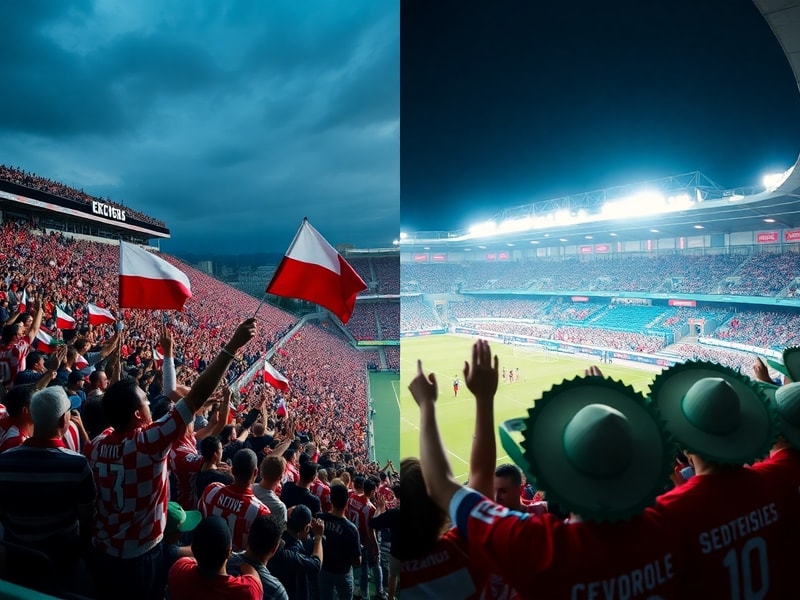
Beyond the results, these matches offer fans a chance to appreciate different footballing cultures. Czech supporters travel to Mexico for international tournaments, bringing their organized chants and scarves to stadiums across CONCACAF. Similarly, Mexican fans in Europe have embraced Czech football, with groups like Los Bohemios gathering to support both clubs and the national team. This cross-pollination of cultures enriches the football landscape, reminding fans that the game is as much about identity as it is about competition.
The relationship between the two nations extends beyond football. Czechia and Mexico share strong diplomatic ties, rooted in historical connections—Czechoslovakia supported Mexico during the 1968 Olympic Games protests, and the two countries have collaborated in science and education. Football acts as a bridge, connecting people through shared experiences of triumph and disappointment.
What the Future Holds for Both Teams
As both Czechia and Mexico look ahead to the next World Cup cycle, their paths diverge slightly but remain intertwined. Mexico enters each tournament with high expectations, aiming to surpass their quarterfinal achievements of the past. Their squad is deep with young talent—players like Johan Vásquez, Julián Quiñones, and Erick Sánchez are building reputations as future stars. Under Tata Martino’s guidance, El Tri is transitioning toward a more balanced style, blending possession with pressing. The goal is clear: reach the World Cup semifinals for the first time since 1970.
Czechia, meanwhile, is in a rebuilding phase. After a strong Euro 2024 campaign—where they reached the knockout stages despite a tough group—there’s optimism about the next generation. Players like Adam Hložek, Mojmír Chytil, and goalkeeper Matěj Kovář represent the future of Czech football. The national team’s identity remains rooted in tactical discipline, but there’s a growing appetite for more attacking creativity. Manager Michal Bílek has emphasized youth development, aiming to blend experienced players with rising stars.
Looking ahead, the next Czechia vs. Mexico match will likely be another tactical chess game. Will Mexico’s pressing overwhelm Czechia’s buildup? Or will Czechia’s midfield control suffocate Mexico’s rhythm? One thing is certain: when these two teams meet, the football is never predictable. It’s a collision of cultures, styles, and ambitions—each trying to prove that their vision of the game is the right one.
For fans of both teams, these matches are a reminder that football is more than just points on a table. It’s a global language, spoken in different accents and rhythms. Whether in Prague’s Letná Stadium or Mexico City’s Azteca, the spirit of the game unites and divides in equal measure. And when Czechia and Mexico step onto the pitch together, the world watches—not just to see who wins, but to witness how the beautiful game can bring distant cultures together.