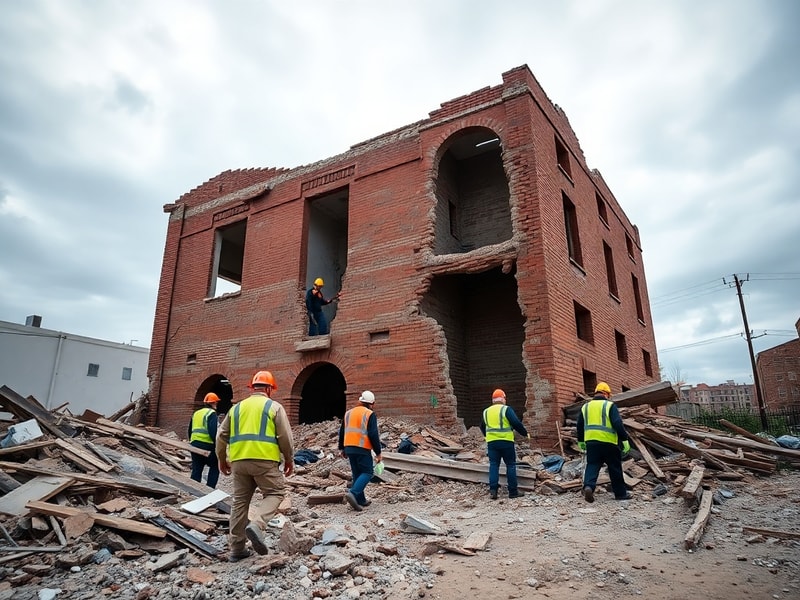
Understanding the Science Behind Earthquakes
Earthquakes are among the most unpredictable and destructive natural events on Earth, capable of reshaping landscapes and communities in seconds. A terremoto hoy—Spanish for “earthquake today”—can occur anywhere in the world, though some regions are more prone to seismic activity due to tectonic plate boundaries. These plates, which make up the Earth’s outer shell, are constantly moving, albeit at a rate of just a few centimeters per year. When pressure builds up along fault lines where plates meet, it eventually releases in the form of seismic waves, resulting in an earthquake.
The energy released during an earthquake travels in waves, categorized as primary (P) waves and secondary (S) waves. P waves are faster and compress the ground in the direction they travel, while S waves move more slowly and cause the ground to move perpendicular to their direction. Surface waves, which are responsible for the most damage, follow these primary waves and can cause the ground to roll or shake violently. The magnitude of an earthquake, measured on the Richter scale or moment magnitude scale, determines its strength, with anything above 7.0 considered major.
Global Hotspots: Where Earthquakes Happen Most
Certain regions bear the brunt of seismic activity due to their proximity to tectonic plate boundaries. The Pacific Ring of Fire, a horseshoe-shaped zone encircling the Pacific Ocean, is the most seismically active area on the planet. Countries like Japan, Indonesia, Chile, and the United States—particularly California—experience frequent earthquakes. In 2023 alone, Japan recorded over 1,500 earthquakes, while Chile has experienced some of the most powerful quakes in recorded history, including the 1960 Valdivia earthquake, which measured 9.5 on the Richter scale.
Beyond the Pacific Ring of Fire, other notable hotspots include the Alpine-Himalayan belt, stretching from the Mediterranean through the Middle East and into the Himalayas. This region has seen devastating earthquakes, such as the 2005 Kashmir quake and the 2015 Nepal earthquake, both of which caused thousands of fatalities. Even regions not typically associated with seismic activity, like the central United States, can experience earthquakes due to human activities such as fracking or reservoir-induced seismicity.
Understanding these hotspots is crucial for preparedness. Governments and organizations in high-risk areas invest heavily in seismic monitoring, early warning systems, and infrastructure designed to withstand tremors. For example, Japan’s Earthquake Early Warning system provides alerts within seconds of detecting initial tremors, giving residents critical time to take cover.
Cultural and Historical Impact of Earthquakes
Earthquakes have left an indelible mark on human history, shaping cultures, religions, and even architectural styles. In ancient Japan, earthquakes were often attributed to the movement of a giant catfish named Namazu, which was believed to be restrained by the god Kashima. When Kashima’s grip loosened, Namazu would thrash about, causing the ground to shake. This myth highlights how early societies sought to explain natural disasters through storytelling, blending fear with reverence for the unpredictable forces of nature.
In modern times, earthquakes have continued to influence cultural narratives. The 2011 Tōhoku earthquake and tsunami in Japan, which triggered the Fukushima nuclear disaster, became a turning point in global discussions about nuclear safety and environmental resilience. Similarly, the 1906 San Francisco earthquake, which destroyed much of the city, led to significant advancements in urban planning and earthquake-resistant construction. These events remind us that while earthquakes are natural phenomena, their impact is deeply intertwined with human development and societal values.
Architecture, too, has evolved in response to seismic risks. Traditional buildings in earthquake-prone regions often incorporated flexible materials like bamboo or wood, allowing structures to sway without collapsing. In contrast, modern skyscrapers in cities like Tokyo and Los Angeles are designed with dampers and base isolators to absorb seismic energy. These adaptations reflect a blend of ancient wisdom and cutting-edge technology, demonstrating humanity’s ongoing struggle to coexist with the Earth’s restless energy.
Preparedness and Response: What You Can Do
While earthquakes cannot be prevented, their risks can be mitigated through preparedness and education. The first step is understanding the seismic risks in your area. Residents in high-risk zones should familiarize themselves with local emergency plans, evacuation routes, and designated safe zones. The U.S. Geological Survey (USGS) provides real-time earthquake data and hazard maps, which are invaluable resources for both individuals and policymakers.
Creating an emergency kit is another critical measure. This kit should include essentials such as water, non-perishable food, a flashlight, batteries, a first-aid kit, and a portable charger. Families should also establish a communication plan, as phone lines may be down after a quake. Practice drills, such as the annual “ShakeOut” earthquake preparedness event, help communities simulate response scenarios and identify weaknesses in their plans.
For those living in earthquake-prone regions, retrofitting homes to withstand tremors can save lives. Simple measures like securing heavy furniture to walls, installing automatic gas shut-off valves, and reinforcing foundations can significantly reduce damage. In Japan, where earthquakes are a fact of life, many households keep helmets and emergency supplies within arm’s reach, a practice that has proven lifesaving in numerous disasters.
Technology also plays a growing role in earthquake response. Apps like MyShake, developed by researchers at the University of California, Berkeley, use smartphone sensors to detect tremors and send alerts to users. Meanwhile, social media platforms have become vital tools for real-time information sharing during emergencies, enabling authorities to coordinate rescues and provide updates to affected communities.
Earthquakes remain one of nature’s most formidable forces, but humanity’s ability to adapt and prepare offers a glimmer of hope. From ancient myths to modern early warning systems, our relationship with these seismic events is a testament to our resilience. By understanding the science behind earthquakes, recognizing global hotspots, and embracing preparedness, we can reduce their toll on lives and livelihoods. The next terremoto hoy may be unpredictable, but our response to it doesn’t have to be.