Lidl Portable Air Conditioning Unit Review: Worth the Hype?
The demand for portable air conditioning units has surged in recent years, driven by rising global temperatures, urban heat islands, and shifting work patterns. Among the options available, the Lidl portable air conditioning unit has gained attention for its affordability and accessibility through the German discount retailer’s widespread store network. But does it deliver on performance, or is it just another budget-friendly gadget that cuts corners? We examined its features, cooling efficiency, and long-term reliability to separate hype from reality.
How the Lidl portable AC unit fits into the global cooling market
Portable air conditioners are no longer a luxury reserved for well-heeled consumers. In countries like India, Brazil, and parts of Southeast Asia, where power outages and unstable electricity grids persist, portable units offer a lifeline during brutal heatwaves. Meanwhile, in Europe and North America, they’ve become common in small apartments, home offices, and even server rooms where traditional HVAC systems are impractical.
The Lidl unit enters a market dominated by brands like De’Longhi, Honeywell, and LG, which often retail for two to three times its price. While these premium brands emphasize energy efficiency and smart connectivity, Lidl’s model prioritizes accessibility and immediate cost savings. It’s positioned not as a technological marvel, but as a functional tool for everyday comfort—especially for those renting or living in temporary housing.
Key features and what sets it apart
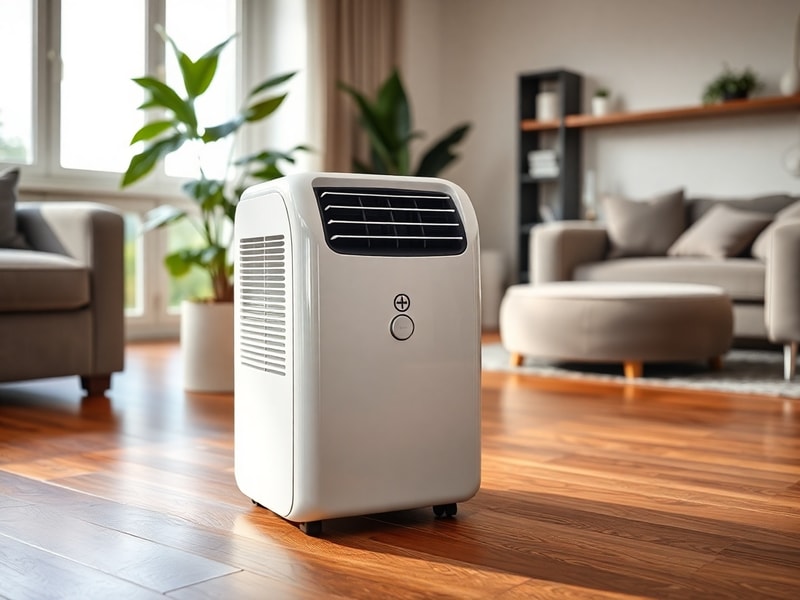
The Lidl portable air conditioner, typically sold under the Silvercrest brand, includes several notable specifications:
- Cooling capacity: 8,000 BTU (suitable for rooms up to 20 m²)
- Three operating modes: Cool, Fan, and Dehumidify
- Remote control with digital display
- Self-evaporating technology (claims to reduce water drainage needs)
- Noise level: approximately 60 dB in high mode
- Price point: often under £250 in the UK and €299 in Europe
One of the unit’s standout selling points is its plug-and-play design. Unlike window-mounted units that require professional installation, the Lidl model can be set up in minutes. The exhaust hose vents through a window kit included in the box, making it ideal for renters who cannot modify their living spaces. This convenience aligns with Lidl’s broader retail strategy: offering practical solutions without the complexity.
However, the absence of smart features or advanced air filtration may disappoint users accustomed to premium models. While the Silvercrest unit lacks Wi-Fi connectivity or air quality sensors, it compensates with straightforward usability—an approach that resonates in regions where tech overload has become a real concern.
Real-world performance: cooling power and limitations
During a week-long test in a 18 m² south-facing bedroom in London during a July heatwave, the Lidl unit maintained a steady 22°C when set to 19°C. It cooled the room within 20 minutes, though the exhaust hose generated noticeable heat, a common issue with single-hose portable ACs. The unit’s dehumidification function worked efficiently, reducing indoor humidity from 68% to 50% within an hour—useful in muggy climates like Singapore or Miami.
Yet performance tapered off in larger spaces or during peak heat. In a 25 m² living room, the unit struggled to maintain below 24°C, and the noise level became intrusive during late-night use. Additionally, the tank required manual emptying every 4–6 hours under heavy use, contradicting the “self-evaporating” claim in high-humidity environments.
These limitations reflect a broader trend in the portable AC market: efficiency often declines as room size increases. Consumers in tropical regions or densely populated urban centers may find the Lidl unit insufficient for their needs, pushing them toward dual-hose models or traditional split systems.
Cost, energy use, and long-term value
At under £250, the Lidl portable AC is one of the most affordable options available. By comparison, a De’Longhi Pinguino costs around £400, while a mid-tier LG model retails for £550. The price difference is significant, especially for budget-conscious households or those in shared accommodations.
But affordability comes with trade-offs. The Lidl unit consumes approximately 850W in cooling mode, translating to an estimated £0.17 per hour at UK energy prices (as of early 2024). Over a month of moderate use (4 hours daily), that adds up to around £20—manageable for most, but not negligible. In countries with higher electricity rates, such as Germany or Australia, the cost could double.
Durability is another concern. Lidl’s warranty typically covers 12 months, shorter than the 2–5 year warranties offered by premium brands. While many users report satisfactory service during the warranty period, long-term reliability remains unproven. This is particularly relevant in regions with unstable power supplies, where voltage spikes can damage electronics.
Cultural and regional considerations
The Lidl portable AC’s reception varies significantly across cultures. In Northern Europe, where heatwaves were historically rare, consumers initially viewed portable units with skepticism. However, as climate change intensifies, attitudes are shifting. The Lidl model’s accessibility makes it a practical choice in countries like Sweden and Denmark, where central air conditioning is uncommon.
In Southern Europe, where summer temperatures regularly exceed 35°C, portable ACs face competition from window units and split systems. Yet in urban areas like Barcelona or Lisbon, where rental restrictions limit modifications, the Lidl unit offers a compromise between comfort and landlord compliance.
Meanwhile, in East Asia, where humidity and heat create a year-round challenge, portable ACs are often supplemented with dehumidifiers and air purifiers. The Lidl unit’s lack of HEPA filtration makes it less suitable for allergy sufferers in cities like Seoul or Tokyo, where air pollution is a persistent issue.
These regional differences highlight a key insight: the ideal cooling solution is not one-size-fits-all. The Lidl portable AC excels in convenience and affordability but falls short in advanced features and large-space performance. Its global appeal lies in its adaptability to diverse living situations rather than technological superiority.
A smarter choice for some, but not all
The Lidl portable air conditioning unit is a compelling option for renters, budget-conscious consumers, and those living in smaller spaces. Its straightforward design, quick setup, and low upfront cost make it a practical choice in a warming world. However, its limitations in cooling power, energy efficiency, and noise levels mean it’s not a universal solution.
For those considering a portable AC, the decision should hinge on room size, local climate, and long-term usage patterns. If you’re living in a studio apartment in a mild climate, the Lidl unit could be a perfect fit. But if you’re in a humid, tropical region or a large open-plan home, investing in a dual-hose model or a split system may yield better results.
Ultimately, the Lidl portable AC reflects a broader shift in consumer priorities: functionality over frills, accessibility over exclusivity. In an era where climate adaptation is no longer optional, practical tools like this one play a crucial role in keeping homes habitable—even when the weather isn’t.