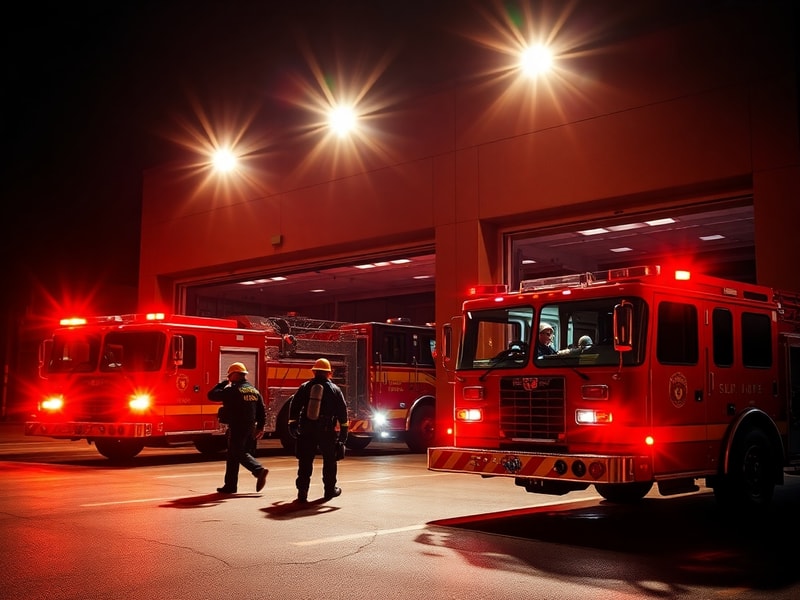
The San Jose Fire: A Global Perspective on Urban Firefighting Challenges
The San Jose Fire Department has long stood as a model of innovation and resilience in urban firefighting. Serving a city of nearly one million people, it faces unique pressures that mirror broader global trends in emergency response. From historic wildfires to dense urban infrastructure, San Jose’s firefighters operate at the intersection of tradition and cutting-edge technology. Their work reflects wider challenges in fire prevention, disaster preparedness, and community resilience worldwide.
Cities like San Jose are not isolated in their struggles. Around the world, metropolitan areas are grappling with longer fire seasons, aging electrical grids, and the increasing density of residential and commercial buildings. The San Jose Fire Department’s experiences offer valuable lessons for fire departments in Tokyo, Berlin, São Paulo, and beyond. How it adapts to climate change, technological disruption, and public health crises may well define the future of urban firefighting globally.
A History of Adaptation and Innovation
Founded in 1851, the San Jose Fire Department is one of the oldest in California. Its evolution has tracked the city’s growth from a small agricultural hub to the heart of Silicon Valley. Early firefighters relied on bucket brigades and hand pumps, but by the early 20th century, the department had transitioned to motorized engines and aerial ladders. This adaptability has remained a defining trait.
In recent decades, the department has embraced technological progress with open arms. It was among the first in the nation to deploy drones for fire scene reconnaissance in 2016. These unmanned aerial vehicles now assist in assessing hazardous environments, locating hotspots, and mapping evacuation routes. Thermal imaging cameras and GPS-based incident command systems have further enhanced operational efficiency.
Yet innovation hasn’t come without cost. Budget constraints and rising pension obligations have forced difficult trade-offs between technology upgrades and staffing levels. Like many fire departments across the United States, San Jose has had to balance modernization with fiscal responsibility—a challenge that resonates in fire services from London to Lagos.
The Climate Crisis and the New Fire Reality
No conversation about San Jose’s fire challenges is complete without addressing climate change. The city, nestled in the southern end of the San Francisco Bay, is increasingly vulnerable to both wildfires and urban conflagrations. Longer, hotter summers have extended the fire season, while Santa Ana wind events—though less common in Northern California—can still drive fast-moving blazes toward populated areas.
The 2020 CZU Lightning Complex Fire, though centered in Santa Cruz County, sent smoke plumes over San Jose for weeks. The incident highlighted the growing overlap between wildland and urban fire risks. San Jose’s fire department now coordinates closely with Cal Fire and regional emergency services to manage cross-boundary threats. This interagency cooperation is a model seen in other fire-prone regions, such as Australia’s New South Wales Rural Fire Service or Spain’s autonomous community fire brigades.
Urban heat islands—areas where concrete and asphalt trap heat—compound the risk. In San Jose, neighborhoods like East San Jose experience temperatures up to 10°F higher than surrounding rural areas. This microclimate effect increases the likelihood of electrical fires and accelerates the spread of flames. Firefighters have adapted by deploying cooling stations during heat waves and conducting targeted outreach in high-risk communities.
Technology and Training: The Modern Firefighter
Today’s San Jose firefighter is as likely to wear a smart helmet as turnout gear. The department has partnered with local tech firms and universities to develop predictive modeling tools that forecast fire spread based on weather, terrain, and building materials. These models are now being shared with fire departments in South Korea and Germany, where urban fire risks are also evolving.
Training has shifted accordingly. Fire recruits now complete modules in data literacy, cybersecurity awareness (to counter arson via digital means), and even basic drone piloting. The department’s training academy, one of the most advanced in the state, simulates multi-story high-rise fires using virtual reality. This approach mirrors trends in firefighting education from Dubai to Dublin.
Yet technology alone cannot replace human judgment. The department places heavy emphasis on community-based fire prevention. Firefighters regularly visit schools, senior centers, and low-income housing complexes to conduct safety inspections and install free smoke alarms. These outreach efforts have reduced residential fire deaths by nearly 20% over the past five years—a success story that has drawn international attention.
A Global Lens: Lessons from San Jose
The challenges faced by the San Jose Fire Department are not unique, but its solutions offer a blueprint for others. Consider these international parallels:
- Tokyo, Japan: With over 6,000 high-rise buildings and a high population density, Tokyo’s fire department uses AI-driven dispatch systems to optimize response times. San Jose’s predictive modeling could serve as a complementary tool in earthquake-prone regions like Japan, where fires often follow seismic events.
- Cape Town, South Africa: Facing water shortages and informal settlements, Cape Town’s firefighters have pioneered low-water firefighting techniques. San Jose’s experience with dry hydrants and water conservation during wildfires could inform similar strategies in water-stressed cities.
- Berlin, Germany: The German fire service has integrated social media monitoring to detect early signs of urban fires or arson. San Jose’s use of drones and thermal imaging could be enhanced by similar digital intelligence tools in densely populated areas.
- São Paulo, Brazil: High crime rates complicate fire response in parts of São Paulo, where firefighters are sometimes targeted by armed groups. San Jose’s community engagement programs could help rebuild trust in fire services operating in high-risk urban environments.
These comparisons reveal a common thread: effective fire response is no longer just about putting out flames. It’s about anticipating risks, leveraging technology, and building resilient communities. San Jose’s approach—rooted in innovation, prevention, and partnership—offers a replicable framework for fire departments worldwide.
Looking Ahead: The Future of Urban Firefighting
The next decade will test the San Jose Fire Department in ways both expected and unforeseen. Climate projections suggest the Bay Area could see a 30% increase in extreme fire weather days by 2050. Meanwhile, the rise of autonomous vehicles and e-bike batteries introduces new fire hazards in urban environments. The department is already exploring countermeasures, including battery recycling programs and EV charging station safety protocols.
Global supply chain disruptions have also impacted the availability of firefighting equipment. San Jose has responded by stockpiling critical gear and collaborating with regional manufacturers to ensure redundancy. This strategy echoes efforts in Singapore, where fire services maintain high levels of self-sufficiency to mitigate external shocks.
As cities continue to expand, the role of fire departments will evolve beyond emergency response. San Jose’s integration of public health nurses into its emergency medical teams is one such innovation. By addressing social determinants of health—such as housing instability or food insecurity—firefighters are becoming first responders to the root causes of urban crises.
In an era where disasters are increasingly interconnected, the San Jose Fire Department stands as a testament to the power of adaptability. Its story is not just one of firefighting excellence, but of civic innovation in the face of global change. For cities worldwide, San Jose offers a compelling question: How can fire departments not only survive the future but lead it?
As urban landscapes grow more complex, the lessons from San Jose will only grow more relevant. Whether through technological breakthroughs, community partnerships, or climate resilience strategies, the department’s journey reflects the broader challenge of safeguarding the world’s cities—one alarm at a time.