The scorching temperatures of the 2024 heatwave didn’t just test the resilience of Brits lounging in parks and sipping pints outside pubs. They also pushed the West Midlands Railway network to its limits, exposing long-standing vulnerabilities in infrastructure that had been quietly deteriorating for years. As tracks warped and services ground to a halt, passengers were left stranded, businesses scrambled to adapt, and questions arose about whether the railway was built for a climate it wasn’t designed to handle.
The heatwave’s brutal impact on rail travel
The mercury soared above 30°C for several consecutive days in June 2024, a rare but increasingly frequent occurrence in the UK. West Midlands Railway, which operates services across Birmingham, Coventry, Wolverhampton, and the surrounding areas, found itself in the eye of the storm. Unlike the dramatic failures seen during the 2022 heatwave, this year’s disruptions were less about spectacular derailments and more about the slow, grinding halt of everyday travel. Railway engineers describe it as a “death by a thousand cuts” scenario—a series of small failures that, when combined, create chaos.
The most immediate problem was track buckling. Steel rails expand in extreme heat, and when they can no longer accommodate that expansion, they bend or fracture. In the West Midlands, stretches of the Birmingham to Wolverhampton line and the Coventry to Leamington Spa route were particularly affected. Network Rail, the company responsible for maintaining the tracks, issued speed restrictions of just 20mph in some areas to prevent further damage. The result? Journeys that normally take 30 minutes stretched to over an hour. Commuters who relied on punctuality for work or childcare found themselves trapped in a system that couldn’t adapt.
But the damage wasn’t limited to the tracks. Overhead electric cables, already strained by years of underinvestment, sagged in the heat, causing power supply issues that led to sudden cancellations. Signalling systems, some of which date back to the 1980s, overheated and failed, adding another layer of unpredictability. Even the humble train doors became a point of failure, sticking shut in the heat and trapping passengers inside at stations. The cumulative effect was a network that felt more like a relic of the past than a modern transport system.
Why the West Midlands is especially vulnerable
The West Midlands has long been the engine of the UK’s economy, home to manufacturing, automotive, and service industries that rely heavily on efficient rail links. Yet its railway infrastructure is a patchwork of old and new, with some lines dating back to the Victorian era and others upgraded only in piecemeal fashion. This inconsistency is a recipe for disaster during extreme weather. The region’s high population density and economic importance mean that disruptions here don’t just inconvenience a few hundred people—they ripple across industries.
One of the most glaring issues is the lack of investment in climate-proofing. While countries like Japan and Spain have retrofitted their railways with heat-resistant materials and advanced cooling systems, the UK has largely treated its network as a “fit and forget” system. The West Midlands, in particular, has seen years of deferred maintenance due to budget constraints and political wrangling over funding. Network Rail’s own data shows that the West Coast Main Line, a critical artery for the region, has seen a 20% increase in emergency speed restrictions since 2019—a clear sign that the system is struggling to cope.
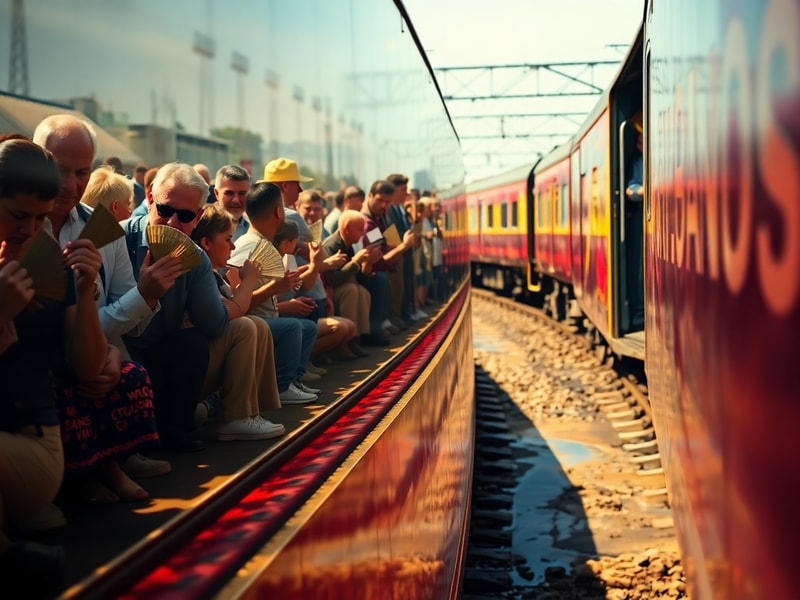
Another factor is the sheer volume of traffic. The West Midlands Railway handles over 30 million passenger journeys a year, with peak services often operating at 90% capacity. When heat-related delays hit, there’s no slack in the system to absorb the disruption. Stations like Birmingham New Street, already notorious for overcrowding, became pressure cookers as passengers were left waiting on platforms with no air conditioning. The human cost of these failures is often overlooked in the rush to blame the weather—parents missing medical appointments, students arriving late for exams, and workers facing disciplinary action for chronic lateness.
Lessons from the heatwave (and why they’re being ignored)
The 2024 heatwave wasn’t the first time the West Midlands Railway buckled under pressure. In 2018 and 2022, similar issues arose, prompting urgent calls for reform. Yet, three years later, little has changed. Why? The answer lies in a mix of short-term thinking, political inertia, and a reluctance to acknowledge that climate change is no longer a distant threat—it’s here.
For starters, the UK’s railway infrastructure is funded on a five-year cycle, a timeline that discourages long-term planning. Major upgrades, like replacing old tracks with heat-resistant materials or installing advanced signalling, take decades to complete. Politicians, meanwhile, prefer to trumpet quick fixes like temporary speed restrictions or emergency repairs, which do little to address the root causes. The result is a system that lurches from crisis to crisis, with passengers and businesses paying the price.
There’s also the issue of accountability. Network Rail, the government-owned company responsible for the tracks, blames the weather and “unforeseen circumstances” for the disruptions. Train operators, on the other hand, point to Network Rail’s failures as the root cause. This blame game leaves passengers in the dark, with no clear answers about when—or if—the situation will improve. The lack of transparency is perhaps the most frustrating aspect for commuters.
Yet, there are glimmers of hope. In response to the 2022 heatwave, Network Rail trialled a new type of heat-resistant rail on a stretch of the West Coast Main Line near Stafford. The results were promising, with no buckling reported even when temperatures hit 35°C. But the trial was small-scale, and there’s no guarantee that similar upgrades will be rolled out across the West Midlands in time for the next heatwave. The question isn’t whether the technology exists—it’s whether there’s the political will to implement it.
What’s next for West Midlands rail travel?
The immediate future looks bleak. With climate projections suggesting that heatwaves like the one in June 2024 will become the norm rather than the exception, the West Midlands Railway is hurtling toward a tipping point. Without significant investment and a radical rethink of how the network is managed, the disruptions of 2024 will seem like a minor inconvenience compared to what’s coming.
For passengers, the advice is grim: expect more delays, more cancellations, and more frustration. Train operators are urging passengers to check for updates before travelling, to travel at off-peak times, and to allow extra time for journeys. But for many, these aren’t viable options. Shift workers, for example, have no choice but to travel during peak hours, while those on tight budgets can’t afford to book last-minute alternative transport.
There are, however, steps that could mitigate the worst of the damage. Prioritising the replacement of old tracks with heat-resistant materials, upgrading signalling systems to make them more resilient, and investing in better station infrastructure—like covered platforms and air conditioning—would go a long way. But these changes require money, and money requires political courage. With a general election looming and public finances stretched thin, it’s far from certain that the West Midlands will get the investment it needs.
In the meantime, passengers are left to adapt. Some have turned to cycling or carpooling, while others have reluctantly accepted that their daily commute will become a game of Russian roulette with the weather. For businesses, the disruptions are a costly reminder of the UK’s crumbling infrastructure. And for the railway industry, the heatwave was yet another warning that the current system is unsustainable.
One thing is clear: the West Midlands Railway cannot afford to wait for the next heatwave to act. The question is whether anyone in power is listening.
Key takeaways from the West Midlands heatwave disruption
- Track buckling was the primary cause of delays, with speed restrictions imposed to prevent further damage.
- Overhead cables and signalling systems also failed, adding to the chaos and unpredictability.
- Underinvestment in climate-proofing has left the network vulnerable to extreme weather.
- Political inertia and short-term funding cycles mean long-term solutions are unlikely without urgent action.
- Passengers bear the brunt, with no clear accountability or transparency from operators or Network Rail.
For more on how extreme weather is reshaping infrastructure across the UK, visit our News and Analysis sections. The challenges facing the West Midlands Railway are part of a broader pattern of climate-related disruptions that are testing the limits of the UK’s ageing infrastructure.