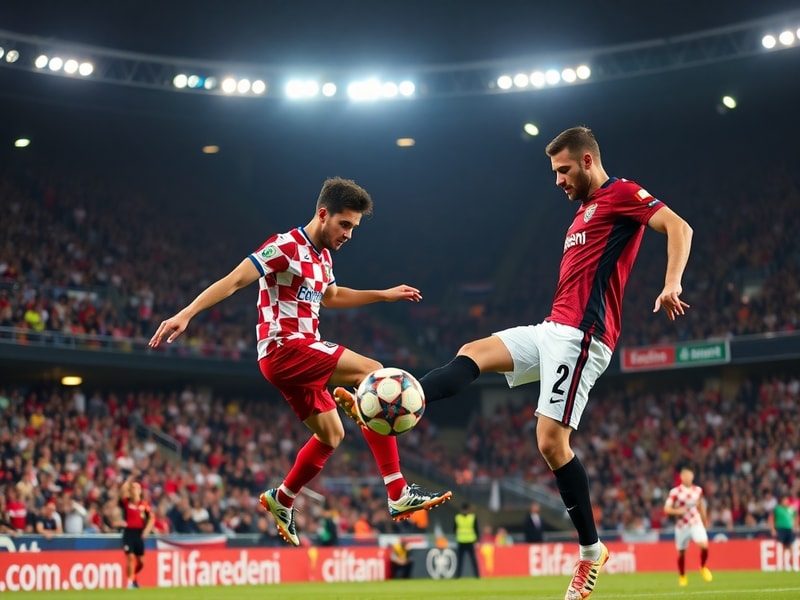
The race for the Golden Boot has always been one of football’s most compelling narratives. It’s not just about the goals—it’s about the stories behind them, the pressure of consistency, and the cultural weight that turns a prolific scorer into a global icon. This season’s competition is no different, with legends of the game locked in a battle that spans continents and leagues. From the electric atmosphere of the Premier League to the tactical precision of La Liga and the unpredictable passion of South American football, the Golden Boot race offers a snapshot of the sport’s global heartbeat.
The Golden Boot’s Evolving Legacy
The European Golden Shoe, as it’s officially known, traces its roots back to the 1967-68 season. Originally an informal accolade, it was formalized in 1996 to recognize the top scorer across Europe’s top leagues. Today, it’s a symbol of elite finishing, but it’s also a reflection of how football has transformed over the decades. In the 1970s and 80s, the award was often dominated by players from leagues like Portugal’s Primeira Liga or the Dutch Eredivisie, where the game’s rhythm was less structured than in England or Spain. Now, the competition is fiercely global, with players from the Premier League, Saudi Pro League, and even the MLS vying for the top spot.
The criteria for winning the Golden Boot have also evolved. Goals alone no longer tell the full story. Factors like minutes played, the quality of chances created, and even the league’s competitiveness are now part of the conversation. The award’s prestige is further amplified by its tie to betting markets, fantasy football platforms, and social media debates. A player who wins the Golden Boot doesn’t just secure a personal milestone—they often become the face of a season, influencing everything from player transfers to managerial decisions.
Contenders from Around the World
This season’s race is a global affair, featuring players who represent the diversity of modern football. In England, Erling Haaland continues to defy expectations, combining raw power with clinical precision. His ability to score in almost any situation—whether it’s a tap-in or a 30-yard strike—keeps him at the top of the charts. Meanwhile, Mohamed Salah’s consistency in front of goal remains a masterclass in efficiency, even as Liverpool’s style of play has shifted under different managers.
Over in Spain, Jude Bellingham has seamlessly transitioned from midfield dominance to goal-scoring heroics at Real Madrid. His late runs into the box and knack for appearing in the right place at the right time have made him a nightmare for defenders. In France, Kylian Mbappé’s pursuit of another league scoring title adds another layer to the race, especially as PSG’s tactical setup evolves around his strengths.
The Saudi Pro League has also become an unexpected battleground. Cristiano Ronaldo, now in his late 30s, has defied age with a barrage of goals, proving that elite finishing is a skill that transcends physical decline. His presence in the race highlights how football’s financial powerhouses are reshaping the landscape of individual accolades.
The competition isn’t limited to Europe’s elite either. In South America, players like Luis Suárez and Germán Cano are dominating their leagues with breathtaking consistency. Cano, in particular, has become a symbol of Argentina’s emerging talent, his goals for Botafogo driving his team’s title ambitions while keeping him firmly in the Golden Boot conversation.
Who’s Leading the Pack?
As of mid-season, the race is tighter than ever. Here’s a quick snapshot of the top contenders:
- Erling Haaland (Manchester City) – 22 goals in 18 games, a strike rate that defies logic.
- Mohamed Salah (Liverpool) – 19 goals, but with a higher chance conversion rate than many of his peers.
- Jude Bellingham (Real Madrid) – 18 goals, a midfielder-turned-striker who thrives under pressure.
- Kylian Mbappé (PSG) – 17 goals, but with the potential to surge ahead in the second half of the season.
- Cristiano Ronaldo (Al-Nassr) – 16 goals, proving that experience and technique can still outshine raw athleticism.
The beauty of the Golden Boot race lies in its unpredictability. Injuries, red cards, or even a tactical shift can derail a player’s campaign overnight. Last season, Harry Kane’s move from Tottenham to Bayern Munich initially raised eyebrows, but his seamless adaptation to the Bundesliga made him a legitimate contender. This season, the rise of young talents like Alejandro Garnacho at Manchester United or Vitor Roque at Barcelona adds another unpredictable element to the mix.
The Cultural Impact of the Golden Boot
Beyond the numbers, the Golden Boot carries cultural significance that extends far beyond the pitch. In many ways, it’s a barometer for a player’s legacy. For instance, Thierry Henry’s multiple Golden Boot wins during his Arsenal days cemented his status as one of the Premier League’s greatest-ever players. His goals weren’t just about scoring—they were about redefining what it meant to be a forward in a modern, attacking team.
The award also serves as a bridge between different footballing cultures. A player like Son Heung-min, who has won the Golden Boot in the Premier League, becomes a global ambassador for Asian football. His success challenges stereotypes and inspires the next generation of players from the continent. Similarly, African players like Sadio Mané and Pierre-Emerick Aubameyang have used Golden Boot victories to amplify discussions about representation in European football.
The Golden Boot isn’t just a personal trophy—it’s a cultural artifact. It reflects the values of the era in which it’s won. In the 1990s, the award was often dominated by South American players who brought flair and creativity to European leagues. In the 2000s, African and French players became more prominent, reflecting the globalization of the sport. Today, the race includes players from the Middle East, North America, and even Oceania, underscoring football’s truly global reach.
Media coverage of the Golden Boot race also plays a role in shaping its cultural impact. Social media platforms amplify individual performances, turning a 90th-minute winner into a viral moment. Broadcasters and pundits dissect every goal, every miss, and every assist, adding layers of narrative to the competition. This year, debates about whether a player’s goals are “pure” enough—i.e., scored without relying on penalties or tap-ins—have added a new dimension to the conversation.
What’s at Stake Beyond the Trophy
Winning the Golden Boot is a career-defining achievement, but the stakes go beyond the trophy itself. For clubs, a Golden Boot winner often translates to increased commercial appeal. Players like Haaland and Mbappé have become global brands, their marketability extending far beyond the football pitch. Sponsorship deals, jersey sales, and even video game ratings (FIFA or Football Manager) all benefit from a prolific scoring season.
For managers, the Golden Boot race can influence tactical decisions. A striker who’s scoring freely might warrant a more direct style of play, while a midfielder-turned-scorer like Bellingham could prompt a system tweak. The award also impacts transfer decisions. A player who’s consistently topping the charts often becomes a target for Europe’s biggest clubs, driving up transfer fees and wage demands.
There’s also the intangible value of legacy. Players like Lionel Messi and Cristiano Ronaldo have both won the Golden Boot multiple times, but their legacies extend far beyond individual accolades. For rising stars, the race is an opportunity to etch their names into footballing history. For veterans, it’s a chance to silence doubters and prove that age is just a number.
The Golden Boot race is more than a statistical competition—it’s a narrative that captures the essence of football. It’s about the underdog making a late surge, the veteran defying time, and the youngster announcing himself on the biggest stage. As the season unfolds, the race will continue to captivate fans, analysts, and pundits alike, each goal adding a new chapter to an already gripping story.
For those following the action closely, the Golden Boot isn’t just a personal honor—it’s a celebration of football’s ability to unite, inspire, and surprise. Whether you’re a fan of sports in general or a die-hard follower of the beautiful game, the race for the Golden Boot is a reminder of why football remains the world’s most beloved sport.