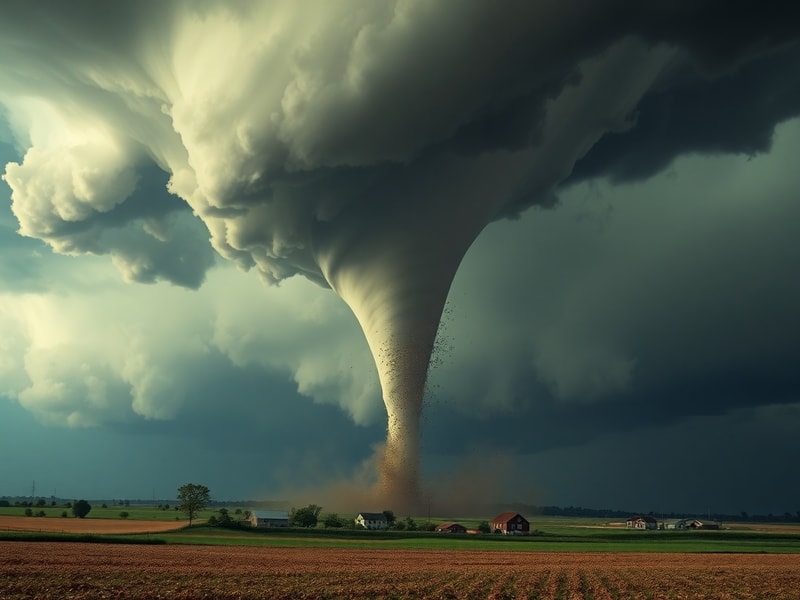
Tornado Warnings Explained: How to Stay Safe When the Sky Turns Deadly
Understanding Tornado Warnings: How to Stay Safe When the Sky Turns Violent
Tornado warnings are among the most urgent alerts issued by meteorological agencies, demanding immediate attention and decisive action. When dark, rotating clouds touch down or are detected by radar, local authorities issue warnings to give communities precious minutes to seek shelter. These warnings differ from watches, which signal a broader potential for severe weather, as they confirm a tornado is imminent or already occurring. The difference between a watch and a warning can mean life or death, especially in regions prone to twisters.
The United States experiences more tornadoes than any other country, averaging over 1,200 annually. But tornadoes are a global threat, documented on every continent except Antarctica. From the plains of Bangladesh to the rural expanses of Argentina, communities face the sudden fury of these spinning vortices. Understanding how warnings work—and why they sometimes fail—can help people worldwide prepare before the sky turns hostile.
How Tornado Warnings Are Issued: Science, Technology, and Human Judgment
Modern tornado warnings rely on a blend of science, technology, and real-time human analysis. The U.S. National Weather Service (NWS) uses a network of Doppler radar systems to detect rotation within storms, known as mesocyclones. When such rotation is observed alongside other indicators like debris signatures or storm motion, forecasters issue a tornado warning for a specific area. Warnings typically cover counties or parts of counties and last for 30–45 minutes, though some may extend longer during prolonged outbreaks.
Beyond radar, storm spotters—trained volunteers and emergency responders—play a critical role. Their ground observations confirm what radar suggests, especially when technology faces limitations due to distance or terrain. In countries with fewer resources, like parts of Africa and Southeast Asia, tornado warnings may rely more heavily on satellite data and community-based alert systems. For instance, India’s meteorological department uses a combination of Doppler radar and SMS alerts to warn rural populations, where awareness campaigns have significantly reduced casualties.
Despite advancements, challenges remain. False alarms can erode public trust, while missed warnings can have catastrophic consequences. A 2021 study found that people in high-risk areas were more likely to heed warnings when they came from multiple trusted sources—local radio, emergency apps, and social media—rather than a single channel. This underscores the importance of redundancy in communication strategies.
Cultural and Regional Responses to Tornado Warnings
How communities react to tornado warnings often reflects local culture, infrastructure, and historical experience. In the American Midwest, where tornadoes are frequent, early warning systems and underground storm shelters are common. Tornado drills in schools and public buildings are routine, ingrained in the cultural fabric as much as Friday night football. Yet even in such prepared regions, complacency can set in. After years without a major strike, some residents may ignore sirens or delay seeking shelter.
In contrast, parts of South Asia face tornadoes with less infrastructure but deep communal response. In Bangladesh, where tornadoes have killed thousands over the years, villagers often rely on hand signals, mosque loudspeakers, and word-of-mouth alerts. The 1996 Manikganj tornado, which killed over 700 people, led to the creation of a nationwide early warning system. Today, NGOs and local leaders use community radio and volunteers to broadcast warnings in regional languages, ensuring messages reach even the most remote villages.
In Europe, tornadoes are less common but no less dangerous. Countries like France and Germany have seen rare but violent tornadoes, such as the 2019 EF4 tornado in Hautmont, France, which destroyed homes and injured dozens. European warning systems are less ingrained than in the U.S., but social media has become a critical tool for rapid dissemination. During a 2023 tornado in northern Italy, emergency alerts sent via WhatsApp and local apps reached residents faster than traditional sirens.
What to Do When a Tornado Warning Is Issued: A Practical Guide
When a tornado warning is activated, every second counts. The safest place is a basement or storm shelter, away from windows. If a basement isn’t available, an interior room on the lowest floor—like a closet or bathroom—offers protection. Mobile homes are particularly vulnerable; residents should seek sturdy shelter immediately. Vehicles are not safe; if caught outside, experts advise lying flat in a ditch or low-lying area and covering the head.
A well-prepared emergency kit can make the difference between chaos and calm. Essentials include water, non-perishable food, a flashlight, batteries, a first-aid kit, and a portable charger. Families should also have a communication plan, designating a meeting point in case they’re separated. Pets should be included in planning—never leave animals tied outside during a warning.
After the storm passes, caution remains essential. Downed power lines may still carry live electricity, and broken gas lines can pose explosion risks. Avoid using matches or lighters, and report hazards to authorities immediately. Surveying damage should wait until emergency responders declare the area safe.
For those in high-risk zones, practicing tornado drills annually can save lives. Schools, workplaces, and community centers should conduct at least one drill per year, simulating both the warning and evacuation process. Technology can assist too: apps like the NWS Mobile Weather and the Red Cross Emergency app provide real-time alerts and safety tips tailored to location.
The Future of Tornado Warnings: AI, Community Networks, and Climate Change
The next generation of tornado warnings may be shaped by artificial intelligence and machine learning. Researchers are developing models that predict tornado formation minutes before radar detects rotation, potentially extending warning times. Projects like the Warn-on-Forecast System (WoFS) in the U.S. provide high-resolution, short-term forecasts that could revolutionize how warnings are issued. In India, AI-powered apps now analyze satellite data to predict thunderstorms and tornadoes in real time, offering alerts in regional languages.
Climate change is altering tornado patterns, though scientists caution against oversimplifying the link. Warmer temperatures and shifting jet streams may increase the frequency of severe storms in traditionally non-tornadic regions. The 2021 tornado outbreak in Kentucky, which killed 80 people, occurred in December—a time when tornadoes are rare but not unheard of. As weather becomes more unpredictable, communities must adapt their warning systems accordingly.
Community-based networks are also gaining traction. In rural Oklahoma, farmers use weather stations linked to smartphones to share real-time data with neighbors. In Africa, projects like the Weather and Climate Information Services for Africa (WISER) program train local volunteers to interpret weather data and warn their communities. These grassroots efforts complement official systems, filling gaps where infrastructure is weak.
Yet technology alone cannot prevent tragedy. Public education remains the cornerstone of tornado safety. Simple steps—knowing the difference between a watch and a warning, identifying the safest room in a home, and having a plan—can turn a moment of panic into a moment of survival. As storms grow more intense and warnings more frequent, the question is no longer just whether we can predict tornadoes, but whether we can act in time.