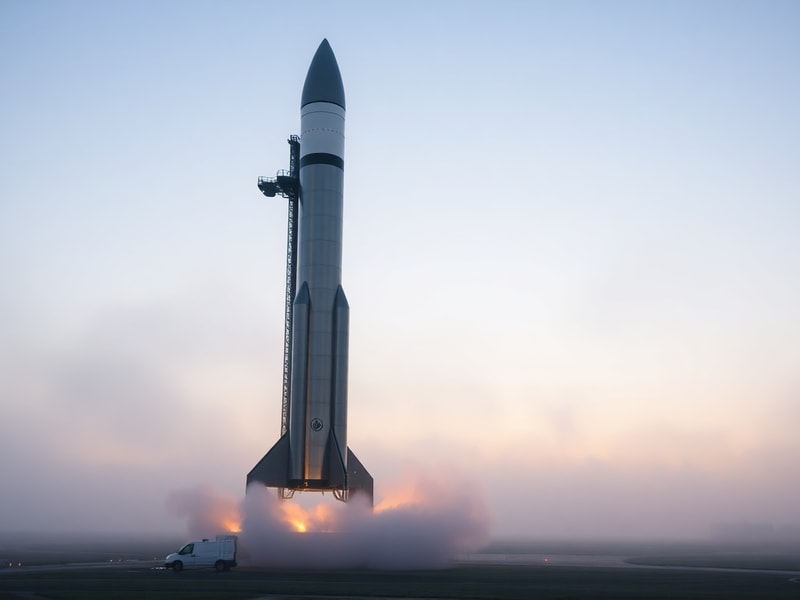
How SpaceX Is Redefining Space Exploration and Global Ambitions
From Humble Beginnings to Global Ambitions
Founded in 2002 by Elon Musk, SpaceX emerged from a singular vision: to reduce the cost of space travel and enable the colonization of Mars. The company’s early years were marked by skepticism and setbacks, including three failed launch attempts of its Falcon 1 rocket. Yet, each failure became a lesson. By 2008, SpaceX achieved its first successful orbital launch, proving that private enterprise could compete in an arena long dominated by government agencies. This milestone wasn’t just a technical triumph; it signaled a shift in how the world viewed space exploration. No longer was space the exclusive domain of superpowers like the U.S. and Russia. A Silicon Valley startup had entered the race.
The cultural impact of SpaceX’s rise cannot be overstated. It arrived at a moment when public fascination with space was resurging, fueled by movies, documentaries, and the growing accessibility of space imagery via the internet. SpaceX didn’t just launch rockets—it launched imaginations. Its sleek, reusable rockets, designed to land back on Earth like science fiction spaceships, captured the public’s attention in ways traditional aerospace companies never had. The company’s branding—minimalist, tech-forward, and unapologetically ambitious—resonated with a generation raised on smartphones and digital innovation. SpaceX wasn’t just building spacecraft; it was redefining humanity’s relationship with the cosmos.
The Starship Revolution and Its Global Ripple Effects
SpaceX’s most ambitious project, Starship, represents a potential turning point for space travel. Designed to be fully reusable and capable of carrying up to 100 metric tons, Starship aims to make interplanetary travel routine. The program’s progress has been closely watched, not just by aerospace engineers, but by governments, scientists, and everyday citizens around the world. In 2023, when SpaceX conducted the first integrated flight test of Starship from its Starbase facility in Texas, the world watched live streams as the massive rocket soared into the sky—only to explode minutes later. Yet even in failure, the test was hailed as a step forward. Such transparency is rare in an industry where mistakes are often shrouded in secrecy.
The global implications of Starship’s success extend far beyond space tourism. For countries with emerging space programs, Starship offers an affordable alternative to traditional launch systems. Nations like India, Nigeria, and Brazil, which have invested in satellite technology but lack heavy-lift capabilities, now see SpaceX as a partner rather than just a competitor. Meanwhile, established space agencies, including NASA and the European Space Agency (ESA), have increasingly relied on SpaceX for cargo and crew missions to the International Space Station (ISS). This collaboration underscores a quiet but profound shift: space exploration is no longer a zero-sum game where one nation’s gain is another’s loss. Instead, it’s becoming a collaborative ecosystem where innovation is shared, and competition drives progress.
Culturally, Starship embodies a new kind of frontier spirit. In the 1960s, the space race was a proxy for Cold War tensions. Today, the race to Mars feels different—less about ideology and more about survival. SpaceX’s goal to establish a self-sustaining city on Mars within the next few decades has sparked debates about humanity’s future. Is this an escape plan from Earth’s problems, or a bold leap toward ensuring our survival? The conversation has moved from classrooms to boardrooms, from sci-fi forums to United Nations meetings. SpaceX didn’t just create a spacecraft; it reignited a global dialogue about our place in the universe.
Starlink: Connecting the World—or Dividing It?
Perhaps SpaceX’s most polarizing venture is Starlink, its satellite internet constellation. Launched in 2019, Starlink aims to provide high-speed internet access to every corner of the globe, particularly in remote and underserved regions. To date, the company has launched thousands of satellites into low Earth orbit, creating a mesh network that beams internet signals directly to user terminals on the ground. The potential is enormous: bridging the digital divide could lift millions out of poverty, improve education, and connect communities cut off from the modern economy.
But Starlink’s ambitions have also sparked controversy. Astronomers have raised alarms about the satellites’ brightness, which interferes with telescopic observations and threatens our ability to study the cosmos. Regulatory bodies, including the International Telecommunication Union (ITU), have raised concerns about spectrum allocation and the risk of collisions in an increasingly crowded orbital environment. Meanwhile, some governments view Starlink as a tool of soft power, with reports that the service has been used to circumvent internet shutdowns during conflicts, such as in Ukraine. SpaceX’s response—that Starlink is a neutral, humanitarian technology—has done little to quell the debate. In a world where technology is never neutral, Starlink forces us to ask: Who controls the infrastructure of the future?
The cultural impact of Starlink is visible in unexpected places. In rural Alaska, where traditional internet providers have long ignored the cost of laying fiber, Starlink terminals have become a symbol of hope. In war-torn regions, they’ve become lifelines. Yet in the halls of power in Washington, Brussels, and Beijing, Starlink is seen through a geopolitical lens. This duality—simultaneously a force for good and a tool of influence—highlights the complexity of SpaceX’s role in the world. The company isn’t just building satellites; it’s shaping the future of global connectivity, and with it, the balance of power on Earth.
A Global Ecosystem of Innovation
SpaceX’s influence extends beyond its own projects. The company has cultivated an ecosystem of startups, suppliers, and research institutions that form the backbone of a new space economy. In the United States, SpaceX’s presence has revitalized the aerospace industry in states like Florida, Texas, and California, creating thousands of jobs and spurring investment in related technologies. In Europe, companies like Germany’s OHB and Italy’s Avio have adapted by partnering with SpaceX for launches, while in Asia, firms in Japan and South Korea are developing components for SpaceX’s supply chain.
This interconnected web of innovation has led to unexpected collaborations. For example, SpaceX’s reusable rocket technology has inspired companies like Rocket Lab and Relativity Space to pursue their own reusable designs. Meanwhile, traditional aerospace giants like Boeing and Lockheed Martin have been forced to rethink their strategies, leading to mergers and acquisitions that reshape the industry. The result is a global space economy that is more dynamic, competitive, and collaborative than ever before.
The cultural shift is equally profound. In the past, space exploration was the domain of a select few—astronauts, scientists, and engineers. Today, it’s becoming a mainstream conversation. Podcasts, YouTube channels, and social media accounts dedicated to space exploration have millions of followers. SpaceX’s livestreams of rocket launches routinely draw millions of viewers, turning what was once a niche event into a global spectacle. Even fashion has been influenced, with brands like Balenciaga and Louis Vuitton incorporating space-themed designs into their collections. SpaceX didn’t just change the industry; it changed the culture.
The Challenges Ahead: Ethics, Competition, and the Final Frontier
Despite its successes, SpaceX faces significant challenges. The most pressing is the ethical dilemma of space colonization. If humans establish a city on Mars, who gets to go? Will it be a meritocracy, a democracy, or an oligarchy? How will resources like water and oxygen be allocated? These questions are no longer hypothetical. SpaceX’s plans for Mars are detailed enough to demand answers now, not decades from now. The company has taken steps to address some concerns, such as proposing a democratic governance model for its Mars colony, but the road ahead is fraught with uncertainty.
Competition is another hurdle. While SpaceX dominates the commercial launch market today, it faces growing challenges from China’s state-backed space program, which has made rapid strides in recent years. In 2020, China became the second country to successfully land a rover on Mars, and its lunar exploration program has ambitions to establish a permanent base on the Moon. Meanwhile, private companies like Blue Origin, founded by Amazon’s Jeff Bezos, and Relativity Space are developing next-generation rockets that could rival SpaceX’s offerings. The space race is heating up, and the stakes are higher than ever.
Regulation remains a wildcard. SpaceX operates in a legal gray area, with few international laws governing private spaceflight. The company has taken steps to comply with existing regulations, such as the U.S. Commercial Space Launch Competitiveness Act, but the lack of a global framework poses risks. For example, what happens if a SpaceX rocket causes environmental damage during launch? Who is liable if a Starlink satellite collides with another object in orbit? These questions highlight the need for international cooperation, but progress has been slow. The United Nations Office for Outer Space Affairs (UNOOSA) has begun discussions on space sustainability, but the process is bogged down by geopolitical tensions.
The cultural conversation around SpaceX also reflects broader anxieties about technology and progress. While some see the company as a beacon of innovation, others view it as a symbol of unchecked ambition. Critics argue that SpaceX’s focus on Mars is a distraction from solving Earth’s problems, such as climate change and poverty. Others question the ethics of privatizing space, warning that it could lead to a new era of colonialism beyond our planet. These debates are healthy, but they also underscore the need for transparency and accountability. SpaceX has made strides in open communication, but the company must continue to engage with the public and address these concerns head-on.
A Legacy Still Being Written
SpaceX’s journey is far from over. The company’s next decade promises to be even more transformative, with milestones like crewed missions to the Moon, the first uncrewed cargo mission to Mars, and the deployment of the next generation of Starlink satellites. Each of these achievements will have ripple effects across industries, cultures, and geopolitical landscapes. SpaceX isn’t just building rockets; it’s building the future.
Yet the company’s true legacy may lie in what it represents: the democratization of space. By proving that private enterprise can achieve what was once thought impossible, SpaceX has inspired a new generation of innovators. It has shown that space exploration is not a luxury reserved for superpowers, but a necessity for humanity’s survival. And it has reminded us that the final frontier is not just a place to visit—it’s a frontier of the human spirit.
As we look to the stars, SpaceX challenges us to ask not just what we can achieve, but what we should achieve. The answers will shape not only the future of space exploration, but the future of our planet. In that sense, SpaceX isn’t just a company. It’s a mirror reflecting our hopes, our fears, and our endless capacity for wonder.