How Monterrey’s Estadio BBVA Redefined Latin American Stadiums
From Steel City to Soccer Capital: Monterrey’s Stadium as a Symbol of Transformation
Monterrey, Mexico’s third-largest city, is often overshadowed by the sprawling capital or the coastal glamour of Cancún. Yet beneath its industrial exterior lies a cultural heartbeat that pulses strongest in its stadiums. Estadio BBVA, more than just a venue for sports, encapsulates the city’s evolution from a gritty industrial hub to a vibrant cultural metropolis. Built in 2015, the stadium didn’t just host games; it redefined Monterrey’s global identity.
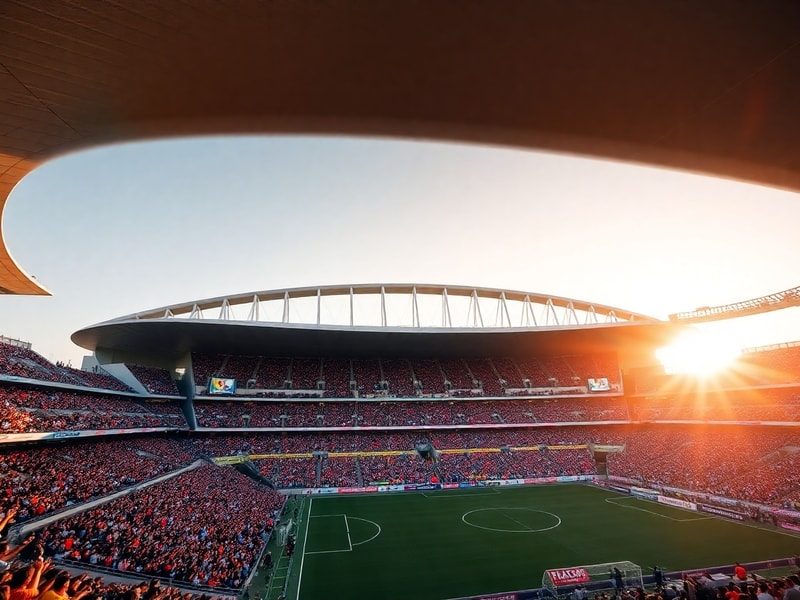
The project was a collaboration between FEMSA, one of Latin America’s largest corporations, and Spanish architecture firm Populous. At a cost of $200 million, Estadio BBVA wasn’t merely a place to watch soccer—it was a statement. Its sleek, futuristic design, inspired by Monterrey’s mountainous backdrop, made it instantly recognizable. The stadium’s roof, a series of interlocking steel ribs, mimics the jagged peaks of nearby Cerro de la Silla, blending nature with innovation. This fusion of local geography and modern engineering became a blueprint for how stadiums could reflect regional pride while embracing global standards.
A Global Benchmark for Modern Stadium Design
Estadio BBVA’s influence extends far beyond Mexico’s borders. It quickly became a case study in sustainable stadium design, earning LEED Gold certification for its energy efficiency and eco-friendly materials. The stadium’s rainwater harvesting system, solar panels, and waste management protocols set new benchmarks in Latin America. These features weren’t just for show; they reflected Monterrey’s commitment to environmental responsibility in an era of climate urgency.
The stadium’s design also prioritized fan experience. With a capacity of 53,500, every seat offers unobstructed views, a rarity in older venues. The VIP lounges, equipped with high-speed Wi-Fi and gourmet dining, catered to Monterrey’s growing middle class and international visitors. Even the parking lots were designed with accessibility in mind, featuring electric vehicle charging stations long before such amenities became mainstream in the region.
Internationally, Estadio BBVA has hosted major tournaments, including the 2019 CONCACAF Gold Cup and Copa Libertadores finals. Its state-of-the-art facilities—from its retractable pitch to its advanced broadcast systems—have made it a preferred venue for FIFA and CONCACAF events. The stadium’s success proved that Latin American venues could compete with Europe’s and North America’s elite stadiums, not just in size, but in innovation.
The Cultural Role of Stadiums in Latin American Cities
In Latin America, stadiums are more than infrastructure; they are civic cathedrals. They serve as gathering places for communities, stages for national identity, and symbols of urban pride. Estadio BBVA continues this tradition while pushing it forward. For Monterrey, a city known for its steel industry and entrepreneurial spirit, the stadium became a monument to progress. It transformed the once-industrial outskirts of the city into a cultural district, spurring development and attracting tourism.
Monterrey’s love affair with soccer is deeply intertwined with its social fabric. The city’s teams, Monterrey FC and Tigres UANL, enjoy fierce rivalries that draw thousands of spectators weekly. Estadio BBVA amplifies this passion. The stadium’s atmosphere, particularly during Clásico Regio matches, is electric. Fans clad in team colors create a sea of red or blue, their chants echoing against the steel and glass structure. This communal energy is a hallmark of Latin American sports culture, where stadiums are as much about belonging as they are about the game.
Yet Estadio BBVA also reflects broader shifts in Latin American urbanism. As cities grow and modernize, stadiums are increasingly integrated into broader urban planning. The area surrounding the stadium, known as “El Coloso de Santa Catarina,” has become a hub for restaurants, bars, and commercial spaces. This development mirrors trends seen in other global cities, where stadiums act as anchors for revitalized neighborhoods. In Monterrey, the stadium’s presence has helped shift perceptions of the city from an industrial backwater to a dynamic cultural destination.
Beyond Soccer: The Stadium as a Multipurpose Venue
While Estadio BBVA is synonymous with soccer, its versatility has allowed it to host a variety of events, from concerts by international artists like Coldplay to religious gatherings and corporate conferences. This adaptability is a testament to its design. The stadium’s modular layout allows for quick transformations, whether it’s setting up a stage for a concert or reconfiguring seating for a corporate event.
In 2023, the stadium hosted the FIFA Club World Cup, drawing global attention to Monterrey. The event wasn’t just about soccer; it was a showcase of the city’s infrastructure, hospitality, and organizational prowess. Local businesses thrived, hotels filled up, and the city’s global profile rose. Such events underscore how stadiums like Estadio BBVA can serve as economic engines, boosting tourism and local industries.
The stadium has also become a canvas for cultural expression. Murals by local artists adorn its walls, celebrating Monterrey’s history and diversity. During major events, the stadium’s exterior is lit up with projections and light shows, turning it into a beacon of creativity. This fusion of sports, art, and commerce reflects Monterrey’s multifaceted identity—a city that embraces tradition while forging ahead into the future.
A Model for the Future of Stadiums
Estadio BBVA stands as a model for how stadiums can evolve beyond their primary function. It’s a space that fosters community, champions sustainability, and drives economic growth. Its success has inspired similar projects across Latin America, from Brazil’s Arena Corinthians to Colombia’s Estadio Metropolitano. These venues are redefining what stadiums can be: not just places for sports, but hubs of culture, innovation, and urban development.
For Monterrey, the stadium is a symbol of resilience. The city has faced challenges, from economic downturns to natural disasters. Yet Estadio BBVA represents Monterrey’s ability to reinvent itself, to turn adversity into opportunity. In an era where cities are increasingly competing for global attention, Monterrey’s stadium demonstrates how architecture and design can shape identity and attract investment.
As Latin America continues to urbanize, the lessons from Estadio BBVA will only grow more relevant. Stadiums are no longer just buildings; they are living entities that reflect the aspirations of the communities they serve. For Monterrey, Estadio BBVA is more than a venue. It’s a legacy.