Strawberry Moon 2024: Meaning, Best Viewing Times & Global Traditions
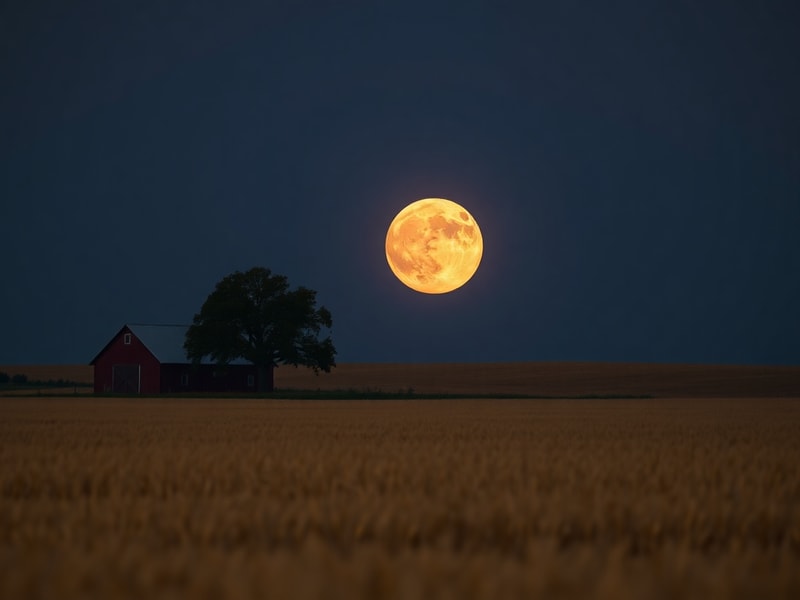
The Strawberry Moon of June arrives each year, painting the night sky with a soft golden glow. Unlike its more dramatic counterparts, this full moon carries a gentle charm, rooted in both astronomy and tradition. June’s full moon was named by Native American tribes, particularly the Algonquin, who associated it with the short season for harvesting strawberries. The name persists today, even as modern skywatchers marvel at its beauty through telescopes and smartphone cameras.
This year, the Strawberry Moon will peak on June 22 at 01:08 UTC, offering a celestial spectacle visible across most of the globe. For those in North America, the moon will appear full for about three days, from Friday evening through Monday morning. Its low position near the horizon often creates the illusion of an even larger, more luminous orb—a trick of perspective known as the “moon illusion.” The sight is fleeting but unforgettable, a reminder of how celestial events connect humanity across cultures and continents.
The Science Behind the Glow: Why the Strawberry Moon Stands Out
The Strawberry Moon isn’t just a poetic name; it’s a real astronomical event. During this phase, the moon is directly opposite the sun, fully illuminated from our vantage point on Earth. Its orbit around Earth is slightly tilted, so it doesn’t always align perfectly to create a total lunar eclipse. This year, however, it will pass through Earth’s outer shadow, known as the penumbra, causing a subtle dimming that may go unnoticed to the casual observer.
What makes the Strawberry Moon unique is its timing. June’s full moon occurs close to the summer solstice in the Northern Hemisphere, when days are longest and nights shortest. The moon’s low path across the sky means it lingers near the horizon longer than usual, bathing the landscape in a warm, extended light. This effect is most pronounced in temperate and Arctic regions, where twilight stretches late into the evening.
Astronomers note that the moon’s color can shift from pale gold to deep amber depending on atmospheric conditions. Wildfire smoke, volcanic ash, or even high humidity can scatter shorter blue wavelengths, leaving the longer red and orange hues to dominate. In 2023, smoke from Canadian wildfires turned the moon a fiery red across the northeastern United States, a stark contrast to the usual soft glow. Such moments remind us how interconnected Earth’s atmosphere and lunar cycles truly are.
A Global Tapestry: How Different Cultures View the June Full Moon
The Strawberry Moon may have Algonquin roots, but its significance stretches far beyond North America. In Europe, where June’s full moon was traditionally called the “Rose Moon” or “Honey Moon,” it symbolized love, fertility, and the abundance of early summer. The term “honeymoon” itself may trace back to this period, when weddings were often held under the full moon’s gentle light.
In China, the Strawberry Moon coincides with the Dragon Boat Festival, also known as Duanwu Festival. Celebrated on the fifth day of the fifth lunar month, this holiday honors the poet Qu Yuan and involves dragon boat races, eating zongzi (sticky rice dumplings), and hanging mugwort to ward off evil spirits. The full moon is believed to amplify the festival’s protective energies, a belief that blends folklore with the lunar calendar’s precision.
For Hindus, the Strawberry Moon falls near Vat Purnima, a festival celebrating the bond between married couples. Women fast and pray for their husbands’ long lives, tying threads around a banyan tree—a ritual that echoes the moon’s nurturing, feminine energy. Meanwhile, in the Southern Hemisphere, where June marks the start of winter, the full moon is known as the “Oak Moon” or “Cold Moon,” a nod to the season’s stark beauty.
These diverse traditions reveal a universal truth: the moon has long been a canvas for human hope, fear, and reverence. Whether as a guide for harvests, a marker of time, or a symbol of unity, its cycles have shaped civilizations in ways both practical and profound.
How to Best Experience the Strawberry Moon in 2024
Watching the Strawberry Moon doesn’t require expensive equipment—just a clear night and a little patience. For the best experience, find a location away from city lights, where light pollution won’t dilute the moon’s glow. Elevated spots like hills, rooftops, or even open fields offer unobstructed views. If you’re near water, the moon’s reflection can create a mesmerizing mirror effect, doubling its presence in the sky.
Timing is key. The moon will appear fullest at the exact moment of its peak illumination, but it will look nearly full for several nights. Arrive at least 30 minutes early to let your eyes adjust to the darkness. Bring a blanket, a thermos of tea, and perhaps a camera with a tripod to capture long-exposure shots. The moon’s low angle means it can be photographed alongside landmarks, trees, or even people for scale.
For those who prefer company, many astronomy clubs and planetariums host public viewing events. These gatherings often include telescopes, expert commentary, and opportunities to photograph the moon through high-powered lenses. Check local listings or Science event boards for gatherings in your area. Even if you can’t make it to an organized event, sharing the experience with friends or family turns a simple observation into a memorable tradition.
If clouds threaten to obscure the view, don’t despair. The Strawberry Moon’s full phase lasts for days, so you’ll have multiple chances to catch it. Alternatively, watch a live stream from observatories like Griffith Observatory in Los Angeles or the Virtual Telescope Project in Italy, which broadcast celestial events in real time.
The Strawberry Moon in Modern Times: More Than Just a Pretty Sight
In an age dominated by artificial light, the Strawberry Moon serves as a rare reminder of nature’s rhythms. Social media platforms explode with images each June, as photographers compete to capture the most striking shot. Hashtags like #StrawberryMoon and #JuneFullMoon trend worldwide, uniting strangers under a shared sky. Yet this digital fascination also raises questions about light pollution and its impact on wildlife and human health.
Environmentalists point out that excessive artificial lighting disrupts ecosystems, confusing nocturnal animals like moths, bats, and sea turtles. The Strawberry Moon, with its natural brilliance, highlights the contrast between our illuminated world and the untamed night. Initiatives like the International Dark-Sky Association advocate for responsible lighting to preserve the night sky’s beauty—and its ecological importance.
For photographers and artists, the Strawberry Moon is a muse. Its soft light inspires painters, poets, and filmmakers, from Van Gogh’s starry nights to contemporary indie films that use moonlight as a metaphor for mystery and introspection. Musicians, too, have woven lunar themes into their work, with songs like “Moon River” and “Clair de Lune” evoking the moon’s ethereal presence.
Even in Technology, the Strawberry Moon sparks innovation. Advances in astrophotography and smartphone cameras now allow amateur astronomers to capture high-resolution images of lunar craters and maria (the dark plains on the moon’s surface). Apps like Star Walk and SkyView use augmented reality to overlay constellations and lunar phases, making celestial navigation accessible to everyone.
The Strawberry Moon, then, is more than a seasonal event—it’s a bridge between past and present, science and art, nature and technology. As we gaze upward, we’re reminded of our place in the universe, both as observers and participants in its endless cycles.
Mark your calendars for June 22, and take a moment to step outside. Whether you’re alone with your thoughts or surrounded by loved ones, the Strawberry Moon offers a chance to pause, reflect, and reconnect with the natural world. In a fast-paced era, it’s a gentle nudge to look up—and remember what lies beyond our screens.