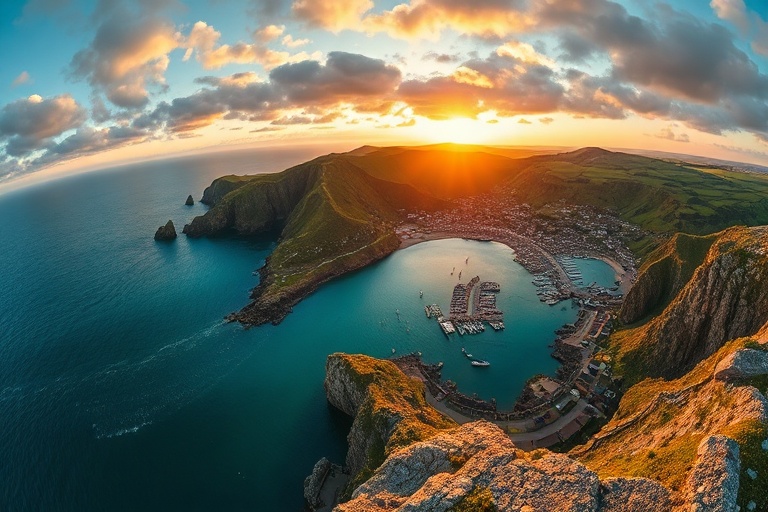
Nestled at the southwestern tip of England, Cornwall is often reduced to clichés: cream teas, pasties, and rugged coastal paths. Yet this narrow peninsula punches far above its geographical weight, shaping global narratives from tin mining to surf culture, from Celtic heritage to cutting-edge renewable energy. Its influence stretches from ancient trade routes to modern digital economies, making Cornwall a microcosm of how small regions can leave outsized imprints on the world.
The Historical Tapestry: From Bronze Age Trade to Modern Identity
Cornwall’s story begins not with tourism, but with industry. The region’s tin deposits, mined as early as 2000 BCE, became the backbone of the Bronze Age economy. Tin from Cornwall was traded across Europe, fueling the rise of civilizations from Greece to Egypt. By the time of the Roman conquest, Cornwall was known as Cassiterides—the Tin Islands—a name that still echoes in global trade history.
This industrial legacy didn’t fade with the Bronze Age. In the 19th century, Cornwall’s mines became the Silicon Valley of their day, producing up to two-thirds of the world’s copper. The region’s engineers pioneered steam-powered machinery, and Cornish miners took their skills as far as Mexico and Australia. Today, remnants of this era—abandoned engine houses and subterranean tunnels—serve as open-air museums, telling a story of innovation that transcended borders.
But Cornwall’s historical significance isn’t just economic. It’s cultural. The Cornish language, a Brythonic Celtic tongue closely related to Welsh, survived centuries of suppression to experience a revival in the late 20th century. Today, it’s recognized as a minority language under the European Charter for Regional or Minority Languages, with schools offering bilingual education. This linguistic resurgence reflects a broader cultural reclamation, where Cornwall asserts its distinct identity within the United Kingdom.
Surfing, Art, and the Reinvention of a Regional Economy
If Cornwall’s past is rooted in industry, its present is defined by creativity and leisure. The region has become a global hub for surfing, hosting international competitions and nurturing world-class athletes. Fistral Beach in Newquay is now synonymous with professional surfing, drawing competitors and spectators from as far as Australia and Japan. The sport’s growth has spurred a cottage industry of surf schools, eco-resorts, and sustainable wetsuit brands, proving that adventure tourism can be both profitable and environmentally conscious.
Art has also played a transformative role. The Tate St Ives, opened in 1993, cemented Cornwall’s status as an art destination. Perched on the edge of Porthmeor Beach, the gallery showcases modernist and contemporary works, with many pieces inspired by the Cornish light and landscape. Artists like Barbara Hepworth and Ben Nicholson made St Ives their home in the mid-20th century, creating a legacy that continues to attract creatives from around the world. Today, the region hosts the annual St Ives September Festival, blending music, literature, and visual arts in a celebration of global culture.
This cultural renaissance has redefined Cornwall’s economy. Where once mining and fishing dominated, now creative industries contribute over £300 million annually. The Cornwall and Isles of Scilly Local Enterprise Partnership reports that the creative sector is one of the fastest-growing in the region, outpacing traditional industries. This shift reflects a broader global trend, where regions once reliant on extraction are pivoting toward knowledge and experience economies.
The Green Frontier: Leading the UK’s Renewable Energy Revolution
Cornwall isn’t just looking back at its history—it’s shaping the future. The region is at the forefront of the UK’s renewable energy transition, harnessing its windy coasts, strong tides, and abundant sunlight. The Wave Hub, a pioneering wave energy project off the north coast, has attracted international investment and research collaborations. Meanwhile, solar farms and wind turbines dot the landscape, contributing to Cornwall’s goal of becoming carbon-neutral by 2030.
This green ambition extends beyond energy. Cornwall’s Eden Project, a massive botanical garden housed in biomes that recreate global climates, has become a model for sustainable tourism and education. Since opening in 2001, it has welcomed over 20 million visitors, educating them on biodiversity and climate change. The project’s success has inspired similar initiatives worldwide, from the Singapore Botanic Gardens to Biomes in Montreal.
Even Cornwall’s agricultural sector is getting an eco-friendly makeover. The Cornish Pasty Company now offers organic, locally sourced pasties, while dairy farms are adopting regenerative practices to reduce their carbon footprint. This holistic approach to sustainability—encompassing energy, tourism, and agriculture—positions Cornwall as a case study for other regions grappling with climate change.
Challenges and Contradictions: The Other Side of Cornwall’s Appeal
Despite its successes, Cornwall faces significant challenges. The region has some of the highest levels of deprivation in England, with pockets of poverty that contrast sharply with the affluence of seasonal workers and second-home owners. House prices have surged due to demand from retirees and remote workers, pricing out locals. The Cornwall Housing Crisis has become a flashpoint, with activists demanding policy changes to protect affordable housing.
Tourism, while economically vital, also brings pressures. The influx of visitors has led to overcrowding in popular spots like St Michael’s Mount and the Eden Project, straining local infrastructure. Environmentalists warn of erosion on coastal paths and disruption to marine ecosystems. Balancing economic benefits with sustainability remains a delicate act.
There’s also the question of identity. While Cornwall celebrates its distinct culture, some argue that its branding as a “Celtic nation” is more marketing than reality. The region’s Celtic ties are undeniable, but its relationship with the rest of the UK is complex. The Cornish nationalist movement, advocating for greater devolution or even independence, adds another layer to this debate. How Cornwall navigates these tensions will shape its future role in the UK and beyond.
Key Takeaways: Why Cornwall Matters Globally
- Historical Legacy: Cornwall’s tin trade fueled Bronze Age economies, and its mining innovations powered the Industrial Revolution. Its cultural heritage, from the Cornish language to Celtic traditions, offers a unique lens on European history.
- Cultural Capital: From surfing hotspots to art galleries, Cornwall has redefined itself as a hub for creativity and leisure, attracting global audiences and inspiring similar transformations worldwide.
- Green Leadership: With ambitious renewable energy projects and sustainable tourism models, Cornwall is a laboratory for climate action, proving that small regions can lead systemic change.
- Economic Resilience: By diversifying from traditional industries to tech, art, and green energy, Cornwall demonstrates how communities can adapt in an era of global disruption.
Cornwall’s story is a reminder that regions, no matter how small, can wield outsized influence. It’s a place where ancient trade routes meet modern innovation, where industrial grit collides with artistic flair, and where economic survival depends on reinvention. As the world grapples with climate change, inequality, and cultural homogenization, Cornwall offers a compelling case study in resilience and adaptability. It’s more than a postcard destination—it’s a global player with lessons to share.
For those seeking inspiration on regional development, cultural preservation, or sustainable tourism, Cornwall is a masterclass. The real magic of this narrow peninsula isn’t in its cliffs or cream teas—it’s in its ability to continually redefine itself while staying true to its roots. In an era of global uncertainty, Cornwall proves that identity and innovation aren’t mutually exclusive. They can, in fact, be the perfect partnership.