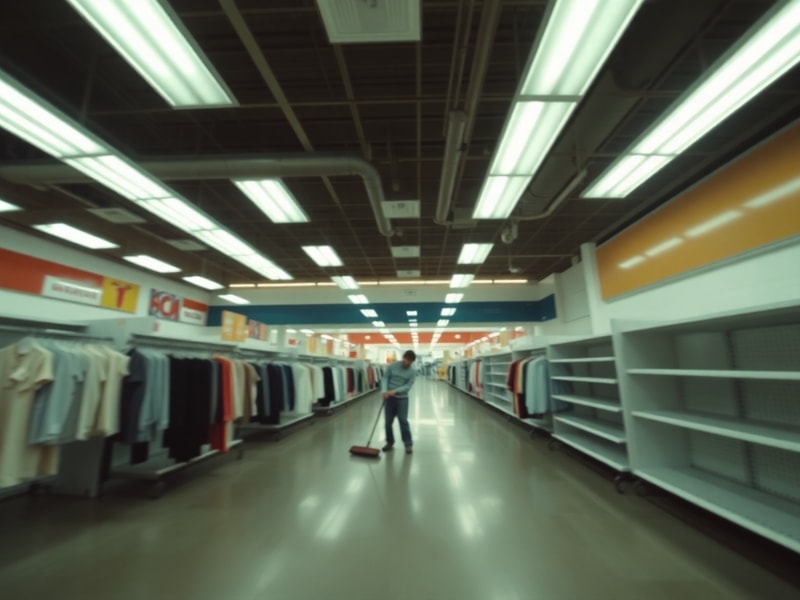
JCPenney’s recent announcement of store closures has sent ripples through the retail sector, marking another chapter in the long decline of traditional department stores. The 125-year-old chain, once a dominant force in American retail, now finds itself in the unenviable position of shrinking its footprint to survive. With 69 locations slated for closure by mid-2025, the move underscores the accelerating pressures facing legacy retailers in an era dominated by e-commerce and shifting consumer habits.
Why JCPenney’s Closures Reflect a Larger Retail Shift
The closures are not an isolated incident but part of a broader trend that has reshaped the retail landscape over the past decade. Department stores like Macy’s, Kohl’s, and Nordstrom have also scaled back physical locations, opting instead to invest in digital platforms and omnichannel strategies. JCPenney’s decline mirrors these struggles, exacerbated by financial instability and changing consumer preferences. The pandemic accelerated these shifts, pushing more shoppers online and leaving brick-and-mortar stores with unsustainable overhead costs.
Several factors contributed to JCPenney’s current predicament:
- E-commerce dominance: Online shopping now accounts for nearly 20% of total retail sales, up from just 6% a decade ago. Retailers that failed to adapt to this shift have seen their foot traffic dwindle.
- Changing consumer habits: Younger generations prioritize convenience and experiences over traditional retail. Fast fashion and discount retailers have capitalized on this, leaving mid-tier department stores struggling to compete.
- Financial missteps: JCPenney’s 2020 bankruptcy filing highlighted its inability to keep pace with competitors. The company has since struggled to regain its footing, despite a 2023 restructuring plan.
- Location challenges: Many of the stores closing are in areas with declining populations or oversaturated retail markets, making them less viable for long-term profitability.
These closures are not just about JCPenney’s survival—they signal a fundamental restructuring of how Americans shop. Traditional malls, once the heart of retail culture, are increasingly becoming relics of the past. The rise of Amazon and direct-to-consumer brands has eroded the relevance of department stores, forcing them to rethink their strategies or face extinction.
The Human Impact of Store Closures
Beyond the balance sheets, the closures will have tangible effects on employees and local communities. JCPenney employs roughly 10,000 workers, many of whom will face job insecurity as stores shut down. For small towns where a JCPenney location is a cornerstone of the local economy, the closures could devastate foot traffic and neighboring businesses that rely on the store’s draw.
Retail layoffs often disproportionately affect women and older workers, who make up a significant portion of department store employees. These workers may struggle to find comparable employment in regions with limited job opportunities. Meanwhile, communities that lose a JCPenney could see property values decline, further straining local economies.
JCPenney has pledged to support affected employees with severance packages and outplacement services, but the emotional and financial toll remains significant. For many, these closures represent the end of an era—a reminder of how quickly retail fortunes can change.
Can JCPenney Reinvent Itself? Lessons from Retail’s Past
JCPenney’s struggles are a cautionary tale for other retailers clinging to outdated models. The company has attempted to pivot in recent years, including a partnership with Sephora to revamp its beauty section and a focus on private-label brands. However, these efforts have not been enough to offset the decline in foot traffic or the rising costs of operation.
Other retailers have found success by embracing change. Target and Walmart have thrived by blending physical stores with digital strategies, offering curbside pickup and same-day delivery. Meanwhile, discount retailers like TJ Maxx and Marshalls have capitalized on consumers’ desire for value in an inflationary economy. JCPenney’s challenge lies in convincing shoppers that its stores—and its brand—still matter in a crowded retail landscape.
One potential path forward could involve a further reduction in store sizes, transforming JCPenney locations into hybrid showrooms and fulfillment centers. This would align with consumer trends favoring convenience and curation. Another option is doubling down on private-label and exclusive partnerships, which could differentiate JCPenney from competitors like Amazon and Walmart.
Yet, reinvention is easier said than done. JCPenney’s brand identity has been fractured for years, with failed turnaround attempts and inconsistent messaging. To regain trust, the company would need to clearly articulate its value proposition and deliver on it consistently—a tall order for a retailer in survival mode.
What’s Next for the Future of Department Stores?
The closure of 69 JCPenney stores is a stark reminder that the golden age of department stores is over. The survivors will likely be those that can adapt quickly, whether by embracing e-commerce, reimagining their physical spaces, or catering to niche markets. For others, the path forward may be limited to niche roles or eventual acquisition.
As retailers grapple with these challenges, consumers will continue to drive the change. The rise of resale platforms like ThredUp and Poshmark, along with the popularity of thrift stores, reflects a broader shift toward sustainability and affordability. Department stores that fail to align with these values risk becoming obsolete.
For JCPenney, the road ahead is uncertain. The company’s ability to innovate—and its willingness to let go of the past—will determine whether it can carve out a sustainable future. One thing is clear: the retail landscape will look very different in another 10 years, and only the most adaptable will thrive.
For more insights into retail trends and business analysis, visit our News and Business sections.