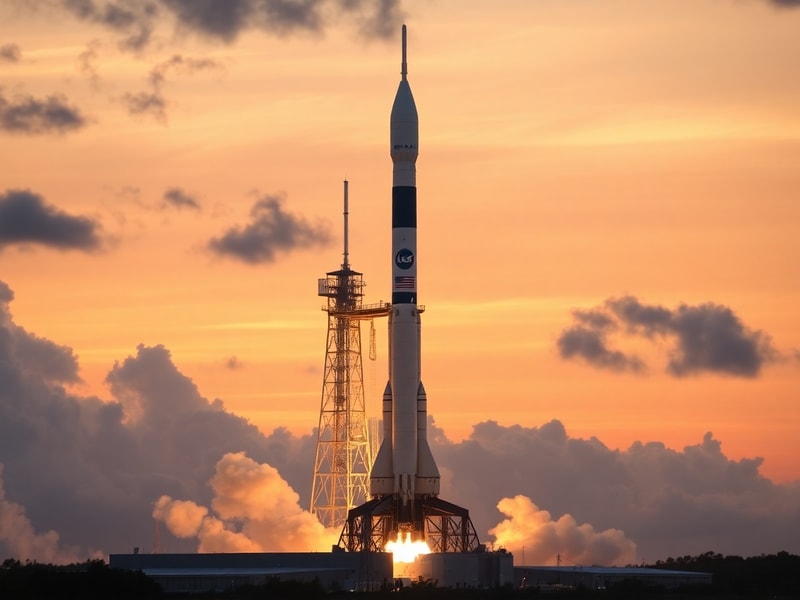
Atlas V Rocket Launch: A Global Icon of Space Exploration
The Atlas V: A Pillar of Space Exploration and Global Collaboration
The Atlas V rocket has long stood as a symbol of American ingenuity and international cooperation in spaceflight. Since its debut in 2002, this heavy-lift launch vehicle has carried satellites, probes, and even crewed missions into orbit, shaping how nations explore the cosmos. Its reliability and adaptability have made it a cornerstone of both commercial and government space programs. Yet beyond its technical prowess, the Atlas V represents something deeper: a bridge between nations, a testament to shared ambition, and a reminder of how space exploration transcends borders.
On July 1, 2024, an Atlas V rocket launched from Cape Canaveral Space Force Station, carrying the classified USSF-51 mission for the U.S. Space Force. While details remain under wraps, the event underscored the rocket’s enduring role in national security and scientific progress. But its impact stretches far beyond any single launch. From launching NASA’s Mars rovers to deploying global communication networks, the Atlas V has woven itself into the fabric of modern spacefaring culture. Its legacy is not just in the payloads it delivers but in the way it has redefined what’s possible when nations unite under a common goal.
A Brief History: From Cold War Origins to Modern Dominance
The Atlas V’s lineage traces back to the early days of the Space Race. Its predecessor, the Atlas rocket, was born in the 1950s as part of America’s first intercontinental ballistic missile program. Designed to deter Cold War threats, the Atlas soon found a new purpose in space exploration. In 1962, it launched John Glenn into orbit, making him the first American to circle the Earth. That mission marked a turning point, proving that rockets built for war could also serve science and discovery.
By the 1990s, the Atlas program had evolved into a commercial enterprise. Lockheed Martin, the rocket’s manufacturer, began marketing it as a reliable option for satellite launches. The introduction of the Atlas V in 2002 brought a new era of precision and power. Its modular design allowed for customization, enabling it to carry everything from small science satellites to large military payloads. This flexibility made it a favorite among international clients, from European space agencies to commercial satellite operators in Asia.
Today, the Atlas V stands alongside competitors like SpaceX’s Falcon 9 and Europe’s Ariane 6. Yet it retains a unique place in the global space community. Unlike some newer rockets that prioritize rapid reusability, the Atlas V has focused on consistency and proven performance. Its track record—over 100 successful launches—speaks to its role as a steady workhorse in an industry where failure is not an option.
The Cultural Significance of Rocket Launches
Rocket launches are more than technical achievements; they are cultural events that captivate audiences worldwide. The Atlas V’s liftoffs, broadcast live to millions, evoke a sense of wonder that transcends language and borders. In countries like India and Japan, where space programs have deep historical roots, launches spark national pride. Even in nations without their own space agencies, the sight of a rocket piercing the sky unites people in shared awe.
This cultural resonance is evident in how launches are covered globally. In Europe, major news outlets dedicate live blogs and special reports to missions like the Atlas V’s deployment of the GOES-R weather satellite. In Africa, where satellite technology is crucial for everything from agriculture to disaster response, the rocket’s payloads are seen as lifelines. Even in remote villages, where internet access is limited, the idea of a rocket carrying communication systems symbolizes progress.
For many, a launch is also a moment of reflection. It reminds us of humanity’s place in the universe—small, yet capable of extraordinary feats. The Atlas V, in particular, carries this duality: it is a product of American engineering, yet its impact is felt across continents. This global perspective highlights how space exploration has become a unifying force, cutting across political divides and economic disparities.
How the Atlas V Fits Into the Future of Spaceflight
The space industry is undergoing rapid transformation, with reusable rockets and private companies reshaping the landscape. Yet the Atlas V remains relevant, thanks to its adaptability and partnerships. One of its most notable roles is in NASA’s Commercial Crew Program, where it has launched missions to the International Space Station. These flights not only transport astronauts but also symbolize the growing collaboration between government agencies and private enterprises.
Looking ahead, the Atlas V’s legacy may evolve. United Launch Alliance, the company behind the rocket, is developing its successor, the Vulcan Centaur. Scheduled for its first flight in 2024, the Vulcan will incorporate new technologies while retaining the Atlas V’s core strengths. This transition reflects a broader trend in spaceflight: innovation must coexist with reliability. The Atlas V has shown that balance is possible, serving as a bridge between the old and the new.
For enthusiasts and professionals alike, the Atlas V represents more than a rocket. It is a reminder of how far we’ve come—and how much farther we can go. Whether it’s launching a satellite that improves weather forecasting or sending a probe to study distant planets, its missions have tangible impacts on daily life. In an era where space is increasingly commercialized, the Atlas V stands as a testament to the enduring power of exploration.
What’s Next for the Atlas V and Global Space Exploration
The future of the Atlas V is intertwined with the broader ambitions of the space community. Here are some key developments to watch:
- Lunar and Martian Missions: NASA’s Artemis program aims to return humans to the Moon, with the Atlas V potentially playing a supporting role in early missions. While the Space Launch System (SLS) will be the primary rocket, the Atlas V could assist in deploying secondary payloads or lunar landers.
- Commercial Satellite Growth: The demand for communication and Earth observation satellites continues to rise. Companies in Europe, Asia, and the Americas rely on the Atlas V’s proven track record to deploy their payloads, ensuring its relevance in the commercial sector.
- International Partnerships: Collaborations between nations are expanding. The Atlas V has already launched satellites for Japan’s Himawari weather program and Europe’s AEHF military communications system. Future missions could further strengthen these bonds, particularly in regions like Southeast Asia and Latin America.
- Technological Upgrades: While the Atlas V is nearing the end of its operational life, upgrades like the Centaur V upper stage will enhance its capabilities. These improvements ensure it remains competitive until the Vulcan Centaur fully takes over.
The Atlas V’s story is far from over. Even as newer rockets enter the scene, its contributions will be remembered as foundational. It has not only launched payloads but also launched careers, inspired generations, and fostered international cooperation. In a field where progress is measured in decades, the Atlas V stands as a reminder that great achievements are often the result of persistence, innovation, and collaboration.
For those who watch its launches, whether in person or via livestream, the Atlas V offers more than a spectacle. It offers a glimpse into humanity’s future—a future where the boundaries of Earth no longer limit our ambitions. As we look to the stars, the Atlas V serves as a reminder that the sky is not the limit; it is just the beginning.