What Scientists Really Do: Careers, Ethics, and the Future of Research
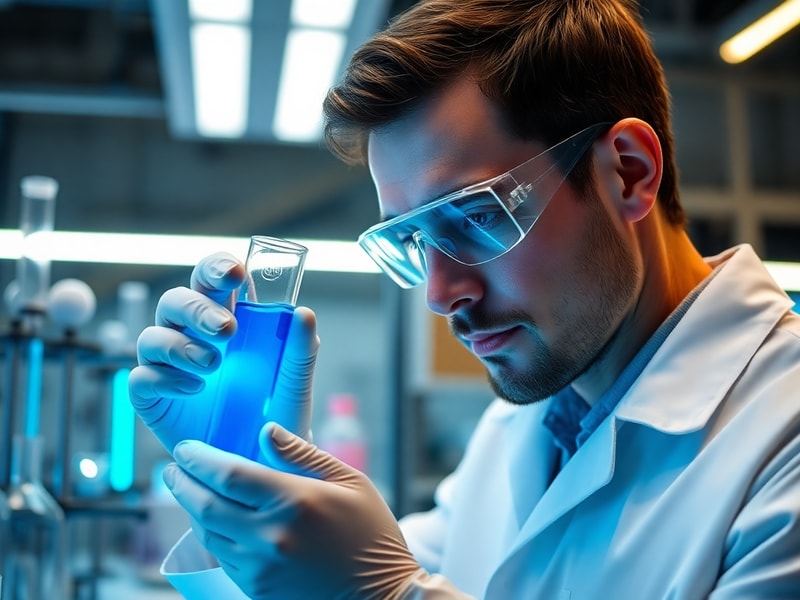
The role of scientists extends far beyond the stereotype of the lab-coated researcher peering into microscopes. These professionals drive progress across industries, from medicine to environmental sustainability, often working in collaborative teams to solve complex challenges. Their work underpins technological advancements that shape daily life, yet their contributions remain underappreciated by the general public. By examining the diverse paths into scientific careers, the ethical dilemmas they face, and the evolving tools at their disposal, we gain a clearer picture of how science intersects with society.
The Diverse Paths Into Scientific Careers
Science is not a monolithic field but a vast ecosystem of disciplines, each with its own entry points and specializations. Some scientists begin with a passion for a specific subject, like astrophysics or microbiology, while others stumble into research after exploring unrelated fields. Universities offer structured pathways, but alternative routes—such as industry certifications, online courses, or apprenticeships—are becoming increasingly viable. For instance, data science has emerged as a gateway for professionals from mathematics, computer science, or even social sciences, thanks to the growing demand for analytical skills.
Interdisciplinary approaches are reshaping traditional career trajectories. A biochemist today might collaborate with engineers to develop medical devices, or a geologist might work with climate scientists to model environmental changes. These overlaps create opportunities for professionals who can bridge gaps between disciplines. Organizations like Dave’s Locker Science highlight emerging fields where collaboration is key, such as bioinformatics or renewable energy engineering.
The career ladder in science isn’t always linear. Many researchers transition between academia, private sector roles, and government positions, leveraging their expertise in different contexts. A physicist might start in a university lab, move to a tech company to develop quantum computing algorithms, and later advise policymakers on scientific funding. This fluidity reflects the adaptability required in modern scientific careers.
The Ethical Challenges Scientists Confront
Scientific progress is not without controversy. Ethical dilemmas frequently arise, particularly in fields like genetic engineering, artificial intelligence, and environmental conservation. The CRISPR gene-editing tool, for example, has sparked debates about the boundaries of human intervention in biology. While it offers potential cures for genetic disorders, its misuse could lead to unintended consequences, such as designer babies or ecological imbalances.
Another pressing issue is data privacy in scientific research. With the rise of big data and AI, scientists must navigate the ethical use of personal information, especially in health-related studies. The infamous case of Cambridge Analytica demonstrated how data misuse can undermine public trust in both science and technology. Researchers today are increasingly required to adopt frameworks like the FAIR principles—Findable, Accessible, Interoperable, and Reusable—to ensure transparency and accountability.
Environmental scientists face their own set of ethical challenges. Balancing conservation efforts with economic development often puts them at odds with policymakers or corporate interests. The debate over fracking, for instance, pits energy demands against potential groundwater contamination. Scientists advocating for stricter regulations may find themselves labeled as alarmist, while those pushing for industrial expansion risk being seen as complicit in environmental harm.
The Role of Peer Review in Ethical Science
Peer review serves as a critical safeguard against unethical or flawed research. It ensures that findings are scrutinized by experts before publication, reducing the risk of fraud or bias. However, the system is not infallible. High-profile retractions, such as those in the pharmaceutical industry, reveal gaps in oversight. Some journals have begun implementing stricter transparency measures, like pre-registering clinical trials, to mitigate these risks.
The Tools and Technologies Transforming Science
The tools available to scientists today are more advanced than ever, enabling discoveries that were once unimaginable. High-performance computing allows researchers to simulate complex systems, from protein folding to climate patterns. Meanwhile, lab automation and robotics have streamlined experiments, reducing human error and increasing reproducibility. In fields like astronomy, telescopes like the James Webb Space Telescope are capturing images of the universe in unprecedented detail, offering new insights into its origins.
Artificial intelligence is another game-changer, particularly in drug discovery and materials science. Machine learning algorithms can analyze vast datasets to identify potential drug compounds or predict the properties of new materials. Companies like DeepMind have demonstrated AI’s potential by using it to solve protein structures, a breakthrough that could accelerate medical research. However, these tools also raise questions about job displacement and the need for upskilling in the scientific workforce.
Collaboration is being redefined by digital platforms. Open-access journals and preprint servers like arXiv allow scientists to share findings before peer review, fostering faster innovation. Platforms like GitHub enable researchers to collaborate on code and data, breaking down geographical barriers. Even citizen science projects, where non-professionals contribute to research, are gaining traction. Projects like Zooniverse enlist volunteers to classify galaxies or track wildlife, demonstrating how technology can democratize science.
The Future of Scientific Work
The scientific landscape is evolving rapidly, driven by technological advancements and shifting societal priorities. One of the most significant trends is the growing emphasis on interdisciplinary research. Problems like climate change or pandemics cannot be solved by a single discipline; they require collaboration between biologists, engineers, social scientists, and policymakers. Universities and research institutions are responding by creating cross-disciplinary programs and funding initiatives that encourage such partnerships.
Another trend is the increasing focus on sustainability. Scientists are exploring ways to reduce the environmental impact of research itself, from minimizing plastic waste in labs to using renewable energy in facilities. The push for green chemistry, which aims to design products and processes that reduce or eliminate hazardous substances, is gaining momentum. These efforts reflect a broader shift toward responsible innovation, where the long-term consequences of scientific work are considered alongside its benefits.
However, the future of scientific work is not without challenges. Funding remains a perennial issue, with many researchers struggling to secure grants for innovative projects. The pressure to publish frequently can also lead to a “publish or perish” culture, where quantity is prioritized over quality. Additionally, the commercialization of research—where universities and corporations collaborate for profit—raises concerns about conflicts of interest and the prioritization of marketable outcomes over fundamental discovery.
The role of scientists in society is likely to become even more pivotal as global challenges intensify. Whether it’s developing vaccines for emerging diseases, designing sustainable cities, or uncovering the mysteries of the cosmos, their work will continue to shape the future. Yet, for science to thrive, it must be supported by policies that prioritize ethical considerations, equitable access to resources, and public engagement.
Public Perception and the Need for Advocacy
Despite their critical contributions, scientists often struggle to communicate their work effectively to the public. Misunderstandings about scientific methods, such as the distinction between correlation and causation, can lead to misinformation. The COVID-19 pandemic highlighted this gap, as conflicting messages from officials and experts eroded public trust. Scientists must therefore become better advocates for their field, using clear, accessible language to explain complex ideas.
Initiatives like science communication workshops and public outreach programs are helping bridge this divide. Organizations like the Dave’s Locker Education platform provide resources for scientists looking to engage with broader audiences. By demystifying their work, scientists can foster a more informed and scientifically literate society—one that values evidence-based decision-making.