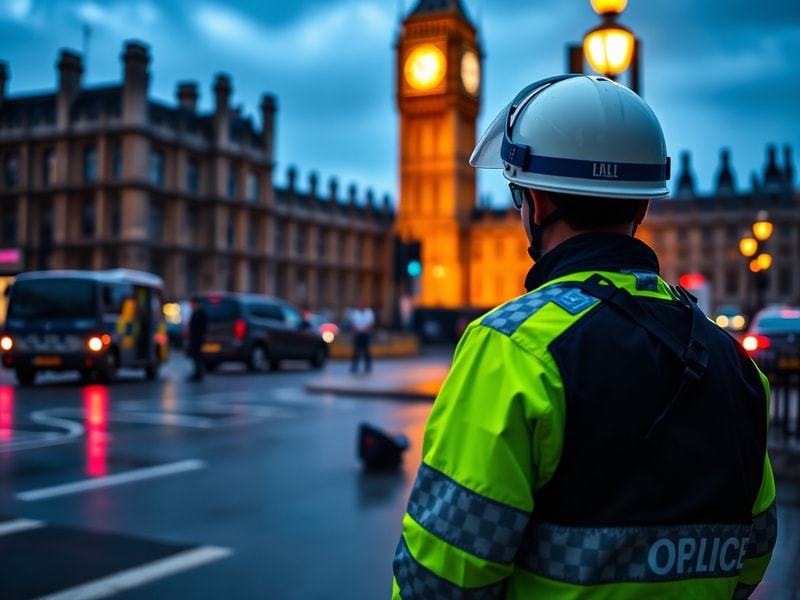
Metropolitan Police: Structure, Challenges and Reform in 2024
The Metropolitan Police Service, often abbreviated as the Met, stands as the United Kingdom’s largest police force. Serving London with over 33,000 officers and 15,000 staff, it plays a pivotal role not only in maintaining public safety but also in shaping national policing standards. Its jurisdiction covers 32 boroughs across Greater London, excluding the City of London, which has its own dedicated force. The Met’s responsibilities span from counterterrorism and serious organised crime to local policing and emergency response, making it one of the most complex law enforcement agencies in the world.
The structure and command of the Metropolitan Police
The Met operates under a hierarchical command structure designed to ensure accountability and operational efficiency. At the top sits the Commissioner, currently Sir Mark Rowley, who reports directly to the Home Secretary. Beneath the Commissioner are four Deputy Commissioners, each overseeing major functional areas such as frontline policing, specialist crime, professionalism, and corporate services. These leaders are supported by Assistant Commissioners and Chief Superintendents, who manage borough commands and specialist units respectively.
London is divided into 12 Basic Command Units (BCUs), each responsible for a cluster of boroughs. Each BCU has a Chief Superintendent and a dedicated team of officers, detectives, and police staff. Additionally, the Met maintains several national and specialist units, including:
- Counter Terrorism Command (CTC)
- Organised Crime Command
- Public Order Unit
- Dog Support Unit
- Marine Policing Unit
This structure allows the force to respond rapidly to local incidents while maintaining the capability to tackle large-scale threats. The BCUs also work closely with local councils, community groups, and news outlets to build trust and improve transparency. Despite its size, the Met has faced criticism over the years regarding coordination, resource allocation, and public trust—issues that continue to shape its evolution.
Controversies and challenges facing the force
No discussion of the Metropolitan Police would be complete without addressing the controversies that have frequently made headlines. One of the most persistent issues is the use of stop-and-search powers, which, while intended to reduce crime, have disproportionately targeted Black and minority ethnic communities. According to Home Office data, Black people are nine times more likely to be stopped and searched than white people in London. This disparity has fueled accusations of institutional racism, a claim reinforced by the 1999 Macpherson Report following the murder of Stephen Lawrence.
Another major challenge is the force’s response to public order incidents and protests. The policing of events such as the 2011 London riots, the Extinction Rebellion protests in 2019, and more recently, the Sarah Everard vigil in 2021, has drawn significant scrutiny. Critics argue that heavy-handed tactics, including the use of containment (or “kettling”), excessive force, and failures in protecting vulnerable individuals, have eroded public confidence. In 2022, an independent review by criminologist Lady Louise Casey found evidence of “institutional racism, sexism, and homophobia” within the Met, prompting urgent calls for reform.
Corruption scandals have also plagued the force. High-profile cases, such as the murder of private investigator Daniel Morgan in 1987 and the conviction of officers in the 2019 “Plebgate” scandal, have highlighted systemic issues within internal culture. These incidents have led to public inquiries and recommendations for stricter oversight and cultural change. The Met has since introduced mandatory training on diversity, ethics, and professional standards, alongside increased use of body-worn cameras to improve accountability.
Innovation and reform: The path forward
Despite its challenges, the Metropolitan Police has taken significant steps toward modernisation and reform. One notable initiative is the rollout of the Digital Policing Programme, which aims to enhance investigative capabilities through advanced data analytics, artificial intelligence, and digital forensics. This includes the use of facial recognition technology in public spaces—a move that has sparked both support for crime prevention and concern over privacy violations.
The force has also prioritised neighbourhood policing, embedding officers within local communities to rebuild trust. Initiatives such as the Violence Reduction Units (VRUs), which focus on early intervention and youth engagement, have shown promising results in reducing violent crime in some boroughs. Additionally, the Met has strengthened its mental health response through the Street Triage scheme, partnering with NHS professionals to better support individuals in crisis.
Recruitment and retention remain critical challenges. The Met has struggled to attract diverse talent, particularly in senior roles, and has faced criticism over its handling of misconduct cases. In response, it has launched targeted outreach programs, including apprenticeships and graduate schemes, to diversify its workforce. The introduction of the Police Covenant, a commitment to support officers and their families, reflects a broader recognition of the psychological and physical toll of policing.
The Met’s role in national security and global policing
Beyond London’s borders, the Metropolitan Police plays a crucial role in national security and international policing. The Counter Terrorism Command (CTC) is one of the most advanced units of its kind in Europe, responsible for investigating terrorist plots and disrupting extremist networks. It works in close collaboration with MI5, international police agencies, and allied forces to monitor threats and respond to emergencies. The Met’s involvement in major events such as the 2012 Olympic Games and the funeral of Queen Elizabeth II demonstrated its ability to manage large-scale security operations with precision.
The force is also a founding member of Interpol and Europol, contributing to global efforts against human trafficking, cybercrime, and organised crime. Its International Crime Coordination Centre (ICCC) facilitates cross-border investigations, ensuring that criminals cannot exploit jurisdictional gaps. This international dimension underscores the Met’s status not just as a local force, but as a key player in global law enforcement.
Yet, its national influence extends beyond security. The Met often sets the tone for policing standards across the UK, from training methodologies to ethical guidelines. Its decisions on technology use, public engagement, and crime prevention strategies are closely watched by other forces and policymakers. As society evolves, so too must the Metropolitan Police—balancing tradition with innovation, authority with empathy, and strength with accountability.
The Metropolitan Police Service remains a cornerstone of British law enforcement, a force of immense scale and influence. While it continues to navigate the complexities of modern policing—from digital threats to social justice—the Met’s journey reflects broader societal challenges and aspirations. Reform is not a destination but a process, one that demands continuous reflection, public dialogue, and unwavering commitment to justice. For Londoners and Britons alike, the Met’s evolution will shape not only the safety of communities but the very fabric of trust between citizens and the state.