How Wimbledon’s 2026 Prize Money Could Redefine Tennis Economics
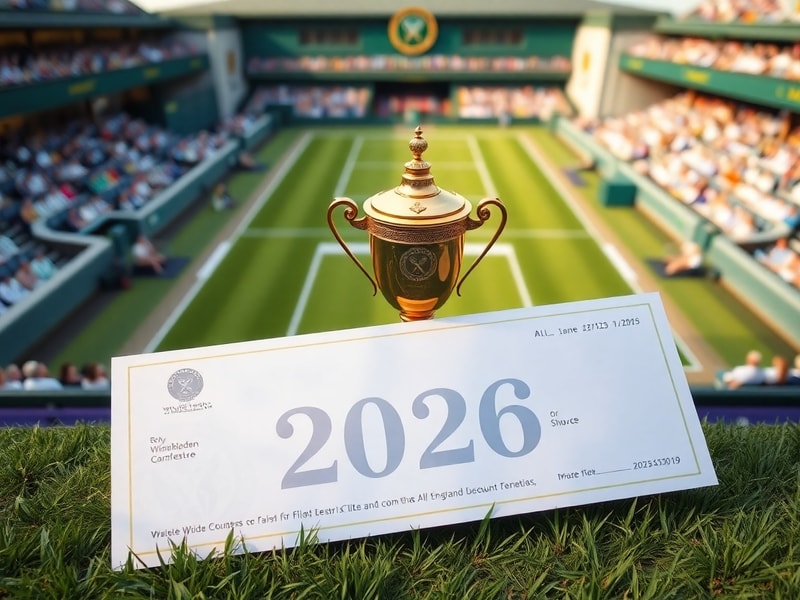
The All England Lawn Tennis Club has a long history of quietly reshaping tennis economics with each new championship cycle. In 2026, the club will unveil its most ambitious financial update in years, potentially setting a new benchmark for global tournament payouts. While exact figures remain under wraps, insiders suggest the total prize pool could exceed £60 million for the first time—driven by inflation, commercial demand, and the sport’s evolving global audience.
Wimbledon’s approach to prize money has always been distinct. Unlike the ATP and WTA tours, which adjust purses based on rankings and tour events, Wimbledon operates independently. Its funding model relies on a mix of sponsorships, broadcast revenue, and ticket sales—all insulated from the volatility that affects other tournaments. This independence allows the club to prioritize player welfare while maintaining its reputation as tennis’s most prestigious event.
Historically, Wimbledon has led the way in equal prize money for men and women. Since 2007, the tournament has paid both singles champions the same amount, a stance that has influenced global sports policy. By 2026, this principle is expected to extend further, with equal payouts likely across all rounds and events, including doubles and mixed doubles. The move would reinforce Wimbledon’s stance as a progressive leader in gender equity within elite sports.
Behind the Numbers: What’s Driving the Increase
The projected rise in Wimbledon’s 2026 prize money isn’t arbitrary. Several converging factors are pushing the club to expand its financial commitment:
- Inflation and cost of living: With rising travel, training, and living expenses for players, the club recognizes the need to support athletes beyond just prize cheques.
- Broadcast and streaming growth: Wimbledon’s global TV and digital audience continues to expand, particularly in Asia and North America, driving higher rights fees that fund larger purses.
- Player advocacy: The ATP and WTA have increasingly pushed for greater financial transparency and higher base earnings, putting pressure on Grand Slams to align with tour standards.
- Sponsorship revenue: Partners like IBM, Ralph Lauren, and Evian are investing more deeply in Wimbledon, enabling the club to reinvest in player compensation.
Industry analysts point to the 2023 US Open as a bellwether. That year, the tournament increased its total prize money to $65 million, a 15% jump from 2022. Wimbledon typically trails the US Open in total payouts but leads in prestige and tradition. The 2026 adjustment could narrow that gap, especially as younger, digitally native fans increasingly associate prize money with a tournament’s credibility.
The Global Impact: Who Benefits Beyond the Winners
While the champions and finalists receive the largest slices of the pie, Wimbledon’s prize money trickles down in meaningful ways. Lower-ranked players—often struggling to break even after travel and coaching costs—stand to gain the most. In 2023, Wimbledon paid £53,000 to first-round losers in the men’s and women’s singles. By 2026, that figure could rise above £60,000, easing financial pressure on journeymen players from smaller federations.
This ripple effect extends beyond Europe. Players from Africa, South America, and Southeast Asia—regions with limited grass-court infrastructure—rely on Wimbledon’s early-round payouts to fund their careers. A 20% increase in first-round prize money would represent a lifeline for athletes who might otherwise abandon the tour due to unsustainable costs.
Wimbledon’s influence also shapes coaching and development programs worldwide. National federations often use Grand Slam prize money as a benchmark when setting athlete stipends. A higher Wimbledon purse could pressure smaller nations to increase their own funding, creating a virtuous cycle of investment in grassroots tennis.
Cultural Shifts: Prize Money as a Symbol of Legacy
For decades, Wimbledon’s prize money was treated as a private affair—revealed only after the tournament concluded. In 2026, the club is expected to adopt a more transparent approach, publishing detailed prize breakdowns in advance. This shift reflects broader cultural changes in sports, where financial fairness is increasingly scrutinized by fans and players alike.
Social media has amplified these conversations. Viral moments—such as when Coco Gauff criticized the disparity between men’s and women’s prize money at other tournaments—have made financial equity a mainstream issue. Wimbledon’s long-standing policy of equality gives it moral authority, but the club must now defend its overall scale. Critics argue that even with equal pay, the top 100 players still dominate the purse, leaving mid-ranked athletes with limited financial security.
The 2026 changes may address this imbalance. Rumors suggest Wimbledon could introduce a “player bonus pool,” funded by commercial revenue, to supplement earnings for athletes ranked outside the top 50. Such a move would align with the ATP’s proposed “Global Tennis Relief Fund,” aiming to stabilize the lower tiers of the sport.
What Comes Next: The Future of Grand Slam Economics
Wimbledon’s 2026 prize money decision will ripple across the tennis calendar. If the club sets a new standard, the Australian Open and French Open may follow suit, triggering a domino effect across all four majors. The ATP and WTA are already negotiating revised tour structures, with prize money central to discussions. A Grand Slam consensus on fair distribution could redefine how tennis values its participants.
Yet challenges remain. Inflationary pressures on hosting costs—venues, security, and logistics—could constrain future increases. Sponsors, too, may push back if they perceive diminishing returns on their investment. Wimbledon’s ability to balance tradition with innovation will determine whether it maintains its leadership role.
One thing is certain: the 2026 prize money announcement will be more than a financial update. It will be a statement about what tennis values in 2026—and who it chooses to reward.
For fans and players alike, the moment offers a chance to rethink the sport’s priorities. Prize money isn’t just a number; it’s a reflection of which athletes are celebrated, which stories are told, and which legacies are built.