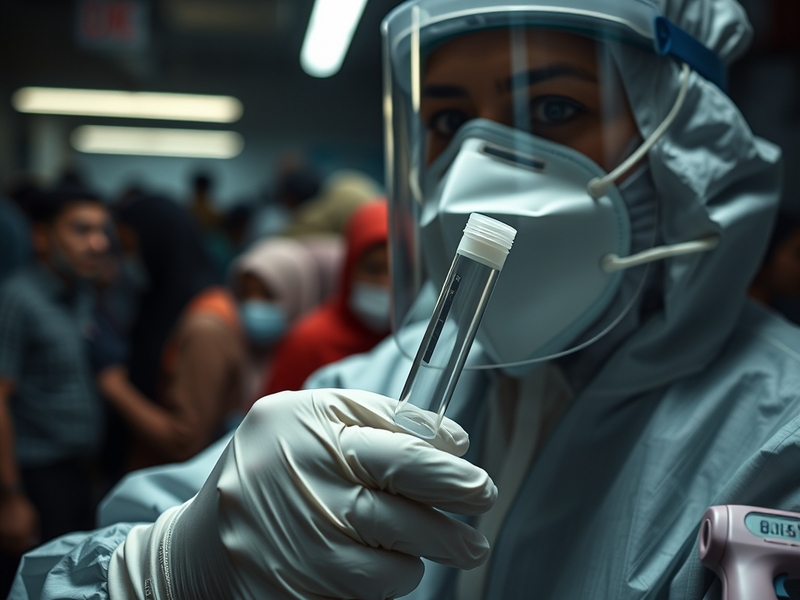
Understanding Disease Outbreaks: Causes, Responses, and Lasting Impacts
Disease outbreaks remain one of the most unpredictable and disruptive forces in global health, capable of reshaping economies, straining healthcare systems, and altering the way societies function. Unlike isolated cases of illness, outbreaks occur when a disease spreads rapidly through a community or region, often catching officials off guard. The World Health Organization (WHO) defines an outbreak as the occurrence of disease cases in excess of what would normally be expected in a defined community or season. These events can range from localized clusters of foodborne illnesses to worldwide pandemics that cross borders within weeks.
What makes outbreaks particularly challenging is their ability to emerge from unexpected sources. Some originate from zoonotic transmission—when pathogens jump from animals to humans, as seen with Ebola, SARS, and COVID-19. Others arise from resistant strains of bacteria or viruses that evolve and evade existing treatments. Environmental factors, such as climate change and urbanization, further complicate containment efforts by altering ecosystems and increasing human-animal interactions. Understanding these dynamics is critical not only for immediate response but also for preventing future crises.
The Anatomy of an Outbreak: How It Starts and Spreads
Every disease outbreak follows a distinct trajectory, beginning with an index case—the first identified patient who introduces the pathogen into a population. From there, transmission pathways can branch out exponentially if conditions are favorable. Respiratory viruses like influenza and measles spread through airborne droplets, while foodborne pathogens such as Salmonella rely on contamination in supply chains. The rate of spread depends on several factors: the contagiousness of the pathogen, population density, public health infrastructure, and individual behaviors.
Once an outbreak gains momentum, public health agencies activate surveillance systems to track cases, identify hotspots, and trace contacts. This data-driven approach aims to contain the spread before it escalates. However, delays in detection or underreporting can allow outbreaks to fester unnoticed. For example, during the 2014–2016 Ebola epidemic in West Africa, weak health systems and community resistance initially hindered containment, leading to over 11,000 deaths. The lesson was clear: early detection and transparent communication are essential to curbing outbreaks before they spiral out of control.
Below are key stages in the lifecycle of a disease outbreak:
- Introduction: A single case or cluster emerges, often unrecognized initially.
- Local Spread: Transmission occurs within a community, frequently through close contact or shared environments.
- Amplification: The outbreak reaches critical mass, overwhelming local health services.
- Containment or Escalation: Public health measures either limit the spread or fail, potentially leading to regional or global spread.
- Resolution: Outbreaks end through natural decline, vaccination, treatment, or public health intervention.
Global Preparedness: Lessons from Recent Outbreaks
The COVID-19 pandemic exposed critical gaps in global pandemic preparedness, despite decades of warnings from experts. Countries with robust health systems initially struggled to manage surges in cases, while low-income nations faced devastating shortages of medical supplies and vaccines. The crisis underscored the need for coordinated international responses, rapid vaccine development, and equitable distribution of resources. It also revealed how misinformation and mistrust could undermine public health efforts, turning scientific consensus into political debate.
Beyond pandemics, other outbreaks have left lasting scars. The 2016 Zika virus outbreak in the Americas highlighted how vector-borne diseases could spread rapidly in tropical regions, leading to severe birth defects in infants born to infected mothers. Meanwhile, the ongoing cholera epidemic in Yemen, driven by war and collapsed infrastructure, has become one of the worst in modern history, with over a million cases since 2016. These examples demonstrate that disease outbreaks are not merely medical events—they are humanitarian and geopolitical crises in disguise.
Several strategies have emerged as essential components of outbreak response:
- Strengthening Surveillance: Investing in real-time data systems and genomic sequencing to detect pathogens early.
- Improving Health Infrastructure: Ensuring every country has the capacity to test, treat, and isolate patients.
- Promoting Vaccine Equity: Preventing disparities in vaccine access that allow outbreaks to persist in vulnerable regions.
- Enhancing Public Trust: Combating misinformation through clear, consistent messaging from trusted sources.
- Coordinating Across Borders: Facilitating information sharing and resource allocation through global health organizations.
Beyond the Crisis: Long-Term Consequences of Disease Outbreaks
The ripple effects of an outbreak extend far beyond the immediate health impacts. Economically, pandemics can trigger recessions, disrupt supply chains, and widen inequality as marginalized communities bear the brunt of job losses and healthcare costs. The COVID-19 pandemic alone is estimated to have pushed nearly 100 million people into extreme poverty, reversing decades of progress in global development. In education, prolonged school closures have left millions of children behind, particularly in low-income countries where remote learning is inaccessible.
Socially, outbreaks can reshape cultural norms and behaviors. Mask-wearing, once rare outside East Asia, became a global symbol of public health solidarity. Remote work and digital services accelerated, transforming industries like healthcare, retail, and entertainment. However, these shifts have also intensified divides between those who can adapt and those left behind. Mental health crises have surged alongside the physical toll of outbreaks, with anxiety, depression, and burnout becoming widespread.
Environmentally, outbreaks have mixed consequences. Reduced travel and industrial activity during the COVID-19 lockdowns led to temporary drops in air pollution and carbon emissions. Yet, the rush to produce vaccines and medical supplies also increased plastic waste and energy consumption. Meanwhile, deforestation and habitat encroachment continue to create conditions ripe for zoonotic spillover events, suggesting that environmental degradation may be a ticking time bomb for future outbreaks.
Looking Ahead: Building a More Resilient Future
While no system can prevent every outbreak, proactive measures can significantly reduce their frequency and severity. Strengthening primary healthcare in low-resource settings is a critical first step, as early detection saves lives and reduces costs. Investing in vaccine research and manufacturing capacity ensures rapid responses to emerging threats. Meanwhile, global health security frameworks, such as the WHO’s International Health Regulations, provide a blueprint for coordinated action—though enforcement remains inconsistent.
At the community level, education plays a vital role. Teaching basic hygiene practices, recognizing symptoms early, and understanding vaccination benefits can empower individuals to protect themselves and others. Public health campaigns must be culturally sensitive and accessible to diverse populations to avoid alienating those most in need of guidance.
The COVID-19 pandemic has shown that humanity can rise to the challenge of a global crisis—but only when leaders, scientists, and communities work in unison. The next outbreak is not a question of if, but when. By learning from past failures and prioritizing prevention, we can build a world where disease outbreaks are met with swift, equitable, and effective responses. The cost of inaction is too high to ignore.