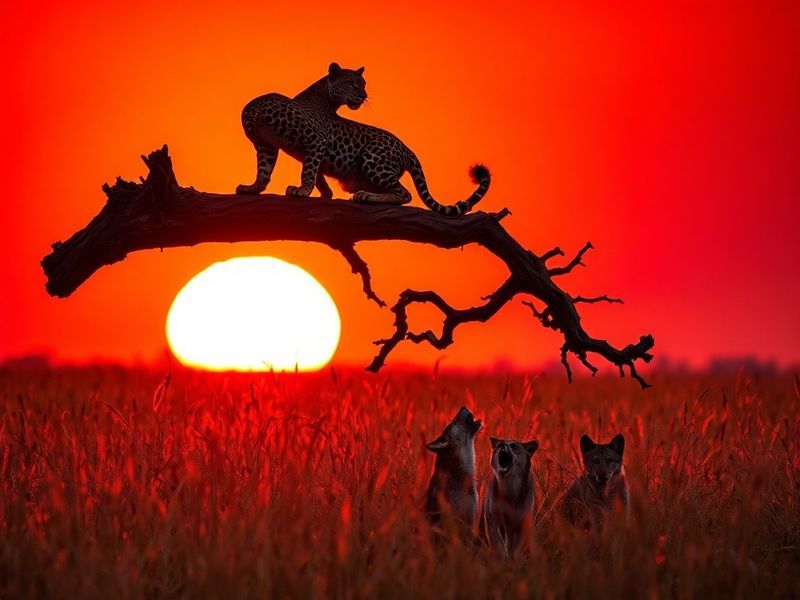
The debate over apex predators often centers on raw power versus stealth and precision. Wolves and leopards represent two distinct evolutionary paths to dominance in their respective habitats. While wolves thrive in coordinated packs, leopards rely on solitary ambush tactics. Understanding their differences reveals how each species has carved out its ecological niche.
The Physical and Behavioral Contrasts
Wolves are built for endurance and teamwork. Adult males typically weigh between 70 to 150 pounds, with females slightly smaller. Their muscular bodies, broad heads, and powerful jaws allow them to take down large prey like elk and bison. Leopards, on the other hand, are more compact and agile. Males average 80 to 200 pounds, but their slender frames are designed for climbing trees with prey in tow rather than sustained pursuits.
Behaviorally, wolves operate in hierarchical packs of 6 to 10 members, communicating through a complex system of howls, growls, and body language. This social structure enables them to hunt cooperatively, targeting prey that individual members couldn’t overpower. Leopards are solitary hunters, relying on surprise rather than teamwork. Their camouflage coats blend seamlessly into tall grass or tree canopies, allowing them to stalk within striking distance before pouncing.
- Wolves: Social, endurance-based hunters with strong pack dynamics.
- Leopards: Solitary, stealth-based ambush predators with incredible climbing ability.
Hunting Strategies in the Wild
Wolves employ a strategy of persistence and numbers. They often wear down prey through prolonged chases, targeting weaker individuals in a herd. Their pack mentality ensures that even if one member falters, others can take over. This method is particularly effective in open terrains like the Arctic tundra or North American forests.
Leopards, meanwhile, are the epitome of opportunistic hunters. They rely on short, explosive bursts of speed—up to 36 miles per hour—to close the gap on unsuspecting prey. Their retractable claws and powerful forelimbs enable them to drag carcasses weighing up to three times their body weight into tree branches, storing food away from scavengers like lions or hyenas. This behavior highlights their adaptability in both savannas and dense rainforests.
In a hypothetical encounter, a wolf pack would likely overpower a lone leopard through sheer numbers. However, a leopard’s ability to scale trees quickly could give it an escape route if outnumbered. The outcome would depend heavily on the environment—wolves dominate in open spaces, while leopards thrive where vertical terrain is available.
Ecological Roles and Human Interactions
Both species play critical roles in maintaining ecological balance. Wolves, as keystone predators, prevent overgrazing by controlling herbivore populations such as deer and moose. Their presence can restore balance to ecosystems by allowing vegetation to recover, which in turn supports a wider range of wildlife. In Yellowstone National Park, the reintroduction of wolves in the 1990s led to a cascade of positive effects, including the revival of willow and aspen trees.
Leopards contribute to biodiversity by keeping smaller predator populations in check, such as jackals and wild dogs. Their scavenging habits also clean up carcasses, reducing the spread of disease. However, human-wildlife conflict poses a greater threat to leopards than to wolves. Habitat encroachment, poaching for their distinctive spotted coats, and retaliatory killings by farmers have drastically reduced leopard populations across Africa and Asia. In contrast, wolves have seen a resurgence in parts of Europe and North America due to conservation efforts.
Conservation status further illustrates their differences. Gray wolves are listed as Least Concern by the IUCN, though some subspecies like the red wolf are critically endangered. Leopards, however, face greater peril, with the IUCN classifying them as Vulnerable, with some regional populations, such as the Amur leopard, teetering on the brink of extinction.
Cultural Symbolism and Mythology
Wolves and leopards hold deep symbolic meanings across cultures. In many Native American traditions, wolves represent loyalty, communication, and spiritual guidance. They are often depicted as teachers or protectors in oral histories. Conversely, European folklore frequently portrays wolves as sinister figures, embodying danger and the unknown. Fairy tales like “Little Red Riding Hood” cemented this negative perception, though modern conservation efforts aim to shift that narrative.
Leopards, meanwhile, are symbols of power and adaptability in African and Asian cultures. In ancient Egypt, the leopard was associated with royalty and protection, often depicted in artwork alongside pharaohs. Hindu mythology reveres the leopard as a vehicle of the goddess Durga, representing ferocity and divine justice. In contrast, some African tribes view leopards as cunning tricksters, though they are also respected for their hunting prowess.
The contrast in their cultural representations reflects their physical and behavioral traits. Wolves, with their social bonds, are often linked to community and family values. Leopards, as solitary hunters, embody independence and stealth. These symbolic associations have influenced human attitudes toward both species, shaping conservation policies and public perception.
Conclusion: Two Paths to Survival
Wolves and leopards exemplify the diversity of nature’s predators. Wolves demonstrate the strength of cooperation, while leopards showcase the power of individual adaptability. Their contrasting strategies highlight the evolutionary trade-offs between social structures and solitary specialization.
Understanding these differences is crucial for conservation efforts. Protecting wolves often involves managing human-wildlife conflicts and preserving large territories, while leopard conservation requires combating illegal wildlife trade and habitat loss. Both species remind us of the delicate balance that sustains ecosystems—and the importance of preserving their habitats for future generations.
Whether in the dense forests of Siberia or the savannas of the Serengeti, wolves and leopards continue to inspire awe and respect. Their survival depends not just on their natural abilities, but on humanity’s willingness to share the planet with them.