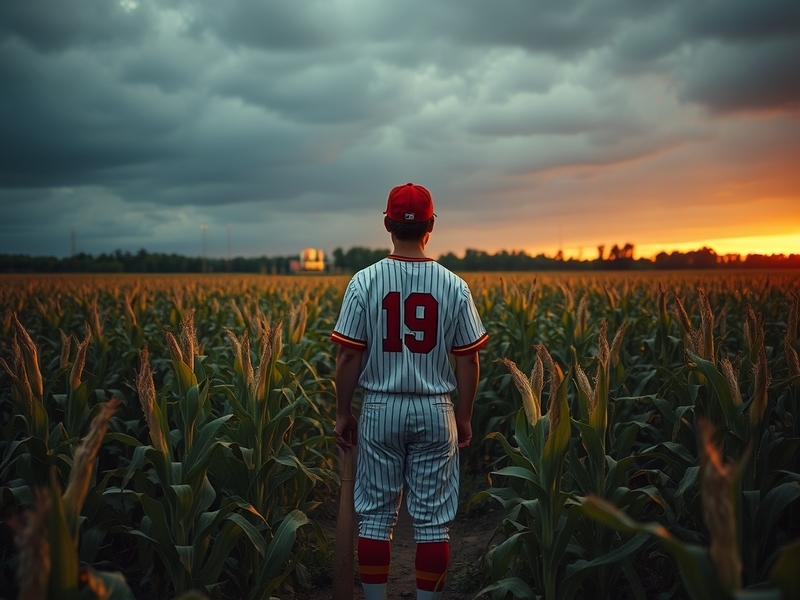
The Field of Dreams Game wasn’t just a baseball game—it was a story written in the Iowa dirt and stitched into the fabric of sports history. On August 12, 2021, the Chicago White Sox and New York Yankees stepped onto a meticulously constructed field in Dyersville, Iowa, the same location immortalized in the 1989 film Field of Dreams. This wasn’t a Hollywood set dressed in cornstalks; it was the real thing. The game carried the weight of nostalgia, the pressure of expectation, and the promise of baseball’s enduring power to unite generations.
The Stage Was Set: A Diamond Built on Dreams
Few places in America evoke the spirit of baseball like the farm in eastern Iowa where Kevin Costner’s character Ray Kinsella plowed under his corn to build a diamond. The original field, privately owned and preserved by the Lansing family, had become a pilgrimage site for fans who walked the warning track or stood in the batter’s box like pilgrims at a shrine. When MLB announced a regular-season game would be played there, it wasn’t just a sporting event—it was a cultural handoff. The 2021 contest marked the first MLB game played in Iowa since the Chicago Cubs beat the Atlanta Braves in 1973 at another temporary venue.
The decision to host a game on a field built for a movie required extraordinary coordination. Temporary bleachers had to be installed. Broadcast towers rose from the cornrows. Parking, security, and concessions had to be engineered without disturbing the hallowed ground. The playing surface itself was a patchwork of sod from various ballparks, ensuring the grass could withstand the wear of a major league contest. Even the foul poles were relocated to match the film’s iconic angles. Every detail was scrutinized to honor the movie’s legacy while meeting MLB standards.
For many fans, the Field of Dreams Game was less about the sport and more about the ritual. Baseball has long been tied to memory, to fathers and sons, to summer evenings that stretch into dusk. This game carried that emotional freight. It asked: Can a place become sacred? Can a story transcend fiction? As the first pitch approached, those questions hung in the humid Iowa air.
What Happened on the Field: A Game Steeped in Symbolism
The White Sox defeated the Yankees 9–8 in a 10-inning thriller that felt like a doubleheader compressed into one. Tim Anderson, the White Sox shortstop, became the first player to homer in the Field of Dreams Game. His blast into the corn beyond left field sent a ripple through the crowd—some cheered, others wiped away tears. It wasn’t just a home run. It was a bat swing aimed at history.
What made the game memorable wasn’t just the score. It was the way baseball unfolded like a story. The Yankees, draped in pinstripes against the pastoral backdrop, felt like outsiders intruding on a sacred space. Meanwhile, the White Sox, representing the grit of the Midwest, played with a swagger that matched the film’s underdog spirit. Each play carried symbolic weight: a diving catch in the outfield, a stolen base that mirrored Ray Kinsella’s journey, a manager’s ejection that echoed the fiery resolve of Shoeless Joe Jackson.
One moment stood out above the rest. With two outs in the ninth, Yankees outfielder Aaron Judge launched a deep fly ball. The crowd held its breath. The ball soared over the right-field fence—then struck a crossbar of the outfield fence, ricocheting back onto the field. It was ruled a home run, then reviewed and confirmed. The replay showed the ball barely clearing the barrier, a borderline call that could have changed everything. Baseball, like life, often hinges on such edges.
By the time the final out was recorded, the scoreboard read White Sox 9, Yankees 8. The players embraced, the fans roared, and the cornfield swayed as if applauding. The game had delivered on its promise: it was both a contest and a ceremony.
Why This Game Matters Beyond the Box Score
The Field of Dreams Game wasn’t just about two teams playing baseball. It was about baseball remembering what it means to be human in an era of algorithms and analytics. In a sport increasingly dominated by launch angles and exit velocities, this game reminded fans that baseball is also about memory, place, and myth.
It proved that sports can be more than entertainment—they can be pilgrimage. Over 7,000 fans made the journey to Dyersville, many camping for days to secure tickets. Social media lit up with stories of families traveling together, of grandparents telling grandchildren about the movie, of strangers bonding over shared reverence. In an age where stadiums are often branded experiences, this game was unbranded. There were no fireworks, no mascot races, no DJs. Just baseball under the stars.
The game also highlighted baseball’s role as a cultural bridge. The Yankees, a team synonymous with New York’s hustle, met the White Sox, a team rooted in Chicago’s working-class grit, on neutral ground. The rivalry was real, but so was the shared respect for the game’s traditions. This wasn’t just a Yankees vs. White Sox matchup—it was a collision of eras, a dialogue between past and present.
Moreover, the Field of Dreams Game signaled a new era for MLB in expanding its footprint. Since 2021, MLB has continued to experiment with alternate venues, from London to Mexico City. The Iowa game proved that baseball can thrive outside traditional markets when it taps into deeper cultural narratives. It wasn’t just about selling tickets—it was about selling belonging.
Lessons and Legacy: What the Field of Dreams Game Teaches Us
The Field of Dreams Game offers several key lessons—not just for baseball, but for all of sports and entertainment:
- Place matters. A field isn’t just dirt and grass. It’s memory, identity, and story. When we honor the land as sacred, we elevate the game.
- Nostalgia is a powerful engine. The movie Field of Dreams endures because it taps into universal longings: reconciliation, redemption, and the belief that love outlasts loss.
- Baseball is a storytelling medium. Every pitch, every swing, every stolen base is a sentence in an ongoing epic. The game writes its own mythology.
- Innovation requires reverence. MLB didn’t bulldoze the field to build a stadium. It adapted to the site, proving that progress and preservation can coexist.
Looking ahead, the Field of Dreams Game has inspired similar experiments. The 2022 MLB at Rickwood Field in Birmingham, Alabama, honored Negro Leagues history. The 2023 Little League Classic at Williamsport continued the tradition of playing baseball where it matters most. Each event carries the spirit of Iowa: that sports can be more than performance—they can be pilgrimage, poetry, and prayer.
As the final notes of “(Don’t Fear) The Reaper” faded and the cornfield returned to silence, one thing was clear: the Field of Dreams Game wasn’t just a game. It was a reminder that some places—and some stories—are eternal.
For fans who stood in the outfield, who touched the foul pole, who felt the breeze carry the scent of cut grass, the memory will never fade. And in baseball, as in life, that’s the most sacred outcome of all.