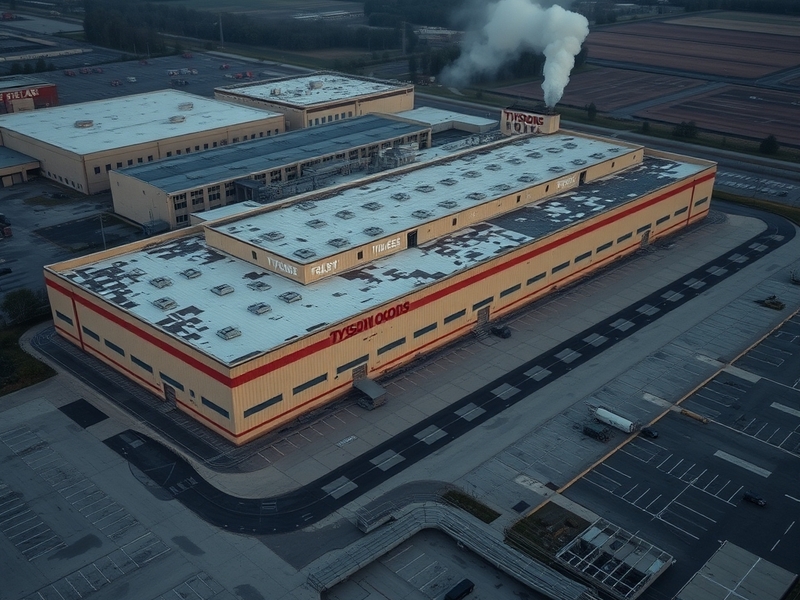
Tyson Foods’ recent decision to shutter its beef processing plants in Holcomb, Kansas, and Dakota City, Nebraska, has sent ripples through the meat industry and raised concerns among workers and local communities. The closures, part of a broader strategy to streamline operations and reduce costs, highlight the ongoing pressures facing large-scale meat producers amid shifting market demands and regulatory challenges. While Tyson executives frame the moves as necessary for long-term efficiency, the human and economic toll on affected employees and surrounding towns is impossible to ignore.
Why Tyson is Shutting Down Its Beef Plants
The primary driver behind Tyson’s plant closures is a sustained decline in beef demand, particularly for premium cuts. Consumers have increasingly shifted toward poultry and plant-based alternatives, which offer lower costs and perceived health benefits. Tyson’s internal data shows a 12% drop in beef consumption over the past three years, forcing the company to reassess its production footprint. Plant closures also align with Tyson’s broader cost-cutting initiative, announced last year, which aims to save $1 billion annually by 2025.
The Holcomb and Dakota City facilities were chosen for closure due to their aging infrastructure and lower production efficiencies compared to newer plants in the Midwest. Tyson has confirmed that operations will cease by mid-2025, with affected workers offered severance packages and relocation assistance. However, many employees—some with decades of service—face uncertain futures as local job markets struggle to absorb displaced labor.
Financial Pressures and Industry Trends
Tyson’s decision reflects broader challenges in the beef industry, where profit margins have tightened due to rising cattle prices and competition from alternative proteins. The company’s stock price dipped following the announcement, underscoring investor concerns about short-term revenue losses. Analysts point to Tyson’s $5.2 billion acquisition of the Hillshire Brands Company in 2014 as a catalyst for its current restructuring, as the debt burden from that deal continues to shape financial decisions.
Another factor is the consolidation of meatpacking plants nationwide. The U.S. beef processing sector has seen a 20% reduction in plants over the past decade, with larger companies like Tyson and JBS dominating market share. This trend has left rural communities with fewer economic anchors, amplifying the impact of closures like those in Holcomb and Dakota City.
Impact on Workers and Local Economies
The shutdowns will directly affect nearly 3,000 employees, many of whom are long-time residents of rural Kansas and Nebraska. Tyson has pledged to provide severance, extended benefits, and job placement services, but critics argue these measures fall short of addressing the long-term economic void left by the closures. Local businesses—restaurants, grocery stores, and suppliers—are already reporting declines in revenue as plant workers reduce spending.
In Holcomb, a town of roughly 2,500 people, Tyson’s plant is the largest employer. The closure could push the local unemployment rate above the state average, which currently stands at 3.1%. Community leaders are scrambling to attract new industries, but the process is slow and uncertain. “This isn’t just a job loss—it’s a way of life,” said a Holcomb city council member in a recent interview with Dave’s Locker News.
Worker Perspectives and Future Prospects
Many displaced workers are skeptical about finding comparable employment in their fields. Tyson’s plants pay an average of $22 per hour, with benefits, which is well above the local minimum wage of $12.50. The remaining job opportunities in the region often pay less and offer fewer benefits, pushing some workers to consider relocating to larger cities. Others are exploring retraining programs in trades like welding or trucking, though these transitions come with their own challenges.
The psychological toll is also significant. A 2023 study by the University of Nebraska found that plant closures in rural areas correlate with increased rates of depression and substance abuse. Tyson has partnered with local nonprofits to provide mental health resources, but the effectiveness of these programs remains to be seen.
Regional and National Implications
The closures raise broader questions about the sustainability of large-scale meat processing in rural America. While Tyson’s move may improve its bottom line, it exacerbates concerns about food system resilience. The U.S. Department of Agriculture has warned that reduced processing capacity could lead to supply chain bottlenecks, particularly during peak demand periods like holidays and grilling season.
Nationally, the closures could shift production to Tyson’s remaining plants, such as those in Iowa and Colorado. However, this centralization increases the risk of systemic disruptions, as seen during the COVID-19 pandemic when outbreaks at major plants led to temporary shutdowns and meat shortages. Industry experts suggest that policymakers may need to incentivize smaller, decentralized processing facilities to mitigate future risks.
Policy and Industry Responses
In response to Tyson’s announcement, Nebraska Senator Deb Fischer called for a federal review of the beef supply chain’s concentration. “We cannot afford to put all our eggs in one basket—or in this case, all our beef in one plant,” she stated. Meanwhile, Tyson has emphasized its commitment to supporting affected communities, though critics argue the company’s actions underscore the need for stronger labor protections and economic diversification policies.
The closures also highlight the delicate balance between corporate efficiency and regional stability. While Tyson’s decisions are driven by market forces, the human cost is undeniable. As one former plant worker put it, “We built this place up. Now we’re watching it fall apart.”
What Comes Next for Tyson and the Beef Industry?
Tyson’s restructuring is likely just the beginning. The company has signaled plans to invest $1.3 billion in automation and modernization over the next three years, which could further reduce its reliance on human labor. This shift may improve margins but could also accelerate job losses in an already struggling sector.
For the beef industry, the closures serve as a cautionary tale about over-reliance on large-scale processing. Diversification—through vertical integration, smaller plants, or alternative protein development—may become essential for survival. Tyson’s competitors, including Cargill and JBS, are closely watching the fallout, as any missteps could trigger similar restructuring waves.
Lessons for Other Rural Communities
The Holcomb and Dakota City closures offer a stark example of how corporate decisions can reshape small-town America. For other rural communities dependent on single-industry employers, the lesson is clear: economic diversification is no longer optional. Programs like apprenticeships, remote work incentives, and small-business grants may help cushion future blows.
Tyson, meanwhile, faces a delicate balancing act. It must prove to shareholders that its restructuring will pay off, while also addressing the human consequences of its decisions. The company’s next moves—whether in automation, new product lines, or community partnerships—will determine whether it emerges stronger or merely as another cautionary tale in the decline of American manufacturing.
As the beef plant era winds down, the question remains: Who will step in to fill the void left behind? For now, the communities of Holcomb and Dakota City are left to grapple with that uncertainty.